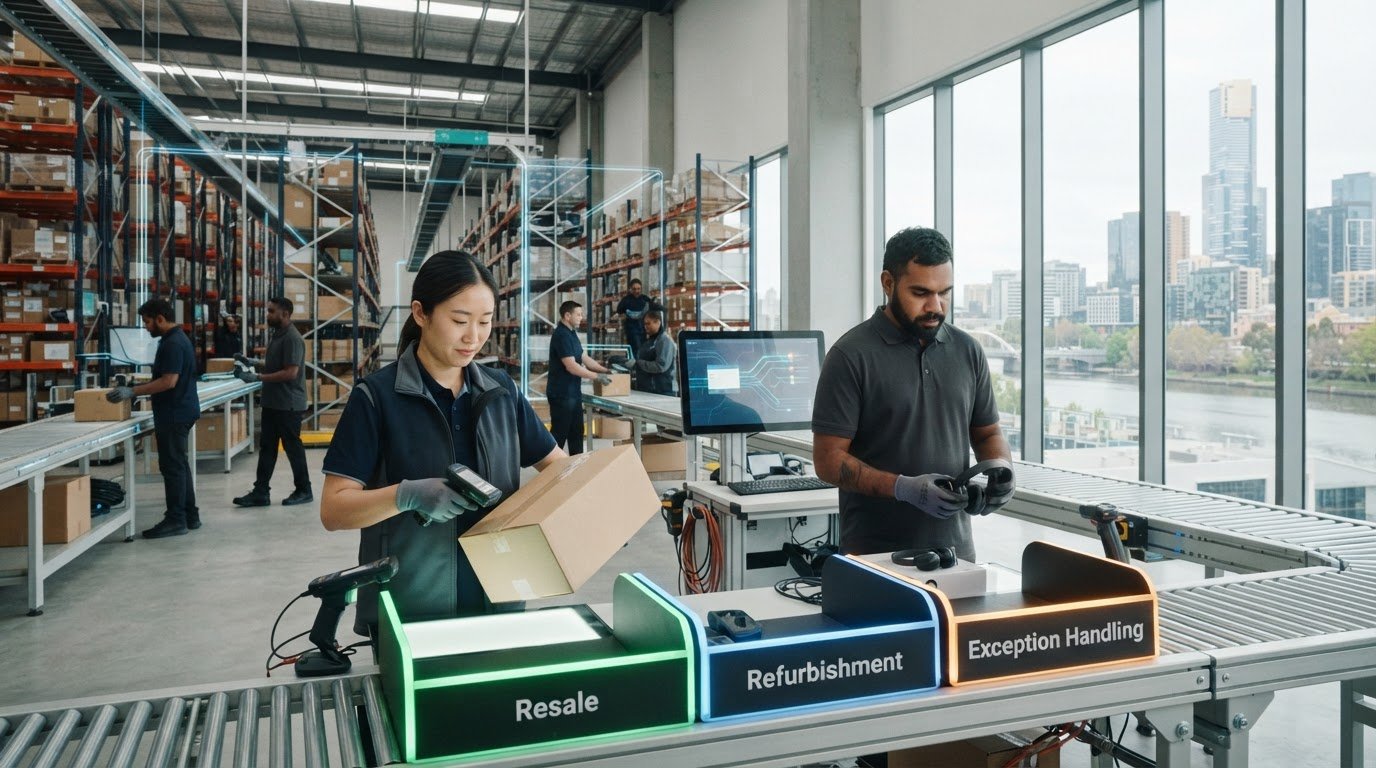
A return isn’t finished when a parcel reaches the warehouse. The item still needs to be identified, its condition recorded and its status updated so it can move into the right stock or fulfilment process. The right reverse logistics provider Melbourne businesses choose should close that loop, not leave returns sitting out of sight.
Returns can pull staff away from daily fulfilment, make resellable stock harder to track and create confusion when processing steps aren’t clear. When comparing providers, look beyond parcel handling and assess how returns connect with inventory and order workflows.
This guide explains what a capable returns process includes and how to assess practical fit, from intake and inspection to inventory visibility and ecommerce integrations. It also covers how a connected fulfilment operation, supported by a cloud-based WMS with real-time inventory and order-status visibility, can help your team track each return and free up time for other work.
Key Takeaways
- Map each return from initiation to its next inventory decision so items don’t disappear between handoffs.
- Compare a reverse logistics provider melbourne businesses can work with by assessing workflow ownership, system visibility, integrations and exception handling.
- Set clear rules for return reasons, item condition, approvals and disposition before outsourcing the workflow.
- Connect returns with warehousing and outbound fulfilment to keep stock and order information easier to follow.
- See how Pik Pak Logistics brings returns processing into its ecommerce fulfilment operation, helping teams delegate day-to-day returns work.
Why Melbourne ecommerce businesses need a returns process, not just return shipping
A returned parcel arriving at its destination is only the beginning. Until someone identifies the item, records its condition and updates its stock status, the business may not know whether it can be resold, should be held aside or needs another action. That gap can leave useful inventory unaccounted for and add manual follow-up to a busy fulfilment team.
Reverse logistics covers the movement of goods and information back through a supply chain. In practice, it manages a product from the customer’s return through to the next inventory decision. A reverse logistics provider melbourne businesses use should support the process after transit, not just arrange or receive a return parcel.
What does a reverse logistics provider manage?
Return shipping is one step in a larger workflow. Managed returns can include receiving and identifying an item, inspecting it against agreed condition rules, recording the outcome and following the merchant’s disposition instructions. Depending on those rules, stock may be restocked, quarantined or directed to another agreed outcome. Clear records let teams see what happened without relying on scattered messages or manual checks.
Why Melbourne businesses should map local and national return flows
Returns from Melbourne customers and returns sent from elsewhere in Australia can involve different handoffs and tracking updates. Map each route from return initiation to receipt, then specify what information should follow the item, such as its order reference, return reason and condition status. This makes exceptions easier to spot and helps connect each returned item to the correct inventory record.
For each route, establish who records the return as in transit, who confirms receipt and when the stock status changes. If tracking shows a parcel has arrived but the inventory record remains unchanged, staff need a clear next step. A shared view is especially useful when teams manage orders across Melbourne and the rest of Australia.
Reliable returns handling also supports the customer experience. Teams can give clearer updates when the item’s status is recorded, rather than piecing together its progress. Accurate inventory information helps prevent returned stock from being treated as available before its condition has been assessed. When receipt, inspection and recording follow an agreed workflow, staff spend less time chasing details and more time on core fulfilment work.
In an integrated operation, returns sit alongside warehousing and outbound fulfilment rather than becoming a separate parcel task. Pik Pak Logistics provides returns processing and reverse logistics, with a cloud-based WMS that gives real-time inventory and order-status visibility. This helps businesses follow a return through the workflow and keep the next stock decision connected to the wider operation.
How a Melbourne reverse logistics workflow moves returns back into view
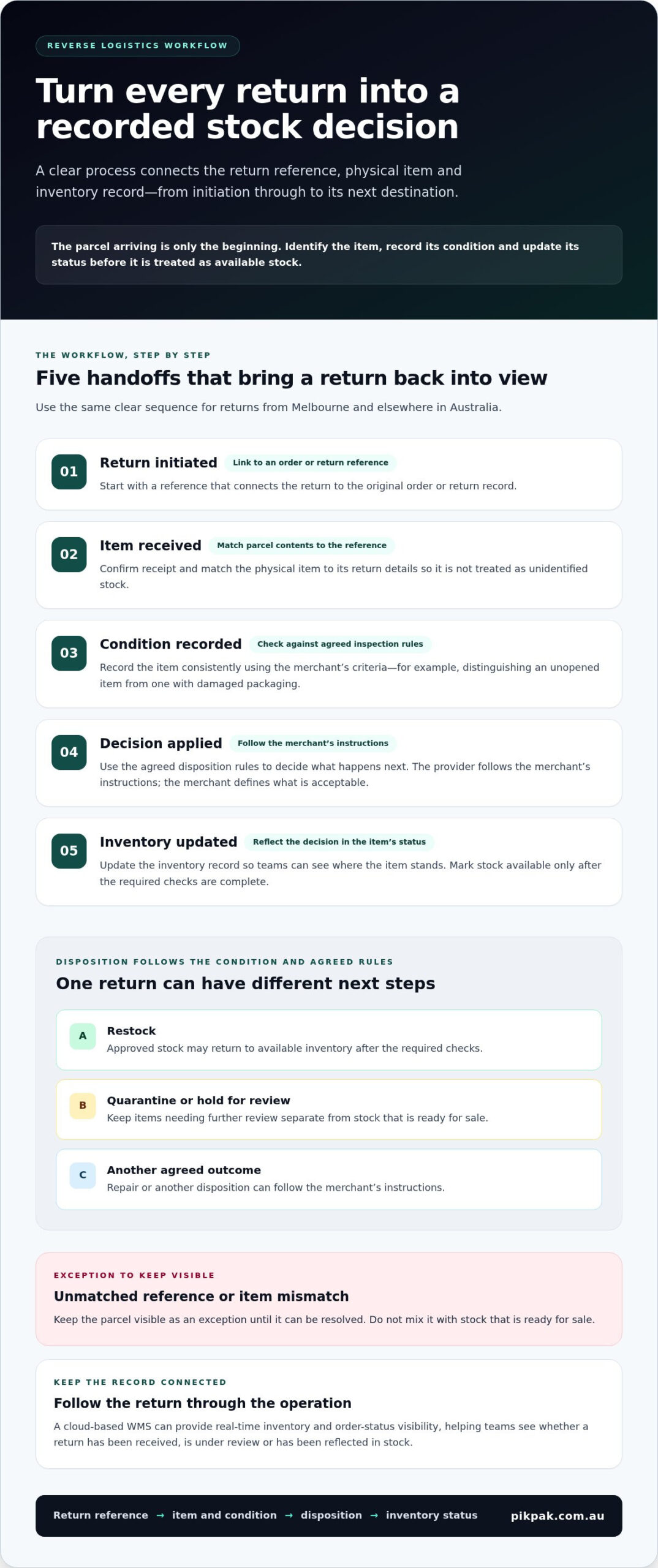
A clear workflow turns a returned parcel into a recorded stock decision. Whether a customer sends an item from Melbourne or elsewhere in Australia, the steps should connect the return reference, physical item and inventory record. A supply chain management perspective also makes clear that returns can lead to different outcomes, not just a refund or an item being put away.
- Return initiated: Link the return to an order or return reference.
- Item received: Match the parcel contents to the reference.
- Condition recorded: Check the item against the merchant’s agreed inspection rules.
- Decision applied: Follow the merchant’s disposition instructions.
- Inventory updated: Reflect the decision in the item’s status so teams can see where it stands.
From returned parcel to recorded condition
At receipt, matching an item to its order or return reference helps prevent it from being treated as unidentified stock. Staff can then record its condition consistently, using the merchant’s criteria for that product. For example, the rules might distinguish an unopened item from one with damaged packaging. Merchants define what counts as acceptable and what should happen next; the provider follows those instructions.
A brief, consistent record gives the person making the next decision useful context, while vague notes can lead to extra checks and delays. If a parcel arrives without a clear reference, or the item doesn’t match the return details, keep it visible as an exception until it can be resolved. Don’t mix it with stock that is ready for sale.
From disposition decision to inventory status
Once the agreed checks are complete, the item can follow its assigned route. Approved stock may return to available inventory; items needing further review can remain quarantined, while repair or another disposition can follow the merchant’s instructions. Update stock as available only after the required checks. This prevents order teams from treating an unassessed return as sellable inventory.
WMS records and status updates connect the return to inventory and order activity. A cloud-based WMS can provide real-time inventory and order-status visibility, making it easier to see whether a return has been received, is under review or has been reflected in stock. The records should support the agreed workflow, rather than rely on assumptions about specific report fields.
For Melbourne-origin returns and parcels coming from other parts of Australia, map the important handoffs: return initiated, in transit, received, assessed and inventory updated. Define what happens if a tracking event appears without a matching receipt, or a receipt has no corresponding return reference. This keeps exceptions from disappearing between transport and processing.
When returns feed into storage and outbound order handling, inventory decisions stay connected to the wider operation. Explore Pik Pak’s warehousing and fulfilment service to see that connected context, or learn more about Pik Pak Logistics.
How to compare reverse logistics providers for a Melbourne operation
A useful comparison looks past broad claims about logistics. Focus on whether returns processing fits your store’s systems and day-to-day fulfilment workflow. The Association for Supply Chain Management’s overview of what is reverse logistics provides helpful context: returns are one part of managing goods as they move back through the supply chain. For a Melbourne business, the right fit depends on where customers send returns from and how each item’s status connects to inventory and orders.
| Criterion | What to assess | Pik Pak Logistics |
|---|---|---|
| Workflow ownership | Is there a clear process from return receipt and identification through inspection and the merchant-approved disposition? | Returns processing and reverse logistics are part of Pik Pak’s ecommerce fulfilment operation. |
| Inventory visibility | Can your team follow return and stock status in the operating system, including items that need a decision? | Its cloud-based WMS provides real-time inventory and order-status visibility. |
| Integration | Does information connect with your ecommerce platform and existing order workflow, or rely on repeated manual entry? | API access and pre-built ecommerce connectors support platform integrations. |
| Exceptions | Are damaged, unidentified or mismatched items kept visible with an agreed path for follow-up? | Merchant rules and exception steps are set as part of defining the returns workflow. |
Check visibility, systems and exception handling
Look for a connected view of return activity and stock status, not just a parcel tracking event. Evaluate how the process handles a damaged item or a return that can’t be matched to an order. Clear ownership and agreed next steps help prevent exceptions from becoming untracked tasks. Explore Pik Pak’s technology support and integrations to understand how system connections support fulfilment workflows.
Test fit with your ecommerce operation
Compare the returns process with the way your store handles orders, inventory and customer-service updates. Consider how return volumes and reasons may shift during promotions or seasonal peaks, then map the handoffs and information your team will need. Melbourne relevance comes from your actual routes, including returns from local customers and customers elsewhere in Australia, not an assumed facility location or delivery speed.
Pik Pak Logistics connects returns management with warehousing and order fulfilment, supported by WMS visibility. This helps keep return information aligned with wider inventory and order activity while your team focuses on core work. Read the Pik Pak Logistics overview for more on its connected fulfilment approach.
How to prepare your Melbourne returns workflow before outsourcing
Outsourcing works best when your provider can follow clear instructions and your team knows which decisions remain yours. Before engaging a reverse logistics provider melbourne businesses can prepare a simple operating guide that defines return rules, system handoffs and ownership. This reduces guesswork during processing without handing over control of your customer policy.
Create clear return rules before launch
Document what staff should do for each product category and return outcome. Specify acceptable condition, what to record during inspection, and whether an item should be considered for restocking, quarantined or directed to another disposition. Set out who approves an exception, such as a damaged item or a return that doesn’t match its order reference.
Keep customer-facing responsibilities explicit. Your business retains ownership of its returns policy, refund decisions and customer communication. Assign an internal owner for each, including who responds when a return is unresolved or needs a policy decision. Before publishing or updating policy wording, check Australian Consumer Law guidance with the ACCC so your statements are accurate and current.
Prepare systems and operational handoffs
List the information teams use to match a returned item to a sale and inventory record. This may include the ecommerce platform, order reference, product identifier and any return reference your business uses. Then map the handoffs for Melbourne customers and customers elsewhere in Australia, noting what information should accompany a return and who records each status change.
Agree how the relevant teams will see updates and exceptions. For example, decide how customer service will know an item has arrived, how inventory staff will distinguish stock awaiting review from stock available to sell, and who follows up on an unidentified return. Pik Pak Logistics’ cloud-based WMS provides real-time inventory and order-status visibility, while API access and pre-built ecommerce connectors support platform integrations.
- Policy: Return reasons, condition rules and disposition instructions by product category.
- Ownership: Internal roles for refund decisions, customer updates and exception approval.
- Systems: Platforms, order identifiers and inventory records involved in the workflow.
- Routes: Melbourne and national return journeys, including information required at each handoff.
- Visibility: How teams will recognise receipt, review, resolution and stock-status changes.
With these requirements written down, you can plan a practical handover that connects returns with your wider fulfilment operation. Discuss your returns workflow with Pik Pak and see how returns management fits alongside ecommerce fulfilment and warehousing.
How Pik Pak fits reverse logistics into Melbourne ecommerce fulfilment
For a Melbourne ecommerce business, returns work best when they connect to the same operation that manages storage, orders and inventory. Pik Pak Logistics provides returns processing and reverse logistics as part of its ecommerce fulfilment services. This brings return handling into the broader logistics workflow rather than treating each parcel as a separate task.
Keep returns connected to inventory and fulfilment
A returned item can affect more than the returns queue. Its condition and approved next step determine whether it should be considered for available stock, held for review or assigned another disposition. Connecting returns with warehousing and order handling keeps those decisions linked to the inventory used to fulfil future orders.
Pik Pak’s cloud-based WMS provides real-time inventory and order-status visibility. This helps teams follow stock and order activity through a connected system, rather than relying only on separate messages or manual checks. API access and pre-built ecommerce connectors support integrations with ecommerce platforms, helping information move between the store and fulfilment operation.
Visibility supports the process, but it doesn’t replace the merchant’s judgement. Your business continues to own its returns policy, customer communication and refund decisions. You define the condition rules and disposition instructions; the operational workflow handles returns in line with those rules. This gives your team clearer control while reducing time spent coordinating routine handling.
Choose a next step that reduces operational friction
Before setting up a workflow, bring together the decisions and details you’ve mapped:
- Return rules: Reasons, product condition criteria and approved outcomes.
- System needs: Ecommerce platforms, order references and inventory information that need to connect.
- Return routes: How Melbourne customer returns and returns from elsewhere in Australia enter the process.
- Internal ownership: Who manages policy decisions, customer updates and unresolved exceptions.
These details help shape a practical handover and show how returns can fit alongside warehousing and outbound fulfilment. If you’re looking for a reverse logistics provider melbourne businesses can integrate into their ecommerce operation, Pik Pak brings returns processing, inventory storage, order fulfilment and WMS visibility together. The aim is straightforward: delegate operational handling while retaining the information and decision-making control your business needs.
Talk with Pik Pak about your returns workflow and explore how returns processing can connect with your wider ecommerce fulfilment operation.
Bring returns into your fulfilment workflow
A strong returns process does more than move parcels. It records each item, applies your agreed condition and disposition rules, and updates inventory so your team can see what happens next. When comparing a reverse logistics provider melbourne businesses can rely on, focus on clear workflow ownership, connected systems and visibility across returns and outbound fulfilment.
Prepare by documenting return rules, system requirements and the handoffs for Melbourne and national return routes. Outsourcing operational handling doesn’t mean handing over your customer policy: your business retains control of refund decisions and customer communication.
Pik Pak Logistics includes returns processing and reverse logistics in its ecommerce logistics services. Its cloud-based WMS provides real-time inventory and order-status visibility, while API access and pre-built ecommerce platform connectors support connected workflows. This gives your team operational visibility and more room to focus on growth.
Talk with Pik Pak about your returns workflow and take the next step towards a more connected fulfilment operation.
Frequently Asked Questions
What does a reverse logistics provider do?
A reverse logistics provider manages the operational steps that move products back from customers into inventory or another agreed outcome. The work can include receiving and identifying an item, recording its condition, updating stock information and following the merchant’s instructions. Return shipping is only one part of the process. The merchant sets product-specific rules and customer policies, so the provider can process returns consistently without taking over policy decisions.
Can a 3PL provider manage ecommerce returns as well as outbound orders?
Yes. A 3PL can manage ecommerce returns alongside warehousing and outbound fulfilment when those services are part of its operation. Connecting the workflows can help teams link a returned item to its original order and inventory record. The merchant still defines return rules, decides customer outcomes and owns refund decisions. Before outsourcing, agree how the provider will follow those instructions and handle damaged, unidentified or otherwise exceptional returns.
How does reverse logistics work for a Melbourne ecommerce business?
Reverse logistics starts when a customer’s return is recorded and the item is routed back. The provider receives and identifies it, records its condition and follows the merchant’s instructions for the next step. Inventory records should then reflect the outcome. A Melbourne business should map returns from local customers as well as parcels coming from elsewhere in Australia, including the handoffs, tracking events and stock updates needed along each route.
What should I compare when choosing a reverse logistics provider in Melbourne?
Compare the provider’s returns workflow, inventory visibility, ecommerce integrations, exception handling and connection to outbound fulfilment. Assess how each returned item is recorded and how merchant-approved disposition rules are applied. For a reverse logistics provider Melbourne businesses are considering, operational fit matters more than broad location claims. Map your actual Melbourne and national return routes, then assess who owns each handoff and how teams can see a return’s status.
Who decides whether a returned product is eligible for a refund?
The merchant remains responsible for its customer policies and applicable consumer-law obligations. A logistics provider can carry out agreed physical processing and record information about a returned item, but that doesn’t automatically make it the decision-maker on refund eligibility. Document who makes refund decisions, communicates with the customer and handles escalations. For legal wording about Australian Consumer Law, refer to current guidance from the Australian Competition and Consumer Commission (ACCC).
How can a business keep visibility of returned inventory?
Link each return to an order or return reference, record its status and update inventory after the agreed disposition decision. A warehouse management system (WMS) can help teams view inventory and order information within the operating workflow. Pik Pak Logistics’ cloud-based WMS provides real-time inventory and order-status visibility. Set clear steps for damaged or unidentified items too, so they remain visible for follow-up rather than being mistaken for saleable stock.
When should a Melbourne business outsource returns processing?
Consider outsourcing when returns are taking staff away from core work, returned stock is difficult to track or the process isn’t connected to fulfilment. First document your return activity, product rules, system needs and customer responsibilities. Then compare those requirements with the provider’s workflow and visibility. There’s no single order-volume threshold that suits every business. The right timing depends on your returns workload, operational fit and plans for growth.