Does your Perth-bound stock need air-conditioning, or does it need a more dependable fulfilment process? For ecommerce fulfillment perth, the distinction matters: a ventilated warehouse isn’t necessarily temperature-controlled, and extra environmental control should be guided by what your products require.
Start with your product’s storage guidance, packaging, sensitivity to heat or moisture, and expected time in storage. These details help you decide whether controlled conditions matter, rather than assuming a standard warehouse suits every product. Storage conditions are only one part of the decision: receiving, inventory visibility, order handling, shipping and returns all affect how well the fulfilment process works.
This guide explains how to assess storage requirements and connect them to your wider operation. You’ll learn what to consider in warehouse conditions, how inventory and orders move through fulfilment, and why technology matters. With a clear view of product needs and order workflows, you can plan a manageable process for serving Perth customers and keeping stock and orders visible.
Key Takeaways
- Use product specifications, packaging and handling needs to decide whether air-conditioned storage is appropriate for your stock.
- Assess your stock profile, order flow and visibility requirements before choosing a warehousing and fulfilment setup.
- Compare storage, inventory visibility, integrations, order handling and returns as connected parts of ecommerce fulfillment perth.
- Map how inventory moves from inbound receiving through dispatch and returns to identify where clear stock and order updates matter.
- Pik Pak’s storage, pick-and-pack, returns, kitting and WMS capabilities can support a coordinated fulfilment process.
Air-Conditioned Warehousing in Perth: When Does Your Ecommerce Stock Need It?
Air-conditioned warehousing uses active cooling to manage indoor conditions. General storage typically relies on ambient warehouse conditions, while cold storage is designed for goods requiring chilled or frozen handling. A facility label doesn’t tell you whether the conditions meet a product’s specific requirements. Air-conditioning alone doesn’t guarantee precise temperature control, continuous monitoring or specialist handling.
Assess the conditions your stock needs throughout the year instead of relying on a warehouse’s general description. Storage and fulfilment are different functions: a warehouse holds inventory, while a fulfillment house can also manage activities such as picking, packing and dispatch. For ecommerce fulfillment perth, considering both helps you plan product care and customer orders as part of one operation.
Which ecommerce products may need controlled storage conditions?
Begin with the manufacturer’s handling instructions and any product-specific storage requirements. Cosmetics, supplements, electronics and products containing wax may be sensitive to heat, moisture or changing conditions, but not every item in these categories needs air-conditioning. Follow the guidance for your actual product rather than relying on a broad category label.
Next, consider how packaging, seasonality and storage duration affect exposure. Protective packaging may help, but it shouldn’t replace documented handling requirements. Stock held for longer periods may face different risks from goods that move through quickly. Include expected storage time and seasonal operating conditions in your assessment, while remembering that conditions can differ between facilities.
Air-conditioned, general, and cold storage: what is the difference?
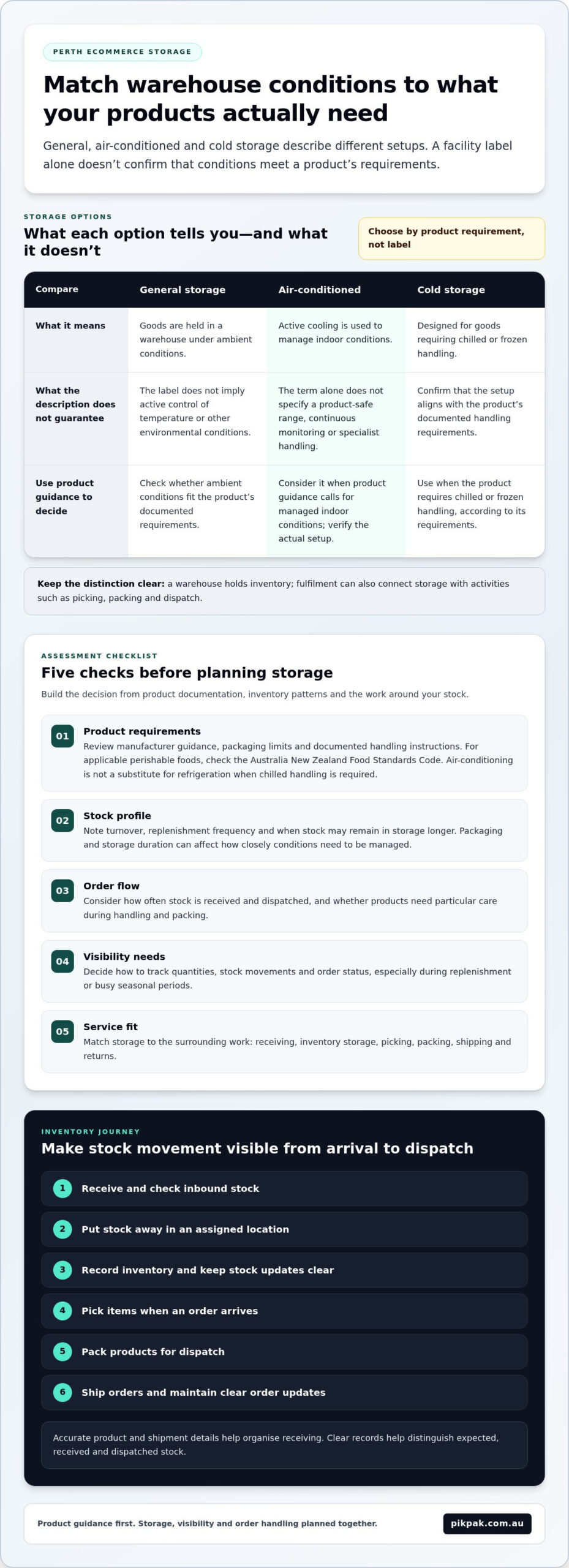
- General storage: Holds goods in a warehouse without implying active control of temperature or other environmental conditions.
- Air-conditioned storage: Uses cooling to manage indoor conditions, but the term alone doesn’t specify a product-safe range or level of monitoring.
- Cold storage: Supports products that require chilled or frozen handling, according to their documented requirements.
Choose storage based on product needs, not the facility label. Keep a record of each product’s handling instructions, packaging, sensitivities and expected storage duration. This gives you a practical basis for planning storage alongside receiving, pick-and-pack and shipping. Pik Pak provides warehousing and fulfilment services that connect inventory storage with order handling.
How Perth Ecommerce Businesses Can Assess Warehouse Conditions
Use a practical assessment to connect product needs with the way stock moves through your operation. For ecommerce fulfillment perth, this helps separate documented requirements from assumptions about local weather or a warehouse’s general description.
Start with product requirements and inventory patterns
Work through these five points before planning storage:
- Product requirements: Review manufacturer guidance, packaging limits and documented handling instructions. For applicable perishable foods, check the Australia New Zealand Food Standards Code for food safety requirements. Don’t treat air-conditioning as a substitute for refrigeration where chilled handling is required.
- Stock profile: Note turnover, replenishment frequency and when stock may remain in storage for longer. Packaging and storage duration can affect how closely conditions need to be managed.
- Order flow: Consider how often stock is received and dispatched, and whether products need particular care during handling and packing.
- Visibility needs: Decide how you’ll track quantities, stock movements and order status, especially during replenishment or busy seasonal periods.
- Service fit: Match storage to the work around it, including receiving, inventory storage, picking, packing, shipping and returns.
Perth’s seasonal conditions may be relevant to planning, but they don’t reveal the conditions inside a particular facility. Base decisions on product documentation and the storage setup. Keep confirmed requirements separate from questions that still need an answer.
Map the warehouse workflow from receiving to dispatch
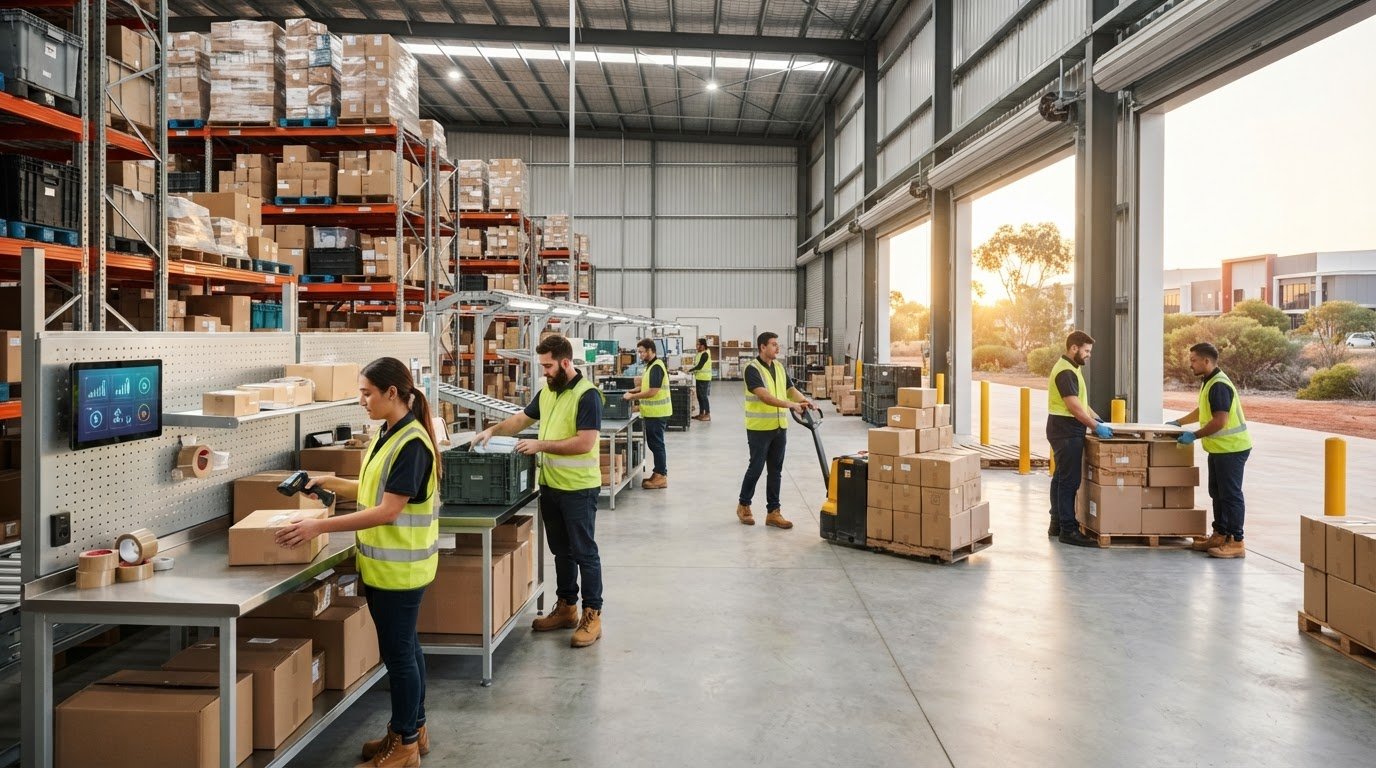
Trace each product’s journey: inbound stock is received and checked, put away in an assigned location, recorded in inventory, picked when an order arrives, packed for dispatch and shipped. Clear records at each step help you see what’s available and distinguish expected, received and dispatched stock.
Inbound planning is a useful place to start. Provide accurate product and shipment details so receiving can be organised around the stock arriving. Pik Pak’s warehouse receiving guidelines explain this part of the process. Then identify where careful handling or timely stock updates matter most, from put-away through packing. Pik Pak connects storage with picking, packing, shipping and inventory visibility to support an end-to-end workflow. Explore Pik Pak’s ecommerce fulfilment support as you plan around your products and order patterns.
Compare Warehouse and Fulfilment Capabilities Before Choosing
A warehouse provides space and manages stock storage. End-to-end ecommerce fulfilment links storage to receiving, inventory records, order processing, packing, dispatch and returns. For ecommerce fulfillment perth, compare how each part of the workflow operates, not just labels such as “full service” or “climate controlled”. Start with documented product requirements, then assess how the operation supports them.
What should a warehouse comparison include?
Use the same practical criteria to compare fulfilment arrangements. Focus on how stock moves and what information you can see at each stage.
Assess storage conditions and fulfilment performance separately. A facility label doesn’t establish that product requirements are met, and storage alone doesn’t explain how orders or returns are handled. The Australasian Supply Chain & Logistics Association offers industry context for logistics planning. For your own assessment, look at the connected process rather than one isolated function.
How does technology support warehouse control?
A warehouse management system (WMS) centralises inventory and order-status information, helping you follow stock from receipt through dispatch. Integrations connect an online store with fulfilment operations, reducing manual transfer of order details and helping keep records aligned.
Pik Pak’s cloud-based WMS provides real-time inventory and order-status visibility. API access and pre-built connectors integrate online stores with fulfilment operations, helping order information flow into the workflow. These tools give you a clearer view of stock and order progress.
Plan Perth Inventory, Customer Delivery, and Returns as One Workflow
Storage decisions work best when they account for what happens after stock arrives. For ecommerce fulfillment perth, map each hand-off from inbound inventory to customer delivery and back through returns. This highlights where product handling, stock records and order information need to stay connected.
Connect inventory visibility with fulfilment decisions
Current inventory and order statuses help you make practical decisions: whether stock is available to sell, when to replenish, and which orders are awaiting processing or dispatch. Keep these views distinct. Inventory tells you what’s on hand; order status shows where customer purchases are in the workflow.
When online-store orders feed into fulfilment systems, teams can reduce repetitive manual entry and work from more consistent order information. A cloud-based warehouse management system (WMS) can centralise inventory and order-status updates, giving you a clearer operational picture without promising a particular dispatch outcome.
Include delivery and returns in the operating plan
After an order is picked and packed, it moves to dispatch and is handed over for delivery. Plan delivery options around customer locations, order patterns and business priorities. For example, customer locations and order mix can help you decide which home delivery options to present at checkout. Pik Pak’s home delivery shipping options can be part of this plan.
Returns belong in the same workflow, not in a separate pile of tasks. Define how returned goods are received and processed, and how each outcome updates inventory records. A returned item may need assessment before it can be recorded as available stock. Clear status updates help distinguish returned, sellable and dispatched inventory.
Then align storage with stock movement. Expected order patterns, replenishment frequency and periods of slower turnover all affect how much inventory you hold and for how long. Connecting these decisions to delivery and returns gives you a more useful view of the operation than considering warehouse space alone.
Keep the process manageable: connect stock records, order updates, dispatch and returns, then review how each step supports your priorities for Perth customers. Plan your ecommerce fulfilment workflow with Pik Pak.
Build a Perth-Ready Ecommerce Fulfilment Plan with Pik Pak
A practical plan starts with your products and the way customers order them. Document handling requirements, map each step from inbound stock to delivery and returns, and decide what inventory and order information you need to see. Then match storage and fulfilment tasks to that workflow. This product-led approach helps Perth-serving businesses plan ecommerce fulfillment perth without relying on broad facility labels or assumptions about warehouse conditions.
How Pik Pak Logistics connects storage with ecommerce fulfilment
Pik Pak Logistics connects key fulfilment activities: storing inventory, picking and packing orders, shipping them and processing returns. Kitting and assembly can also prepare products together as sets. These services bring storage and order handling into a coordinated process shaped around your products and order profile.
A cloud-based warehouse management system (WMS) provides real-time inventory and order-status visibility, so you can follow stock and orders through the operation. Online stores connect through API access and pre-built connectors, helping order information flow into fulfilment rather than relying on repeated manual transfers. Explore Pik Pak Logistics’ warehousing and fulfilment services to see how storage and order handling work together.
What to prepare for a fulfilment planning conversation
Bring practical details that make it easier to shape a workable process:
- Product handling: Manufacturer guidance, packaging constraints and documented storage or handling requirements.
- Inventory profile: Product range, stock levels, replenishment patterns and likely periods of extended storage.
- Order flow: Typical order volumes, sales channels and recurring peaks or changes in order mix.
- Operational needs: Returns processes, kitting or assembly requirements, and the inventory and order updates you need to access.
These details connect storage decisions to receiving, picking, packing, dispatch and returns, rather than treating each task as a separate arrangement. They also help clarify how product requirements and fulfilment visibility fit together. With the workflow defined, you can delegate day-to-day logistics and focus more time on growing your business.
Ready to put your requirements into a practical plan? Discuss an ecommerce logistics solution with Pik Pak Logistics.
Put Your Perth Fulfilment Plan into Action
Choose storage based on documented product requirements, not assumptions or a warehouse label. Then assess how inventory moves through receiving, storage, picking, packing, dispatch and returns. For ecommerce fulfillment perth, a useful plan connects storage needs with clear stock and order visibility, so you can manage the whole process with confidence.
Pik Pak brings inventory storage, pick and pack, shipping, returns processing and kitting into a connected ecommerce workflow. Its cloud-based WMS provides real-time inventory and order-status visibility, while API access and pre-built connectors link online stores with fulfilment operations. These tools help you follow stock movement and order progress.
Start with product handling guidance, your inventory profile and order patterns. Then shape a fulfilment setup around your business needs. Plan your ecommerce logistics with Pik Pak and take the next step towards a more manageable operation, with more time to focus on growing your business.
Frequently Asked Questions
Does every ecommerce business in Perth need an air-conditioned warehouse?
No, air-conditioned storage isn’t necessary for every Perth ecommerce business. The right conditions depend on documented product handling requirements, packaging and expected storage duration. Review manufacturer guidance first, then consider whether seasonal operating conditions could affect your stock. For ecommerce fulfillment perth, choose storage based on product needs rather than assuming all inventory requires active cooling.
How do I know whether my products need air-conditioned storage?
Check manufacturer instructions and any documented product-specific storage requirements. Consider whether your goods are sensitive to heat or moisture, how protective their packaging is, and how long they may remain in storage. Products in categories such as cosmetics or electronics can have different handling needs, so don’t assume every item requires air-conditioning. Use the requirements for your specific product to guide the decision.
What is the difference between air-conditioned storage and cold storage?
Air-conditioned storage uses cooling to manage indoor conditions, but the term alone doesn’t specify a product-safe temperature range or specialist monitoring. Cold storage is intended for goods requiring chilled or frozen handling. General storage doesn’t necessarily include active temperature control. Match the storage type to documented product requirements, especially for goods with specific handling needs, rather than relying on a facility label alone.
Can a 3PL manage storage, picking, packing, and returns together?
Yes. Pik Pak Logistics manages ecommerce fulfilment activities that connect inventory storage with picking, packing, shipping and returns processing. Linking these steps keeps stock movements and orders within one operational workflow. Kitting is also available for preparing multiple products together. This gives businesses a coordinated approach to order handling instead of managing storage and post-purchase returns as separate tasks.
How does a warehouse management system help track ecommerce inventory?
A warehouse management system (WMS) records inventory and order-status information in one platform. Pik Pak’s cloud-based WMS provides real-time visibility, helping you follow stock and see order progress through fulfilment. Online-store integrations using API access and pre-built connectors can transfer order information into the workflow, reducing repetitive manual entry. These tools make it easier to maintain an operational view of inventory and orders.
What should I prepare before moving ecommerce inventory to a fulfilment warehouse?
Prepare product handling instructions, packaging details, an inventory profile, replenishment patterns and expected storage duration. Include typical order volumes, sales channels, and any requirements for kitting, returns processing or inventory reporting. Clear product and inbound shipment information helps organise receiving and stock records. A defined order flow also helps align storage, picking, packing and dispatch with your business needs.
Can ecommerce fulfilment support orders delivered to customers across Australia?
Yes. Ecommerce fulfilment can connect order processing with home delivery shipping options for customers across Australia. Pik Pak Logistics provides pick, pack and ship services and home delivery options, with order-status visibility through its WMS. Plan around customer locations, order patterns and delivery priorities, and make sure your fulfilment workflow carries order information from your online store through packing and dispatch.