What if a fulfilment walkthrough could make the whole order journey easier to picture, from stock arriving at a warehouse to a parcel reaching your customer? If you’re searching for a demo pikpak, it’s reasonable to want more than a list of services. You want to see how the process works in practice and understand what happens when you hand over picking, packing, shipping and returns.
A Pik Pak Logistics walkthrough helps you follow an order through each stage and understand how the web-based WMS supports inventory and order-status visibility. It also shows how store integrations move order information into fulfilment, so you can assess how the workflow fits your business. This article explains what to look for, what details to prepare and how to connect the service to your day-to-day priorities. You’ll get a clearer picture of the handover, the technology behind it and how outsourcing fulfilment can free up time for your core business.
Key Takeaways
- A demo pikpak walkthrough is about Pik Pak Logistics and eCommerce fulfilment, not cloud storage.
- Trace the fulfilment stages to understand how inventory becomes a packed, dispatched customer order.
- See how the web-based WMS provides visibility into inventory and order status, and assess how integrations fit your store systems.
- Prepare a high-level picture of your order patterns, product range, storage needs and current fulfilment challenges.
- Compare the workflow and technology with your day-to-day priorities to decide on your next steps.
Pik Pak Demo: What eCommerce Businesses Can Expect to See
Searching for a demo pikpak can lead to more than one kind of service. This guide is about Pik Pak Logistics, an Australian eCommerce fulfilment provider, and the practical steps involved in storing and sending customer orders. A logistics walkthrough shows how those steps connect and how the supporting technology helps you follow inventory and orders.
Pik Pak Logistics provides warehousing, order fulfilment, pick and pack, shipping, returns processing, kitting and access to a web-based WMS. These services work together to move inventory from storage through to customer delivery, with returns processing supporting the reverse journey. A walkthrough can help you understand how this workflow relates to your products, sales channels and operating priorities.
Why PikPak search results can point to different services
“PikPak” is also used by cloud-storage services, so a search may surface information about saving or viewing files. Those services are separate from Pik Pak Logistics. For Australian online businesses, the relevant questions are how stock moves through warehousing and fulfilment, and how order information stays visible along the way.
Keep the distinction in mind as you explore a demo pikpak: cloud-drive features have no bearing on warehouse operations. Focus instead on the logistics workflow, eCommerce integrations and the handover of fulfilment tasks.
What a fulfilment walkthrough should help you understand
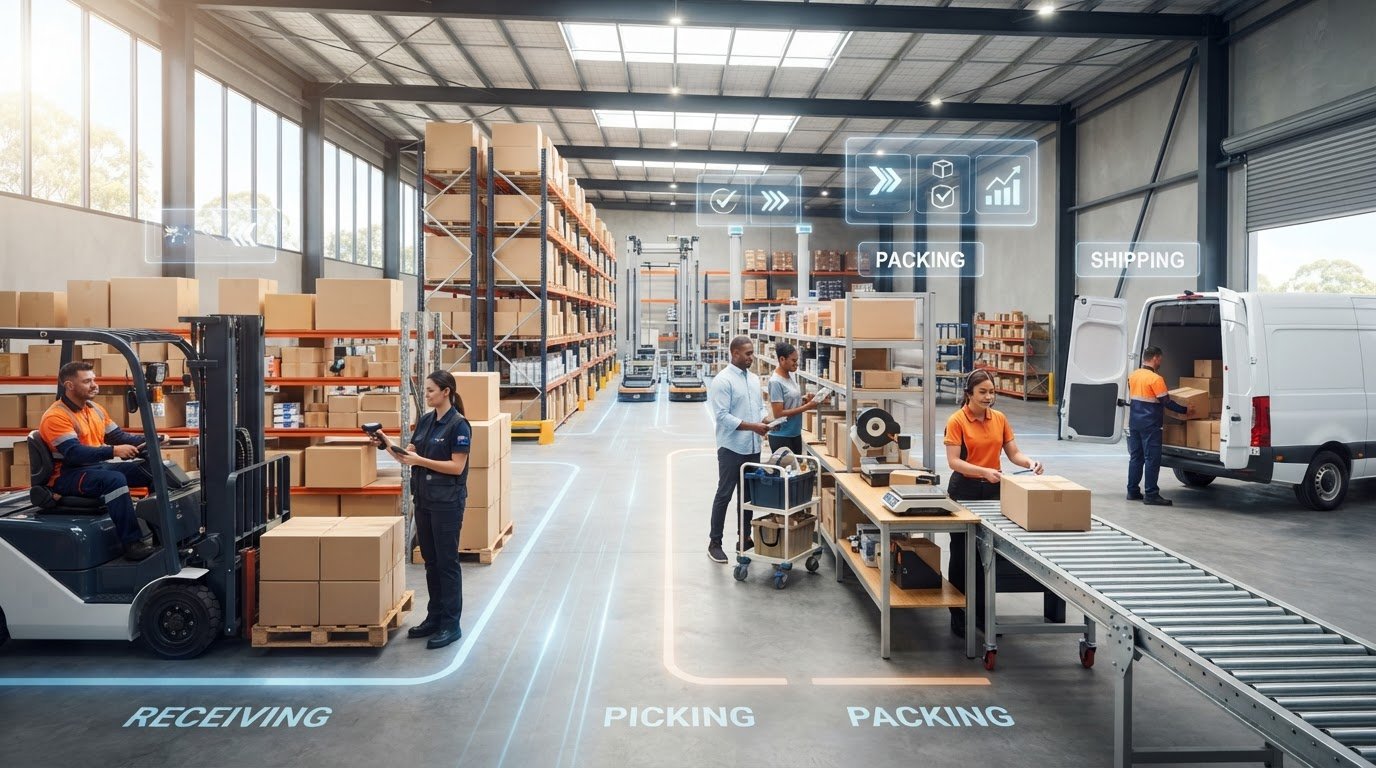
Start with the complete order journey. Inventory arrives at the warehouse, is received and stored, then an order comes through from your sales channel. Warehouse staff pick the required items, pack the order and prepare it for dispatch and customer delivery. Returns processing handles the journey back when a customer sends an item back. This is the practical context for understanding how eCommerce fulfilment works.
Look at how the web-based WMS supports visibility at key points. Pik Pak’s platform provides real-time inventory and order-status visibility, helping you follow stock and see where an order is in the process. This can make the operational handover clearer, especially if you currently manage stock and orders across separate systems.
For a broader view of the warehousing and order fulfilment services available to Australian eCommerce businesses, explore Australian warehousing and fulfilment. Connect that service scope to your own products, sales channels and day-to-day priorities. The goal is a clear picture of how fulfilment can run, not a tour of unrelated technology.
Follow an eCommerce Order Through the Pik Pak Fulfilment Workflow
A useful demo pikpak discussion traces the physical product and its order information through the same fulfilment journey. That makes it easier to see where warehouse processes begin, how store orders reach the fulfilment team and how you can follow progress in the web-based WMS.
From warehouse receiving to an available order
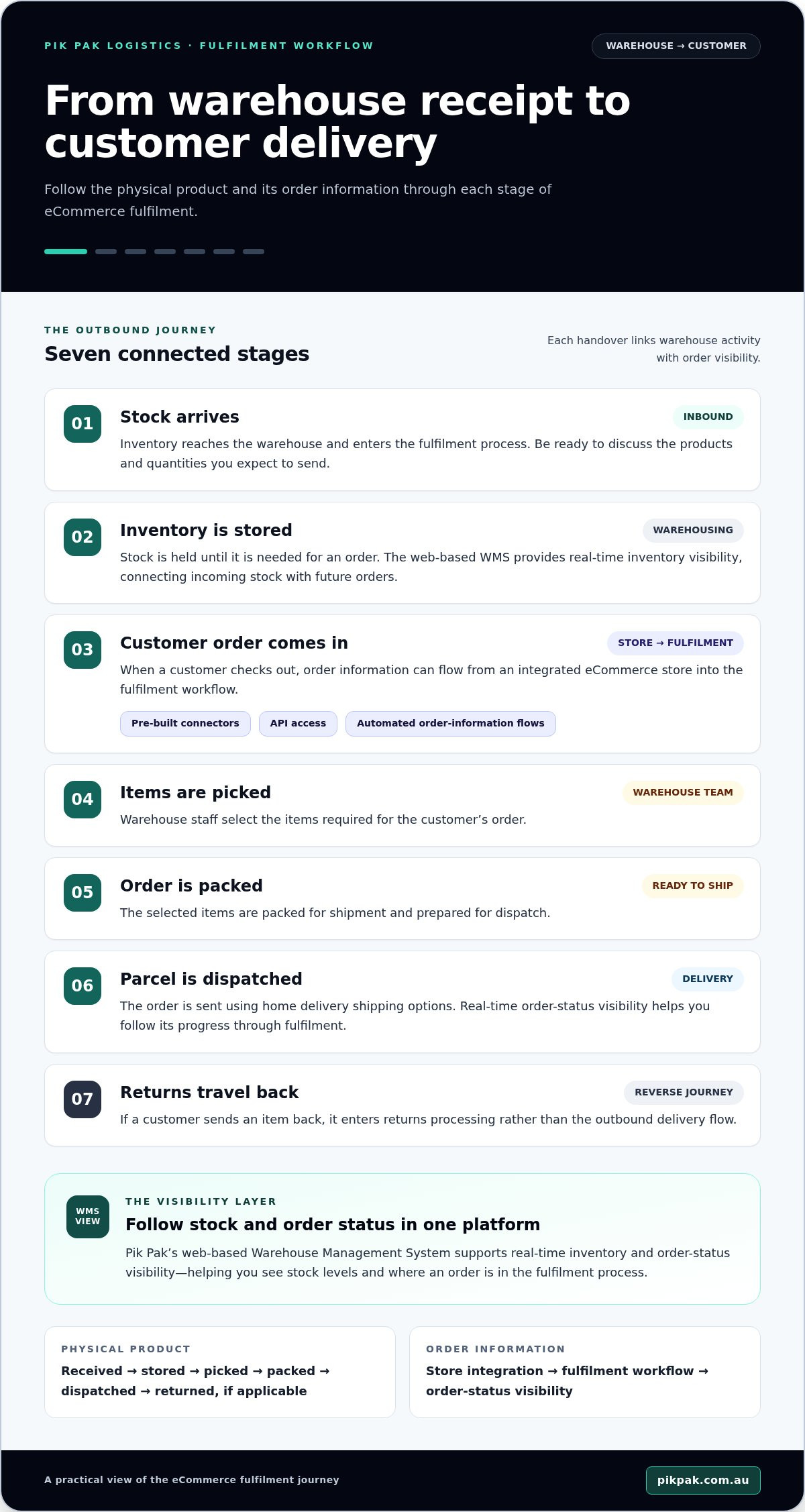
The journey starts when your stock arrives at the warehouse. Receiving brings inventory into the fulfilment process, then the stock is stored until it’s needed for an order. When planning inbound stock, have a clear view of the products and quantities you expect to send. This helps you discuss how receiving and storage fit into your wider inventory process.
Once inventory is in the warehouse, the WMS gives you visibility into stock levels. That view helps connect incoming inventory with future orders, rather than relying on disconnected manual updates.
From customer checkout to delivery and returns
When a customer places an order, information can flow from an integrated eCommerce store into the fulfilment workflow. Pik Pak’s pre-built connectors and API access support automated order-information flows. The warehouse team then picks the ordered items, packs them for shipment and prepares them for dispatch using home delivery shipping options.
In plain English, stock arrives and is stored, a customer order comes in, the items are picked and packed, then dispatched for delivery.
As the order progresses, the web-based WMS provides real-time order-status visibility, helping you see where it is in the fulfilment process. A Warehouse Management System (WMS) helps organise warehouse inventory and orders. In practice, the value is being able to follow stock and order status through one platform.
Returns run in reverse: a customer sends an item back, and the returned stock enters returns processing rather than the outbound delivery flow. This reverse-logistics step is part of the wider service, alongside warehousing, picking, packing and shipping.
Use the walkthrough to picture each handover and note where you need visibility, from stock receipt to delivery and returns. For more on the end-to-end service, explore Pik Pak’s warehousing and fulfilment information.
To see how these stages connect with your eCommerce operation, learn more about Pik Pak Logistics.
Assess Pik Pak’s WMS, Integrations, and Fulfilment Fit
A demo pikpak walkthrough helps you connect platform capabilities with the needs of your operation. Pik Pak’s web-based WMS provides real-time inventory and order-status visibility. API access and pre-built connectors support automated order-information flows. To assess the fit, consider your store setup, order journey and inventory needs together.
Focus on the information you need to manage day to day. For example, inventory and order-status visibility can help you follow stock and check an order’s progress. Think through situations such as a stock discrepancy, a busy period or a customer return, then consider how the fulfilment workflow supports the way your team handles them. This gives you a more useful basis for evaluating the service than a feature list alone.
What to look for in inventory and order visibility
Consider the practical decisions you make using stock and order information. Can you see what inventory is held and follow an order through fulfilment? Clear visibility can support routine planning and make handovers easier to understand. Explore Pik Pak’s technology support and integration to see how the platform supports fulfilment operations.
How to assess integration and service fit
Map your current process before discussing integration: where orders are placed, how order details reach fulfilment, and how inventory is managed. Then consider where automated information flow could reduce manual steps. Pre-built connectors support eCommerce integrations, while API access provides a way to connect systems through an interface. Describe your actual process and the systems involved so you can assess how the integration fits.
Use this compact guide to keep the conversation grounded in your business:
| Business need | Relevant capability | Point to explore |
|---|---|---|
| Check stock status | Real-time inventory visibility in the WMS | How stock information supports your routine decisions |
| Follow customer orders | Real-time order-status visibility | Which stages matter most to your team |
| Connect store and fulfilment | Pre-built connectors and API access | How order information flows between your systems |
| Match service to operations | Warehousing and fulfilment workflow | How your products, order patterns and priorities fit the process |
Bring a typical order and a real operational challenge into the discussion. For example, describe how a store order currently reaches your fulfilment team or where inventory information is difficult to follow. This gives you a clearer basis for assessing technology and fulfilment fit, and keeps the conversation focused on what your business needs.
Prepare for a Pik Pak Demo with These Business Details
A little preparation helps make a demo pikpak discussion specific to your operation. You don’t need a perfect forecast or a stack of paperwork. Bring a clear, high-level picture of what you sell, how orders move today and where fulfilment takes up the most time. That context makes it easier to explore workflow, integration and service fit against your real priorities.
Share the operating picture behind your orders
Summarise your product types and approximate SKU count, along with your usual order patterns. Note whether orders are steady or fluctuate, and flag seasonal peaks that affect stock or dispatch. Then describe how inventory is currently stored, how orders are picked and packed, and how shipping and returns are handled. Keep the overview practical: no customer-level personal data is needed to explain your process.
Set clear priorities for the walkthrough
Rank the areas you most want to understand. These might include connecting your store system, seeing inventory and order status, arranging customer delivery, processing returns or handling kitting and assembly. Describe any bottleneck in plain terms, such as manual order updates or limited space for stock. You can also review the warehousing questions and answers to help shape the discussion.
Before the walkthrough, jot down a few points about your current systems and fulfilment steps. Include what you expect from delivery and returns, and where you’d like more visibility or a simpler handover. This isn’t a formal assessment. It’s a practical way to make sure the conversation reflects how your business operates.
Use this short checklist to assess the fit:
- Visibility: Can you see the inventory and order-status information you need?
- Workflow: Is the path from store order to pick, pack and dispatch clear?
- Integration: Does the discussion address how order information moves from your current system?
- Operational fit: Have you covered storage needs, delivery expectations, returns and any kitting requirements?
- Priorities: Did you explain seasonal peaks and the fulfilment tasks you most want to simplify?
Use your answers to identify points that need more detail, then compare the workflow with your everyday requirements. Explore Pik Pak Logistics fulfilment support and bring your priorities into the next conversation.
Next Steps After Your Pik Pak Fulfilment Walkthrough
A walkthrough is most useful when you turn what you’ve learned into a practical fit check. Compare the workflow and platform capabilities with the way your business handles orders day to day. Look beyond whether each service sounds relevant. Consider how warehousing, fulfilment and the WMS work together to support your priorities, from stock storage to customer delivery and returns.
Turn the walkthrough into a practical decision
Review your notes against the needs you shared. Did the discussion cover the stages that matter most, such as receiving stock, processing orders, pick and pack, shipping or returns? Did the WMS visibility and integration approach make sense for your store and inventory process? List any open workflow questions so they can be addressed as you decide on next steps.
Keep the evaluation grounded in daily operations. For example, if manual order handling takes time away from other work, focus on how order information could flow into fulfilment. If stock visibility is a priority, consider whether the inventory information available supports the way you plan and manage orders. For further context on the end-to-end process, use Pik Pak’s complete order fulfilment guide.
Discuss your fulfilment requirements with Pik Pak
Bring your current setup and growth priorities into the conversation. Share how your store takes orders, what your product range and storage needs look like, and which fulfilment tasks you want to hand over. Include delivery expectations, returns requirements and any kitting or assembly needs. This gives the discussion a clear operational basis.
Pik Pak’s warehousing, pick-and-pack, shipping, returns processing and WMS access are connected parts of the fulfilment service. The workflow can be shaped around your project and operating needs, so you can focus the discussion on the parts that matter to your business. A demo pikpak walkthrough should leave you better able to compare that workflow with your priorities, not add another layer of complexity.
- Review fit: Match the discussed services to the work you need to delegate.
- Check the workflow: Make sure the order journey and handovers are clear.
- Consider the technology: Compare inventory visibility and integration with your store processes.
- List open questions: Note any operational details you still need to understand.
Ready to discuss your current fulfilment setup and what you need next? Discuss your eCommerce fulfilment requirements with Pik Pak.
Make Your Next Fulfilment Step with Confidence
A useful demo pikpak discussion should help you picture the full order journey and compare it with the way your business operates. You’ve seen how fulfilment connects warehousing, pick and pack, shipping and returns, and how a cloud-based WMS provides real-time inventory and order-status visibility.
Technology matters too. Pik Pak’s pre-built connectors and API access support eCommerce order-information flows, while the WMS gives you a way to follow stock and orders. Bring your order patterns, storage needs, current systems and operational priorities into the conversation. That context helps make the next steps practical and relevant to your business.
Ready to explore how these services could fit your operation? Discuss your eCommerce fulfilment requirements with Pik Pak Logistics. With fulfilment tasks handled through a connected service, you can focus more of your time on your core business.
Frequently Asked Questions
What is a Pik Pak demo?
A Pik Pak demo is a practical way to understand Pik Pak Logistics’ eCommerce fulfilment workflow, platform capabilities and fit for your business. This demo pikpak guide covers logistics, not a similarly named cloud-storage product. Use a walkthrough to explore how stock is stored, customer orders are handled and fulfilment information is managed, then relate those capabilities to your store systems and operational priorities.
What can I expect to see in a Pik Pak Logistics demo?
You can explore the order journey from inventory receiving and storage through order receipt, picking, packing and dispatch, as well as returns processing. Pik Pak’s web-based WMS provides real-time visibility of inventory and order status. A useful walkthrough connects these capabilities to your business needs, helping you understand the workflow and how it fits your operation.
Can Pik Pak integrate with my eCommerce store?
Yes. Pik Pak provides API access and pre-built connectors to integrate eCommerce platforms and support automated order-information flows. To assess the fit, bring a clear picture of your current store system, how orders are processed and how you manage inventory. Integration supports fulfilment operations by helping order information flow between systems. It doesn’t replace your online storefront, where customers browse and place orders.
How does Pik Pak track inventory and orders?
Pik Pak’s cloud-based Warehouse Management System (WMS) provides real-time visibility of inventory and order status. Think of the WMS as the platform that helps connect stock information with fulfilment activity. This visibility can help you follow inventory and understand order progress through the workflow. It gives businesses a shared view of logistics information through one platform.
What information should I prepare before a fulfilment walkthrough?
Prepare a high-level overview of your product types, approximate SKU count, order patterns and storage needs. It also helps to describe your current store systems and the steps you use to process, pack and ship orders. Note your delivery expectations, returns process and any kitting requirements. The aim is to make the discussion relevant to your operation, not to complete a fixed document checklist or provide customer-level data.
Does Pik Pak handle returns as well as outbound orders?
Yes. Pik Pak’s eCommerce fulfilment service includes returns processing and reverse logistics alongside warehousing, picking, packing and shipping. Outbound fulfilment moves products from storage to customers; reverse logistics handles products coming back through the fulfilment operation. Include returns in your workflow overview so the discussion covers how they fit into your overall fulfilment needs.
Is Pik Pak Logistics the same as the PikPak cloud drive?
No. Pik Pak Logistics is an Australian third-party logistics provider focused on eCommerce warehousing and fulfilment. Some search results for “PikPak” refer to a separate private cloud-drive service for saving and viewing files. They’re different services. For an online store, the relevant workflow is physical inventory moving through storage, order fulfilment, delivery and returns, supported by logistics technology.