The closest warehouse isn’t always the right pick-and-pack partner. A pick and pack warehouse melbourne search can also bring up warehouse job listings, making it harder to find a service for your online store. If packing orders in-house is taking time away from growth, proximity alone won’t tell you whether outsourcing will make fulfilment easier to manage.
To compare providers, look at how orders move from your store to dispatch, how clearly you can see inventory and order status, and what happens when a customer returns an item. These details affect the customer experience and how much oversight your team needs to retain.
This guide explains what a pick-and-pack warehouse does and how to compare Melbourne 3PL providers using practical criteria. You’ll review workflows, WMS visibility, eCommerce integrations, returns handling and service scope, then prepare questions to ask before sending stock or connecting your store.
Key Takeaways
- Know what a pick-and-pack warehouse does, and distinguish fulfilment services from warehouse job listings.
- Follow the order journey from stock receipt to dispatch to see where accurate, synchronised inventory data matters.
- Compare a pick and pack warehouse melbourne on service scope, systems, stock visibility, returns handling and communication.
- Prepare your stock profile, order patterns, packaging needs and returns expectations before discussing onboarding.
- Check how a provider’s storage, fulfilment, shipping, returns and kitting services fit your needs, and confirm integrations and delivery coverage directly.
Pick and Pack Warehouse Melbourne: What eCommerce Businesses Actually Need
Searching for a pick and pack warehouse melbourne can bring up job advertisements for pick-packers. Those listings are for people seeking warehouse work, not online stores looking to outsource fulfilment. A pick-and-pack warehouse service is a business arrangement: a provider stores your stock, selects items for customer orders, packs them and arranges dispatch.
Outsourcing may make sense when order handling is taking time away from sales, product development or customer support, or when your current space and team can’t comfortably manage fulfilment. The aim isn’t to lose oversight. It’s to delegate daily order handling while retaining a clear view of stock and order progress.
What does pick and pack mean for an online store?
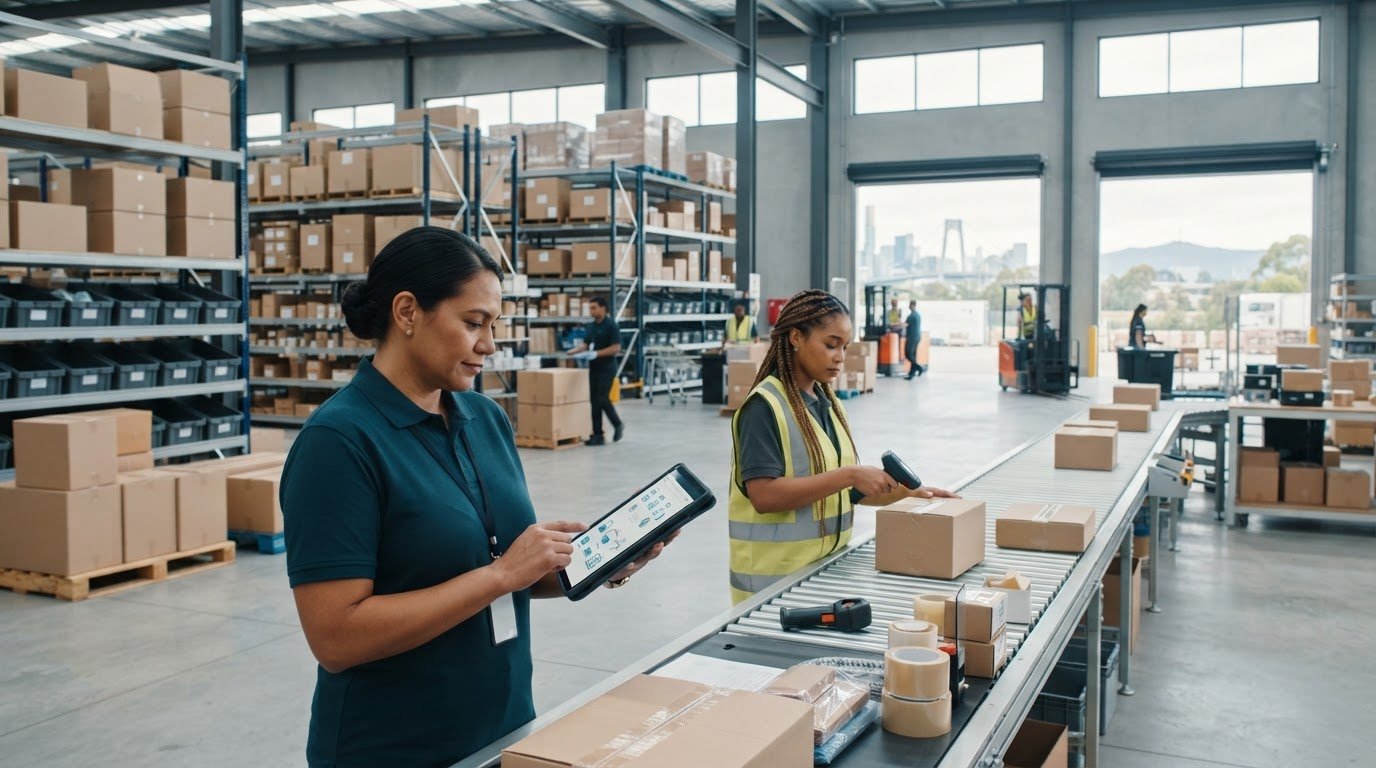
The process starts when a customer orders through your online store. Order details need to reach the warehouse, where staff locate the correct product and quantity, pack the items and prepare them for shipping. Inventory records should update as orders are processed, so your store and warehouse aren’t relying on different stock figures. This is one part of the broader order fulfillment process, from purchase through delivery.
Storage, picking, packing and dispatch form the core service. Returns processing and kitting, which combines items into a prepared set, are additional capabilities to confirm with each provider. Review warehousing and fulfilment services to understand how these activities may fit together for an online store.
Is a nearby warehouse always the best choice?
Not necessarily. Location matters, but so do delivery coverage, dispatch processes and visibility of inventory and order status. A nearby facility doesn’t confirm which delivery options are available or how orders will be handled. Ask providers to confirm the facility location and explain how their service supports deliveries to your Melbourne customer locations.
Before choosing, check the practical details directly:
- Where is the stock held, and which Melbourne-area delivery destinations are covered?
- How are orders sent to the warehouse, and how can you track their status?
- Which dispatch processes and shipping options can the provider confirm for your needs?
For example, a store with customers across metropolitan Melbourne should assess coverage across those delivery areas, not simply select the closest-sounding warehouse. Confirm the arrangements with the provider rather than assuming proximity guarantees a particular delivery timeframe. Clear answers make it easier to compare fulfilment fit before moving stock.
How a Pick-and-Pack Warehouse Handles an eCommerce Order
A fulfilment workflow connects your stock, online store and dispatch process. Each handover should be clear: the warehouse needs accurate information about what has arrived, what a customer ordered and what has left the facility. Understanding these stages helps you ask useful questions before choosing a provider.
From inbound stock to an order ready for dispatch
Receiving sets the starting point. Before sending stock, ask the provider what information and preparation it requires, then check its current instructions. Pik Pak’s warehouse receiving guidelines offer context for preparing an inbound delivery. Confirm any requirements that apply to your stock.
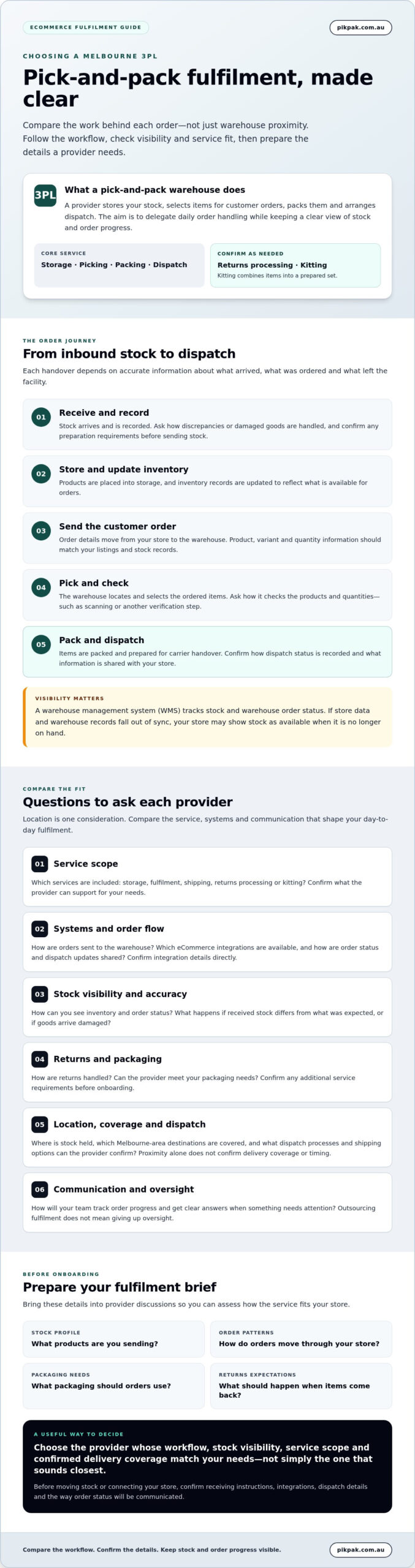
- Receive and record: Stock arrives and is recorded so the warehouse can account for the items received. Ask how discrepancies or damaged goods are handled.
- Store: Products are placed into storage, and inventory records are updated to reflect what is available for orders.
- Send the order: When a customer buys through your store, order details need to reach the warehouse. Product, variant and quantity information should match your listing and stock records.
- Pick and check: The ordered items are located and selected. Ask how the provider checks that the right products and quantities have been picked, and whether scanning or another verification step is used.
- Pack and dispatch: Items are packed and prepared for carrier handover. Confirm how dispatch status is recorded and what information is shared with your store.
How a warehouse management system supports order visibility
A warehouse management system, or WMS, tracks stock and warehouse order status. It connects online orders with the inventory held for fulfilment. If store data and warehouse records fall out of sync, your store may show products as available when stock is no longer on hand, or your team may struggle to answer a customer asking about an order.
Pik Pak’s cloud-based WMS provides real-time visibility of inventory and order status. API access and pre-built eCommerce connectors can support the flow of order information between a store and the warehouse. Before onboarding, check whether your platform is supported and ask about integration requirements. For wider context on the industry in Australia, see the Australian Logistics Council.
Connected records and clear processes can make outsourced fulfilment easier to oversee without requiring your team to manage every parcel. Explore warehousing and fulfilment services to see how storage and order handling can fit together.
Compare Melbourne Pick-and-Pack Warehouses on These Practical Criteria
A useful comparison goes beyond the facility’s address or headline price. Consider how each provider’s processes fit your products, order patterns and need for oversight. Assess a pick and pack warehouse melbourne on how it handles exceptions as well as how a standard parcel moves through the warehouse.
| Criteria | What to compare | Questions to ask |
|---|---|---|
| Service scope | Storage, pick-and-pack, shipping, returns and kitting | Which services are included, and which need separate arrangements? |
| Systems | Store connections, WMS access and order-data flow | Is my eCommerce platform compatible? What setup or API work is required? |
| Stock visibility | How inventory and order status are recorded and shared | How can I check stock levels and identify an order needing attention? |
| Returns | How returned items are received and processed | What steps are followed, and how will the outcome be communicated? |
| Communication | How routine questions and exceptions are handled | Who do I contact about a discrepancy, delayed order or special request? |
What should you check in warehouse technology and integrations?
Ask which eCommerce connectors are available, then confirm compatibility with your specific store setup. Don’t assume a listed connection covers every configuration. Find out who handles onboarding, whether API requirements apply and what support is available if order data stops syncing. Check how the WMS displays inventory, order status and exceptions, such as an order that needs attention. Pik Pak provides a cloud-based WMS with real-time inventory and order-status visibility, plus API access and pre-built connectors. See its technology support and integration details, and verify implementation requirements for your store.
How do you assess service scope and operational control?
Match the provider’s confirmed services to your current needs. Ask how it handles inventory discrepancies, incomplete orders and packing instructions that differ from your usual process. If an order needs a particular insert or protective packing, for example, clarify whether the request can be accommodated and how to document it. Also ask what information you’ll receive and how to raise routine questions.
These checks sit within the wider Australian freight and logistics environment. The government’s National Freight and Supply Chain Strategy provides broader context, while your decision should rest on the provider’s specific procedures. Compare answers against your operational priorities, then review questions about warehousing services to shape a fuller provider discussion.
Check Melbourne Coverage, Delivery Needs and Transition Readiness
A provider’s Melbourne focus doesn’t automatically confirm that its facility or delivery arrangements suit your customers. Before choosing a pick and pack warehouse melbourne, compare your actual delivery destinations and order needs with the provider’s confirmed coverage. Get specific answers rather than relying on a suburb name, map pin or assumed delivery timeframe.
Which Melbourne-area delivery questions should you ask?
Map where your customers are, including destinations outside metropolitan Melbourne if you ship across Victoria. Then ask where your stock would be held and which destinations the provider’s service covers. Confirm available home-delivery options, dispatch timing and carrier arrangements directly. Distinguish commitments the provider can confirm from estimates or assumptions based on location. Warehouse proximity alone doesn’t establish how quickly an order will arrive.
What information should you prepare before switching warehouses?
A smooth handover starts with clear information about your stock and how your store processes orders. Prepare details such as:
- Stock profile: SKU list, product variants, quantities on hand and any items requiring special handling.
- Order patterns: Typical order contents, common multi-item combinations and how order information should reach the warehouse.
- Packing needs: Packaging specifications, inserts or other instructions the provider needs to assess.
- Returns expectations: How returns should be received and what information you need about their processing.
Before stock moves, agree on how it will be received, counted and recorded, and how discrepancies will be raised. Confirm the store connection and who is responsible for setup. Discuss how to test order and inventory information before launch, the proposed transition timing, and how exceptions will be communicated once fulfilment begins. Check the provider’s current receiving and dispatch procedures rather than assuming they match your existing process.
Use these answers to assess practical fit: can the provider serve the destinations that matter, support your packing and returns needs, and explain the steps for connecting your store and moving stock? Review Pik Pak’s customer delivery services and confirm directly whether the arrangements meet your specific requirements.
Why Consider Pik Pak for Pick-and-Pack Fulfilment in Melbourne?
If you’re comparing a pick and pack warehouse melbourne for your online store, look for a service that takes daily fulfilment work off your team’s plate while keeping you informed. Pik Pak Logistics provides inventory storage, pick-and-pack, shipping, returns processing and kitting. Bringing these needs together can free up time for customer relationships, product development and growth.
Which businesses may benefit from Pik Pak’s fulfilment model?
Pik Pak may suit online stores looking to outsource stock storage, order handling and dispatch, particularly when packing in-house competes with other priorities. It may also be relevant if you need returns processing or kitting alongside standard fulfilment. The right fit depends on your products, order patterns and delivery needs, so discuss your specific requirements rather than assuming a particular volume or service arrangement will be available.
Delegating operations doesn’t mean giving up oversight. Pik Pak’s cloud-based WMS provides real-time visibility of inventory and order status. API access and pre-built eCommerce connectors can support information flow between your store and warehouse. Confirm which integration options suit your platform, what setup is involved and how the service supports the Melbourne-area destinations you need. Confirm the facility location and delivery arrangements directly.
What should you confirm before requesting a fulfilment proposal?
Give the provider a clear picture of your operation so it can assess fit. Be ready to discuss:
- Your products, SKU details, stock profile and expected storage needs.
- Typical order patterns, including common multi-item orders.
- Packaging instructions, kitting needs and any special handling requirements.
- Customer delivery locations and the home-delivery options you require.
- Your eCommerce platform, integration requirements and preferred reporting visibility.
- How you expect returns to be handled and what information you need about them.
Ask about receiving steps, store connection, inventory recording, dispatch and returns procedures. Confirm current service scope and implementation requirements directly before planning to move stock. For an overview of the service model, read Pik Pak’s logistics service overview.
Once you’ve gathered those details, discuss your fulfilment requirements with Pik Pak. A clear conversation about stock, orders, integrations and delivery coverage can help establish whether the service fits your online store.
Choose a Fulfilment Partner with Confidence
The right pick-and-pack warehouse melbourne choice isn’t simply the closest facility. Compare how orders move through the warehouse, how clearly you can see inventory and order status, and whether the provider’s services match your needs. Before committing, confirm delivery coverage for your customer locations, compatibility with your store and the practical steps for moving stock.
Pik Pak Logistics offers storage, pick-and-pack, shipping, returns processing and kitting. Its cloud-based WMS provides real-time inventory and order-status visibility, while API access and pre-built eCommerce connectors can support information flow between your store and warehouse. Check which integration options suit your platform and confirm Melbourne-specific delivery arrangements directly.
With those details clear, you can delegate day-to-day fulfilment while retaining useful oversight and more time for business growth. Discuss your pick-and-pack requirements with Pik Pak to explore whether its services fit your online store.
Frequently Asked Questions
What is a pick-and-pack warehouse?
A pick-and-pack warehouse is a fulfilment service that stores products for an online retailer and handles customer orders. The provider receives and records stock, stores it, picks the ordered items, packs them and arranges dispatch. This differs from hiring warehouse staff: outsourcing gives a business access to warehouse operations and fulfilment as a service, rather than employing people to work in its own facility.
How does pick and pack work for an eCommerce business?
An online order is sent from the store to the warehouse, where staff use the order details to pick the right products and quantities, pack them and prepare the parcel for carrier handover. Inventory records should reflect stock as it moves through the process, while order-status updates help you follow progress. Confirm how the provider and your store exchange these details to help keep both systems aligned.
How do I choose a pick-and-pack warehouse in Melbourne?
Compare a pick and pack warehouse melbourne by its service coverage, facility location, eCommerce integrations, stock visibility, returns handling and communication processes. Ask how the provider manages exceptions, such as an inventory discrepancy or an order that needs attention. Verify Melbourne-area delivery arrangements directly, including destinations served and available options. Clear answers help you judge operational fit, not just proximity or headline price.
Does a pick-and-pack warehouse need to be located in Melbourne?
No, the warehouse doesn’t necessarily need to be in Melbourne, but location is one factor to assess. Consider whether the provider covers your customer destinations, how dispatch is arranged, and whether its inventory and order-status information gives you enough oversight. Ask where your stock would be held and confirm the delivery options available for your needs. Proximity alone doesn’t guarantee a particular delivery speed or outcome.
Can a 3PL integrate with my online store?
Many 3PLs offer ways to connect an online store with their warehouse system, but available integrations vary by provider and platform. Ask which connectors are available, whether they support your store setup, and whether API requirements or additional configuration apply. Confirm how order and inventory information stays synchronised, who manages onboarding and what support is available if the connection needs attention. Pik Pak offers API access and pre-built eCommerce connectors.
What services should a pick-and-pack warehouse provide?
Core fulfilment typically covers receiving and storing inventory, picking ordered products, packing them and arranging dispatch. Your business may also need returns processing, kitting or access to warehouse technology, so check whether each capability is included in the provider’s service scope. For example, a store selling products as prepared sets should ask whether kitting is available and how instructions are managed. Choose services that match your operation, not a generic checklist.
How do I move my inventory to a new fulfilment warehouse?
Start by preparing an accurate stock list with SKU details, product variants and quantities. Ask the new provider to confirm its current receiving requirements and how incoming stock will be counted and recorded. Plan the store integration and test order information before launch. Then compare the recorded warehouse inventory with your own records, resolve discrepancies and agree on a transition sequence with the provider, including how dispatch and exceptions will be handled.