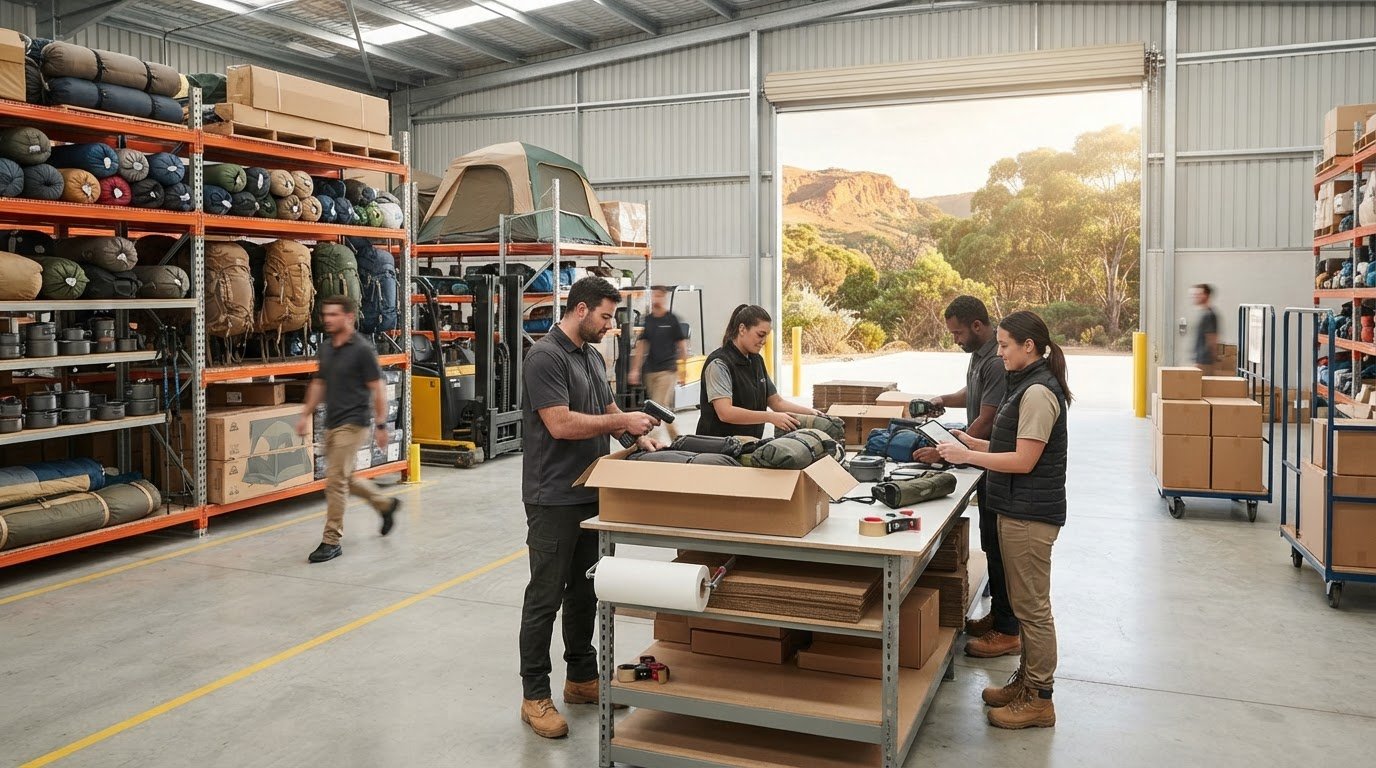
What if the biggest fulfilment challenge isn’t getting orders out the door, but keeping every part of the operation working together? Bulky items, small components and multi-part products can complicate storage and picking, while seasonal peaks put extra pressure on stock and staffing. Effective fulfillment for camping and hiking gear needs to account for that complexity, not just the number of parcels leaving the warehouse.
It makes sense to want reliable order processing without taking on the daily work of running a warehouse. But a setup that works in a quiet month may struggle when demand shifts, promotions bring in more orders or returns need processing. Clear inventory and order visibility can help you make informed decisions as conditions change.
This guide explains how to assess outdoor-gear fulfilment needs, compare operational fit and prepare for a 3PL. We’ll look at how receiving, storage, picking, packing, kitting and returns work together, and how a web-based WMS can keep stock and order status visible. The goal is a dependable operation that leaves you more time for your products, customers and business.
Key Takeaways
- Map product dimensions, components and packaging needs to understand how catalogue variety affects receiving, storage and picking.
- Assess fulfillment for camping and hiking gear by looking for clear processes for SKU identification, picking checks and packing.
- Weigh the benefits of delegating daily fulfilment against the need for visibility and coordination, especially during seasonal peaks.
- Prepare products for a 3PL with accurate identifiers, dimensions, packaging details and instructions for each product or kit.
- See how WMS visibility, ecommerce integrations and kitting can connect orders and inventory while giving you more time to focus on growth.
Why Camping and Hiking Gear Brands Need a Fulfilment Setup Built for Variety
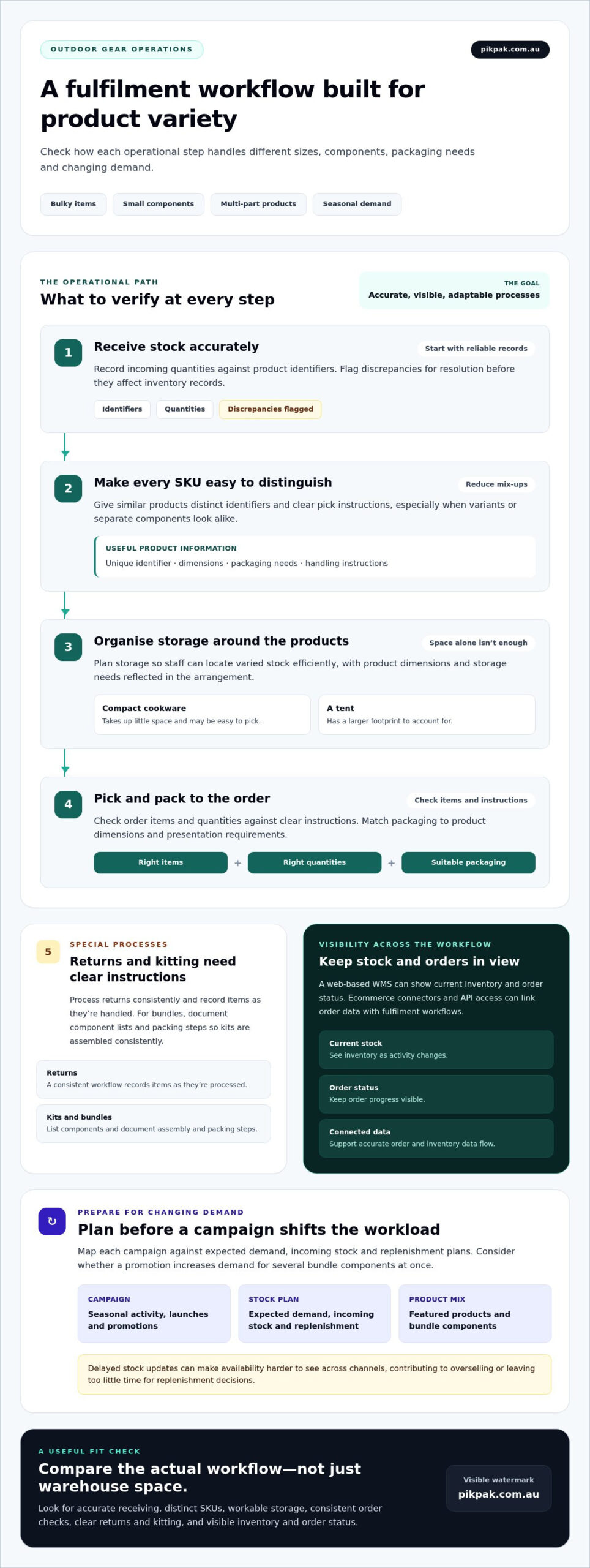
A few orders can be managed with a simple routine. As a camping and hiking brand grows, that routine needs to handle products with different sizes, components and packing needs, as well as changing demand. A compact cookware item takes up little space and may be easy to pick. A tent has a larger footprint, while a multi-part product or promotional kit needs clear instructions so every component is included.
These differences affect the entire workflow. Receiving needs accurate product identifiers and records. Storage must make varied stock easy to locate, and picking and packing need to match each order to the right items and packaging. Available warehouse space alone doesn’t make a good fit. For fulfillment for camping and hiking gear, look for accurate, visible and adaptable processes that can keep pace as products and order volumes change. Third-party logistics (3PL) describes the broader practice of outsourcing logistics activities, but practical fit depends on how well daily processes match your catalogue.
Which camping and hiking products create different fulfilment demands?
Compact accessories and larger items create different storage and picking needs. Bundles and products with multiple components add another layer: staff need to identify the correct items and pack them consistently. Make the work clearer by documenting each product’s dimensions, unique identifier, packaging needs and handling instructions. For kits, list the components and packing sequence. Useful product data reduces guesswork from receiving through dispatch. Pik Pak’s warehouse receiving guidelines can help brands prepare product information for receiving.
How do seasonal peaks affect outdoor-gear order fulfilment?
Seasonal campaigns, product launches and promotions can change both order volumes and which products need to be available. Map each campaign against expected demand, incoming stock and replenishment plans. Consider how a promotion affects the product mix too: a bundle may increase demand for several components at once, not just the featured product.
Delayed stock updates make it harder to see what’s available across channels. This can contribute to overselling or leave too little time to make replenishment decisions. A web-based WMS with real-time inventory and order-status visibility gives you a clearer view as activity changes.
Seasonal fulfilment readiness means having accurate stock information and workable processes in place before demand shifts. With that foundation, brands can plan for busy periods and adjust priorities while keeping day-to-day orders in view.
What to Evaluate in Fulfilment for Camping and Hiking Gear
Compare the actual workflow, not just the warehouse space. For fulfillment for camping and hiking gear, receiving accuracy, clear SKU identification and consistent packing checks all matter. A product-data error can lead to the wrong item being stored or picked. Use this checklist to assess how each step supports your catalogue and customer orders.
| Operational need | Evidence of a workable process |
|---|---|
| Receiving accuracy | Incoming stock is recorded against product identifiers and quantities, with discrepancies flagged for resolution. |
| SKU identification | Similar products have distinct identifiers and clear pick instructions to reduce mix-ups between variants or components. |
| Storage logic | Products are organised so staff can locate stock efficiently, with dimensions and storage needs reflected in the plan. |
| Picking and packing | Orders are checked against item quantities and instructions, while packing accounts for product dimensions and presentation requirements. |
| Returns and kitting | Returns are processed consistently, and bundle assembly follows documented component lists and packing steps. |
| Inventory and order visibility | A WMS shows current stock and order status, while ecommerce connections support accurate order and inventory data flow. |
How should brands assess storage, picking and packing workflows?
Start with what happens when stock arrives. A reliable receiving process records quantities and identifiers, then flags discrepancies so they can be resolved before affecting inventory records. During picking, unique SKUs and practical instructions help distinguish similar products and show which components belong in an order. Packing procedures should account for product dimensions and brand presentation requirements, so the right items leave in suitable packaging.
Returns and kits need clear processes too. A returns workflow should record items as they’re processed, while kitting instructions should make bundle contents and assembly steps clear. Pik Pak’s warehousing and fulfilment services bring storage and order processing together.
Which technology and service capabilities support better control?
A web-based WMS can make inventory and order status visible without requiring you to manage a warehouse directly. Ecommerce connectors and API access can link order data with fulfilment workflows, reducing manual transfers and helping keep stock updates connected. Assess how information moves between your store and the warehouse, and whether the integrations support your order process. Explore Pik Pak’s technology support overview for details on WMS access and ecommerce integrations.
Use these criteria to focus on capabilities that match your products, sales channels and campaign plans. For an overview of how the services work together, visit Pik Pak Logistics’ fulfilment services.
Is Outsourced Fulfilment a Poor Fit for Bulky, Seasonal or Bundled Gear?
No. A varied catalogue doesn’t automatically make outsourced fulfilment a poor fit. The key is whether product requirements are documented and whether receiving, storage, picking, packing and shipping processes account for them. Outsourcing can take daily warehouse tasks off your plate, while a web-based WMS helps you retain visibility of stock and order status. Delegation still requires coordination: product data, campaign plans and order information need to stay aligned.
There are trade-offs. An in-house team may offer direct oversight, but managing a warehouse also takes time and attention away from products, customers and growth. Outsourcing shifts operational work to a fulfilment partner, making clear workflows and shared information important to maintaining control. The right fit depends less on whether your catalogue is varied and more on whether its requirements can be communicated and handled consistently.
Can a 3PL manage varied or larger outdoor products?
Assess dimensions, packaging, storage and delivery requirements together. A larger product can take up more storage space and need a different packing workflow from a compact item. A bundle may require several components to be picked and packed in a defined order. Accurate SKU data, measurements and written instructions help guide receiving, storage and pick-and-pack processes. Document each product and kit, then align on the workflows used to fulfil those orders.
Don’t assume every item needs the same process. Record requirements at the product or kit level so the workflow reflects the actual catalogue, rather than relying on staff to remember exceptions. Pik Pak’s warehousing, picking, packing, shipping, returns processing, kitting and assembly connect these activities as part of ecommerce fulfilment.
How can brands maintain visibility after outsourcing?
Outsourcing warehouse tasks doesn’t have to mean losing sight of operations. WMS access can show inventory and order status, helping you follow stock movement and order progress. Shared product data and agreed processes give your brand and fulfilment team a common reference for identifiers, kit contents, campaign changes and order handling.
Seasonal plans still need coordination. Share campaign forecasts and planned promotions so inventory priorities and bundle instructions can be reflected in fulfilment workflows. This helps reduce last-minute changes and makes it easier to spot when stock levels may need attention. For context on how warehouse tasks connect from order receipt through delivery, see the warehousing and fulfilment overview. A suitable setup should give your team dependable operational visibility while freeing up time for work that grows the business.
How to Prepare Camping and Hiking Products for a 3PL
Good preparation gives the fulfilment team clear information to receive, store and process your stock. It also makes it easier to keep orders, promotions and returns connected as your catalogue changes. Use this sequence to prepare for fulfillment for camping and hiking gear.
- Map your SKUs. List every product and variant with a distinct identifier. Note which items are sold individually and which are components of a kit or bundle.
- Complete product records. Provide accurate descriptions, identifiers, product and carton dimensions, and packaging details. Add any product-specific handling or packing instructions.
- Forecast demand. Map launches, seasonal campaigns and promotions against expected stock arrivals and order changes. Share replenishment expectations so inventory priorities can be planned.
- Document bundles. List each kit’s components and specify how the offer should be assembled and packed. Record any changes when a promotion starts or ends.
- Align workflows. Agree how inbound stock, order information, packing instructions and returns will be handled and recorded, including how updates will be shared.
What product information should be ready before stock arrives?
Make product data easy to use. A complete record should connect each SKU to its description, unique identifier, dimensions, carton details and packaging requirements. Document product-specific instructions clearly rather than relying on team members to remember exceptions. For bundles, identify every component and provide assembly rules so the finished offer can be prepared consistently.
Before sending stock, compare your product list with the inbound shipment details. This gives the receiving team a reference for recording what arrives and identifying discrepancies. Pik Pak’s warehouse receiving guidelines offer practical information for preparing stock for warehouse receipt.
How can brands plan for launches, promotions and returns?
Share campaign timing and expected demand changes early in the planning process. This gives inventory and order workflows a clearer view of what is coming, including which SKUs or bundle components may need closer attention. Set out how returns should be received, recorded and reflected in inventory so returned stock remains trackable.
Use this quick check before stock arrives or a campaign begins:
- Product records, identifiers and dimensions are complete.
- Inbound stock and expected quantities are documented.
- Bundles have component lists and assembly instructions.
- Campaign timing and replenishment expectations are shared.
- Order and returns processes are aligned.
Prepare your product data and workflows with Pik Pak Logistics’ ecommerce fulfilment support.
How Pik Pak Supports Camping and Hiking Gear Fulfilment
Outdoor ecommerce orders move through connected steps, from stock arriving at the warehouse to an order being delivered or returned. Pik Pak Logistics brings receiving, inventory storage, picking, packing, shipping and returns processing together, with kitting and assembly for planned bundles and promotions. Brands can delegate daily fulfilment work while keeping stock and orders visible.
What does an end-to-end fulfilment workflow look like?
The workflow starts with receiving inventory and recording it for storage. When an order comes through an ecommerce integration or API connection, it can flow into fulfilment for picking and packing, then shipping through home-delivery options. For a bundle, kitting and assembly bring the documented components together before the order is packed.
A web-based WMS provides real-time inventory and order-status visibility, so your team can follow stock and order progress without managing the warehouse directly. This view can also support planning as seasonal demand or promotions change priorities. Returns processing completes the cycle, with returned orders handled as part of ongoing ecommerce operations and inventory information kept in view.
Connected systems can reduce the need to move order information manually between platforms and fulfilment workflows. Pik Pak provides pre-built ecommerce platform connectors and API access to link brands’ sales systems with warehouse operations. Accurate product and order data remain important inputs, including SKU records, bundle instructions and campaign updates.
What is a practical next step for an outdoor ecommerce brand?
Start with a simple operational snapshot. List your product range and SKU variations, note how order volumes change across campaigns, record your current ecommerce integrations, and identify recurring fulfilment tasks such as bundle assembly or returns processing. This makes the daily workload and the processes that need attention easier to see.
Use that snapshot to define a workflow that matches your products, order patterns and growth plans. Discuss your fulfilment requirements with Pik Pak to explore a setup that connects inventory storage, pick and pack, shipping, returns, kitting and WMS visibility, giving you more time to focus on your customers and business.
Build a Fulfilment Setup Ready to Grow
Reliable fulfilment for camping and hiking gear starts with processes that reflect your catalogue, from accurate product information and organised inventory to clear picking, packing and bundle instructions. Seasonal plans and promotions also need to connect with stock and replenishment decisions, so your team can respond with better visibility.
Pik Pak Logistics brings warehousing, pick and pack, shipping, returns processing and kitting together. A web-based WMS provides real-time inventory and order-status visibility, while ecommerce integrations, API access and pre-built connectors help link orders to fulfilment workflows. You can delegate daily warehouse tasks without losing sight of stock and orders.
Ready to put a more connected process in place? Discuss your camping and hiking gear fulfilment needs with Pik Pak. With the right operational foundation, you can spend less time coordinating warehouse tasks and more time building your products, supporting customers and growing your business.
Frequently Asked Questions
How does fulfilment for camping and hiking gear work?
A fulfilment partner receives and stores your products, then picks, packs and ships orders from your online store. The workflow can also include returns processing and assembling kits or promotional bundles. For outdoor brands, organised SKUs, accurate product details and clear packing instructions help teams process a varied catalogue consistently. WMS access makes inventory and order status easier to monitor, so you can follow activity without managing a warehouse directly.
Can a 3PL fulfil bulky camping and hiking products?
Bulky products can be part of a 3PL workflow, but product size is only one factor to consider. Dimensions, packaging, storage, picking and delivery requirements all shape the process. Share accurate measurements and product instructions so the workflow reflects your catalogue. Assess your product mix rather than assuming all outdoor gear is alike, and use that assessment to set clear processes and realistic customer delivery expectations.
How can outdoor brands manage seasonal fulfilment demand?
Plan seasonal demand with a calendar of launches, promotions and expected changes in order volume. Share forecasts and replenishment plans with the fulfilment team, and keep product and stock records current. WMS visibility can help you monitor inventory and order status as activity changes, supporting timely stock decisions. Planning ahead makes it easier to coordinate incoming stock, warehouse workflows and customer communications rather than relying on last-minute fixes.
Can a fulfilment provider assemble camping gear bundles?
Yes. Kitting and assembly can bring multiple products together as a bundle or prepare stock for a promotion. Provide a clear component list, product identifiers, packing instructions and campaign timing so the process is repeatable and stock records remain clear. Pik Pak Logistics provides kitting and assembly as part of its fulfilment services, helping outdoor brands coordinate planned offers alongside regular order workflows.
What should I look for in a camping gear fulfilment partner?
Assess the complete workflow, not storage space alone. Look at receiving accuracy, SKU and product data, picking and packing processes, ecommerce connections, inventory visibility, returns handling and kitting. Consider how the setup can accommodate seasonal promotions and catalogue changes. Comparing these operational capabilities with your products, order patterns and growth plans helps you identify a fit that supports reliable fulfilment while giving your team more time for customers and the business.
How does a WMS help with outdoor gear inventory?
A Warehouse Management System records and organises inventory and order activity. For outdoor brands managing different product sizes, variants or bundle components, real-time stock and order-status visibility can support day-to-day decisions. Ecommerce integrations can help connect order information with fulfilment workflows. A WMS works best alongside accurate product data and clear warehouse processes. It supports operational control but doesn’t replace well-organised SKUs and instructions.
Does ecommerce fulfilment include returns and bundle assembly?
Ecommerce fulfilment can include more than sending new orders. Pik Pak Logistics handles returns processing, while kitting and assembly can prepare combined products or promotional offers. The workflow should reflect how your store sells products and manages inventory. Document return steps, bundle components and product instructions so fulfilment tasks and stock records stay clear throughout the customer order cycle, from dispatch through returns processing.