
Are you running a successful eCommerce brand, or have you accidentally become a full-time packing clerk? Many Australian business owners find themselves trapped in a cycle of tape dispensers and shipping labels; they often believe that simply securing more storage space is the only solution to their growing pains. When deciding between a fulfillment center vs warehouse, it’s easy to assume they’re the same thing. However, one is a place where products sit, while the other is where your business actually moves. With industrial warehouse vacancy rates in Australia sitting at a tight 3.2% in 2026, choosing the wrong strategy can be a costly mistake that drains your budget without fixing your delivery delays.
You shouldn’t have to sacrifice your growth to manage logistics. We’ll show you how to distinguish between static storage and high-velocity fulfillment so you can choose the right path for your current volume. You’ll discover how to eliminate shipping errors, gain real-time visibility into your stock, and finally automate your shipping process. This guide breaks down the critical differences and helps you decide which facility type will help you reclaim your time and refocus on your core objectives.
Key Takeaways
- Understand the fundamental shift from static storage to high-velocity movement, where the goal is processing orders rather than just holding stock.
- Learn how the fulfillment center vs warehouse choice dictates your ability to scale, contrasting dusty shelves with active, tech-driven inventory bins.
- Discover how a cloud-based WMS and eCommerce integrations automate the flow from “Order Placed” to “Label Printed,” eliminating manual packing errors.
- Compare traditional warehouse overheads like leases and labor against the flexible, activity-based cost structure of a professional fulfillment partner.
- Identify the specific business triggers that signal it’s time to delegate your logistics so you can refocus on brand growth and customer acquisition.
What is the Difference Between a Fulfillment Center and a Warehouse?
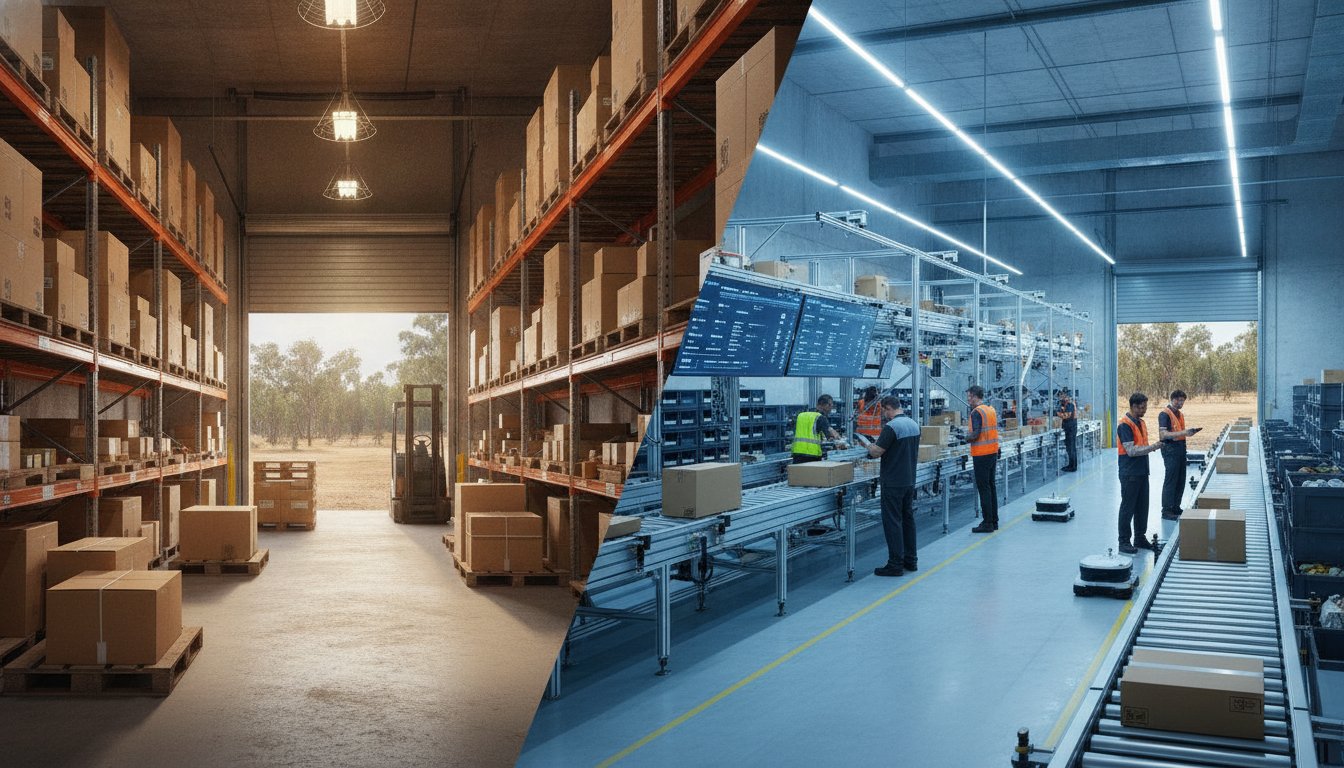
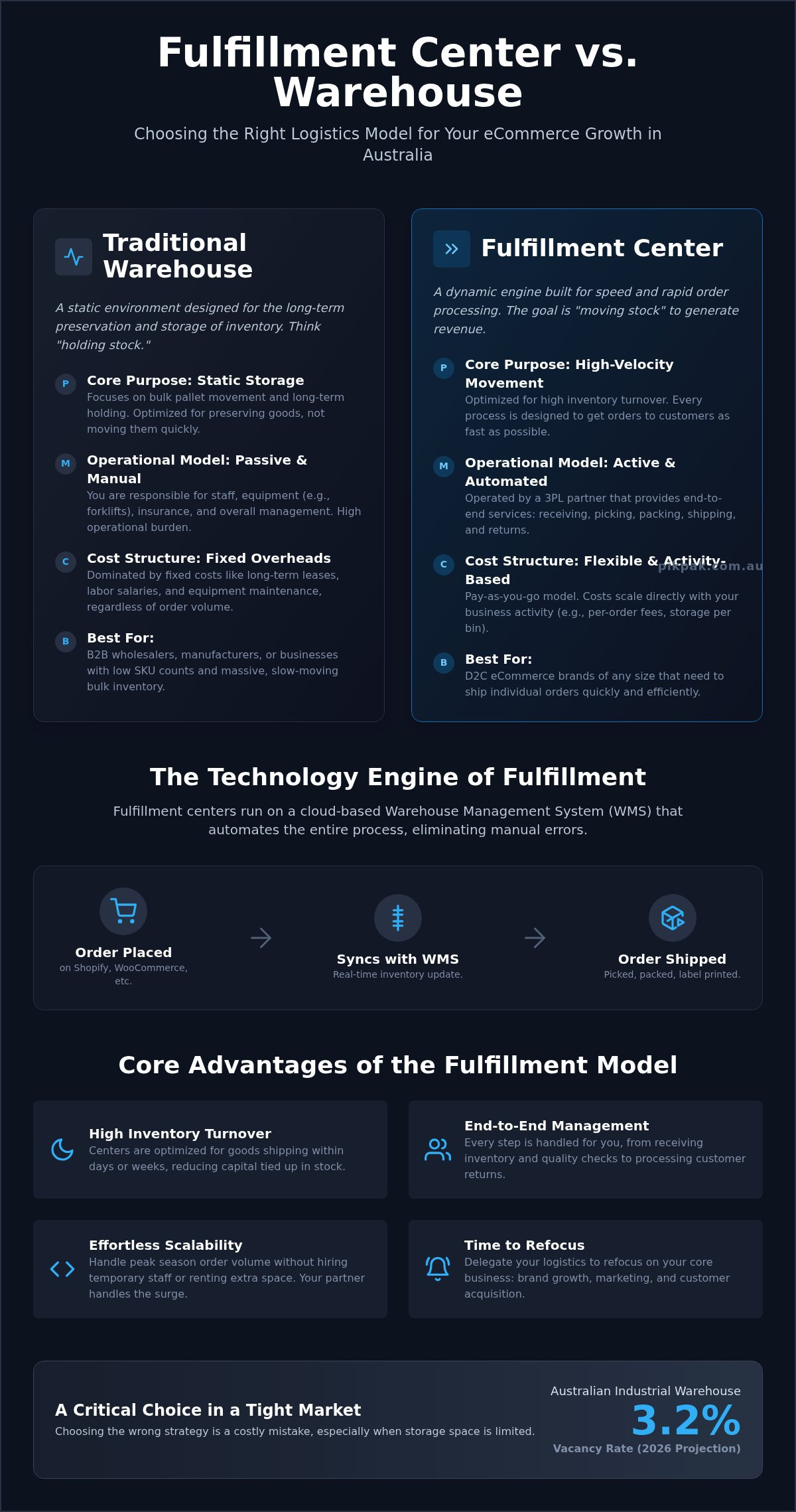
Understanding the distinction between a fulfillment center vs warehouse is the first step toward reclaiming your time. While both involve large buildings and racking, their operational DNA is entirely different. A warehouse is a static environment designed for the long-term preservation of inventory. In contrast, a fulfillment center is a dynamic engine designed for rapid order processing. It’s the difference between a library where books stay on shelves for years and a newsstand where the inventory changes every single day.
A fulfillment house, as it is sometimes called, represents a fundamental shift in the supply chain. We’re moving away from the old model of “holding stock” and toward a model of “moving stock.” In an eCommerce world, inventory that sits still is just an expense. Inventory that moves is revenue. These modern hubs are typically operated by a Third-Party Logistics (3PL) provider. Your 3PL acts as a seasoned partner that manages the complex backend of your business so you can stay focused on marketing and product development.
The Core Purpose of a Traditional Warehouse
Traditional warehouses are the backbone of industrial storage. They focus on bulk pallet movement and long-term inventory holding. If you’re a B2B wholesaler or a manufacturer with a low SKU count and massive volume, a warehouse provides the square footage you need. However, this model is often passive. You’re usually responsible for providing your own staff, sourcing your own forklifts, and managing your own insurance. It’s a reliable solution for stock that doesn’t need to go anywhere quickly, but it places the operational burden squarely on your shoulders.
The Dynamic Nature of a Fulfillment Center
Fulfillment centers are designed for the speed of modern eCommerce. They don’t just house your products; they breathe life into your sales channel. These facilities are built for Direct-to-Consumer (D2C) efficiency, offering integrated services like pick and pack and automated shipping options. When an order hits your Shopify or WooCommerce store, the fulfillment center springs into action immediately.
Choosing a fulfillment model allows you to delegate the daily busy work of your online store. Consider these core advantages of the fulfillment model:
- Inventory Turnover: FCs are optimized for high-turnover goods that ship out within days or weeks of arriving.
- End-to-End Management: From receiving stock to processing returns, every step is handled for you.
- Scalability: You can ramp up your order volume during peak seasons without hiring temporary staff or renting extra space.
- Technology Integration: Your sales channels sync directly with the facility, ensuring your stock levels are always accurate.
By moving your operations to a fulfillment center, you transform a logistical headache into a streamlined, automated process. You stop being a warehouse manager and start being a business owner again. It’s about precision, speed, and the elimination of inefficiency.
High-Velocity Movement vs. Static Inventory Storage
The core difference in the fulfillment center vs warehouse debate comes down to the speed of the inventory. A traditional warehouse is often a sea of “dusty shelves” where pallets are stored for months at a time. This is static storage. A fulfillment center, however, operates on an “active bin” model. Here, products are constantly being touched, picked, and packed. It’s a high-velocity environment where every square inch is optimized for movement rather than just housing.
Fulfillment centers use sophisticated “slotting” techniques to maximize efficiency. This means placing high-demand items in the most accessible locations to shorten “picking paths.” While a warehouse worker might spend ten minutes driving a forklift to find a specific pallet, a fulfillment specialist uses data-driven routes to pick multiple orders in a single trip. This precision is what allows for rapid scaling without increasing your operational stress.
Inventory Turnover: The Metric That Matters
Inventory turnover is the heartbeat of any successful eCommerce operation. When items move quickly, you reduce the capital tied up in stock and avoid the rising costs of industrial storage. According to an academic perspective on logistics models, the efficiency of a facility is often measured by how effectively it transitions goods from receiving to shipping.
In a traditional warehouse, “dead stock” can sit for years, slowly draining your resources through lease costs and insurance premiums. In a fulfillment center, real-time data helps you identify these slow-movers before they become a liability. You gain the visibility needed to keep your stock lean and your cash flow healthy. This proactive approach ensures you aren’t paying to store items that aren’t selling.
Carrier Relations and Shipping Speed
The final leg of the journey is where the fulfillment model truly shines. Warehouses typically operate on scheduled or on-call pickups, which can lead to delays of 24 to 48 hours. Fulfillment centers maintain daily, high-volume relationships with major Australian couriers. This volume gives them the leverage to secure better rates and later cutoff times than a single business could negotiate on its own.
Late-afternoon cutoffs are a massive win for customer satisfaction. If a warehouse struggles with the complexities of customer delivery, it often results in missed deadlines and frustrated shoppers. A fulfillment center ensures your orders are processed and handed to a driver the same day they’re placed. If you’re tired of managing these logistics yourself, it might be time to explore a more efficient partnership that automates the entire process.
The Role of Technology: WMS and eCommerce Integrations
The technological gap between a fulfillment center vs warehouse is often the deciding factor in how quickly an Australian brand can scale. A traditional warehouse might rely on basic spreadsheets or manual entry to track stock. This creates a “black box” where business owners have little visibility into their daily operations. In contrast, a modern fulfillment center operates using a Warehouse Management System (WMS). This software acts as the “digital brain” of the facility, coordinating every movement from the moment a pallet arrives to the second a package is handed to a courier.
This level of technology support automates the flow from “Order Placed” to “Label Printed,” removing the manual friction that slows down growth. While a standard warehouse might leave you manually booking pickups with Australia Post or StarTrack, a tech-forward fulfillment center integrates these services directly. This aligns with the government definition of a fulfillment center as a comprehensive service provider that handles the complexities of both storage and shipping. By automating these tasks, you eliminate the operational stress of managing multiple courier aggregators yourself.
Integrating Your Online Store
Manual data entry is the enemy of efficiency. Modern fulfillment centers use API connectors to link directly with platforms like Shopify and WooCommerce. When a customer makes a purchase, the order data flows instantly to the WMS without you lifting a finger. This integration ensures that tracking numbers are updated automatically and sent to the customer in real time. Because over 30% of eCommerce transactions in Australia now occur via mobile devices, providing instant, accurate tracking updates is essential for meeting consumer expectations and reducing “where is my order” enquiries.
Real-Time Visibility and Reporting
Precision in inventory management prevents the two biggest growth killers: overstocking and “out of stock” scenarios. A robust WMS provides a live view of your inventory levels across all sales channels simultaneously. This transparency allows you to forecast demand with confidence, ensuring you only pay for the storage you actually need. Instead of guessing when to reorder, you can use data-driven insights to maintain optimal stock levels. This shift from manual tracking to automated visibility transforms logistics from a chaotic hurdle into a manageable, predictable part of your business strategy.
By delegating these technical burdens to a specialist, you reclaim the hours previously spent on administrative tasks. You gain the freedom to focus on brand building while the technology handles the heavy lifting of your fulfillment center vs warehouse strategy.
Comparing Costs: Storage Fees vs. Fulfillment Efficiency
When evaluating a fulfillment center vs warehouse, the most significant difference lies in how you pay for the service. A traditional warehouse operates on a fixed-cost model. You sign a long-term commercial lease, often for three to five years, and pay for the entire square footage regardless of whether it’s full of stock or sitting empty. In Australia, industrial lease rates averaged AUD $148 per square meter annually in early 2026. This fixed overhead, combined with utilities, insurance, and equipment maintenance, creates a high financial barrier that doesn’t adapt to your sales cycle.
A fulfillment center uses a variable-cost model that scales with your business. Instead of paying for a whole building, you pay for the specific storage you use, typically per pallet or per shelf. When an order is placed, you pay an activity-based fee for the pick, pack, and ship process. This “pay-as-you-go” structure is a massive advantage during seasonal peaks like Black Friday or the Christmas rush. You can ramp up your volume without the risk of hiring temporary staff or renting overflow space that you won’t need in January. This shift from fixed to variable costs protects your cash flow and allows you to reinvest your capital into marketing and product development.
The Hidden Costs of Self-Warehousing
Value-Added Services: Kitting and Returns
A professional fulfillment center offers more than just storage; it provides specialized kitting and assembly services that can create new revenue streams for your brand. Whether you’re creating subscription boxes or bundling products for a promotion, these tasks are handled efficiently by experts. Additionally, professional returns management, or reverse logistics, ensures that returned items are inspected and returned to inventory quickly. This recovery of stock value is much harder to achieve in a basic warehouse environment. If you’re ready to stop managing a lease and start growing your brand, you can streamline your logistics costs today with a partner that scales alongside you.
Choosing the Right Logistics Model for Your Growth in Australia
Deciding between a fulfillment center vs warehouse depends entirely on your business model and your plans for the next twelve months. A traditional warehouse is the right choice if you manage bulk B2B shipments, handle a very low SKU count, or need long-term storage for stock that rarely moves. It’s a static solution for a static inventory. However, if you’re building a high-velocity eCommerce brand, you need a facility that doesn’t just hold your products but actively pushes them out to your customers. Scaling brands require the speed, technology, and daily activity that only a dedicated fulfillment hub can provide.
When to Move to a Fulfillment Center
You don’t need to wait until your operations are in chaos to make a change. There are clear indicators that your current setup is holding you back. If you recognize these triggers, it’s time to consider a 3PL partner:
- Trigger 1: You spend more than two hours every day packing boxes. This is time you should be using for marketing, product development, or customer acquisition.
- Trigger 2: You’re running out of physical space. When your garage or current small facility is cluttered, inventory visibility drops and shipping errors rise.
- Trigger 3: Your shipping times are lagging. If you can’t get orders out the door within 24 hours, you’re failing to meet the expectations of modern Australian shoppers.
The Pik Pak Advantage for AU eCommerce
We provide the tech-savvy partnership that Australian businesses need to compete on a global scale. Our Melbourne-based expertise ensures that your logistics are handled with precision, from seamless API integrations with Shopify to managing local courier aggregators like Australia Post and StarTrack. We treat your logistics as a service priority, ensuring that every order is an opportunity to build customer loyalty rather than a source of stress.
Stop letting the “busy work” of logistics drain your energy and stall your growth. By offloading the complexity of pick, pack, and ship services, you reclaim your schedule and your peace of mind. When you’re ready to automate your operations and scale your brand with confidence, partner with Pik Pak to unlock your true business potential.
Take Control of Your Growth Strategy
Navigating the fulfillment center vs warehouse decision is about more than just square footage; it’s about choosing the speed at which your brand scales. While traditional warehouses offer a place for stock to sit, a fulfillment partner provides the engine that drives your customer experience forward. You’ve worked hard to build your brand. Don’t let manual packing and shipping errors hold you back from your next milestone.
By leveraging a cloud-based WMS for 24/7 visibility and seamless integrations with platforms like Shopify, eBay, and WooCommerce, you transform logistics from an operational hurdle into a competitive advantage. Our expert Australian-based support team is here to ensure your transition is smooth and your operations remain precise. It’s time to reclaim your schedule and refocus on your core objectives while we handle the heavy lifting.
Ready to automate your shipping? Get a Pik Pak quote today
The right logistics strategy makes growth feel effortless. We’re ready to help you build a more efficient, automated, and successful business starting today.
Frequently Asked Questions
Is a fulfillment center more expensive than a warehouse?
A fulfillment center is often more cost-effective for eCommerce brands because it converts high fixed overheads into manageable variable costs. While a warehouse requires a long-term commercial lease and dedicated staff, a fulfillment center charges based on storage used and orders processed. This flexibility protects your cash flow during slower months and eliminates the hidden costs of equipment maintenance and labor management.
Can I use a fulfillment center for long-term storage?
You can use a fulfillment center for long-term storage, but these facilities are optimized for high-velocity movement. If your stock sits for more than six months, you might encounter higher storage fees compared to a traditional warehouse. It’s best to use a fulfillment center for your active inventory and consider a warehouse for bulk, slow-moving backup stock to keep your logistics budget lean.
How many orders do I need to have before moving to a fulfillment center?
There is no set order minimum, but most businesses make the switch when they spend more than two hours a day packing boxes. If your daily operations are preventing you from focusing on marketing or product growth, you’ve reached the threshold. Moving to a professional facility allows you to scale from ten orders to hundreds without increasing your personal workload or stress levels.
Does a fulfillment center handle returns and exchanges?
Yes, professional fulfillment centers manage the entire reverse logistics process, including returns and exchanges. They inspect returned items, determine if they can be resold, and update your inventory levels in real time. This service removes a major administrative burden from your plate and ensures that your customers receive their refunds or replacements much faster than manual processing allows.
What is the difference between a 3PL and a fulfillment center?
A 3PL (Third-Party Logistics) is the service provider, while a fulfillment center is the physical hub where the work happens. When you partner with a 3PL, you gain access to their fulfillment center infrastructure, technology, and staff. In the fulfillment center vs warehouse debate, remember that a 3PL adds a layer of expert management and automation that a simple storage warehouse lacks.
How do I integrate my Shopify store with an Australian fulfillment center?
You can integrate your Shopify store using secure API connectors provided by your fulfillment partner. This setup takes minutes and allows your orders to flow directly into the facility’s Warehouse Management System. Once connected, the system automatically syncs stock levels and sends tracking numbers back to your customers. This automation eliminates manual data entry and ensures your store is always up to date.
Do fulfillment centers provide their own packaging materials?
Most fulfillment centers provide a range of standard packaging materials, including plain boxes, satchels, and protective mailers. You also have the option to provide your own custom-branded packaging to enhance the unboxing experience for your customers. Using the facility’s standard materials often saves you money, as they purchase these items in bulk and pass the savings on to you.
What happens if my inventory is damaged in a fulfillment center?
Professional facilities have strict protocols and insurance coverage to handle damaged inventory. If an item is damaged while under the facility’s care, the provider typically follows a clear reimbursement or replacement process outlined in your service agreement. Using a tech-savvy partner with barcode scanning and proper rack management significantly reduces the risk of damage compared to managing a cluttered, manual warehouse yourself.