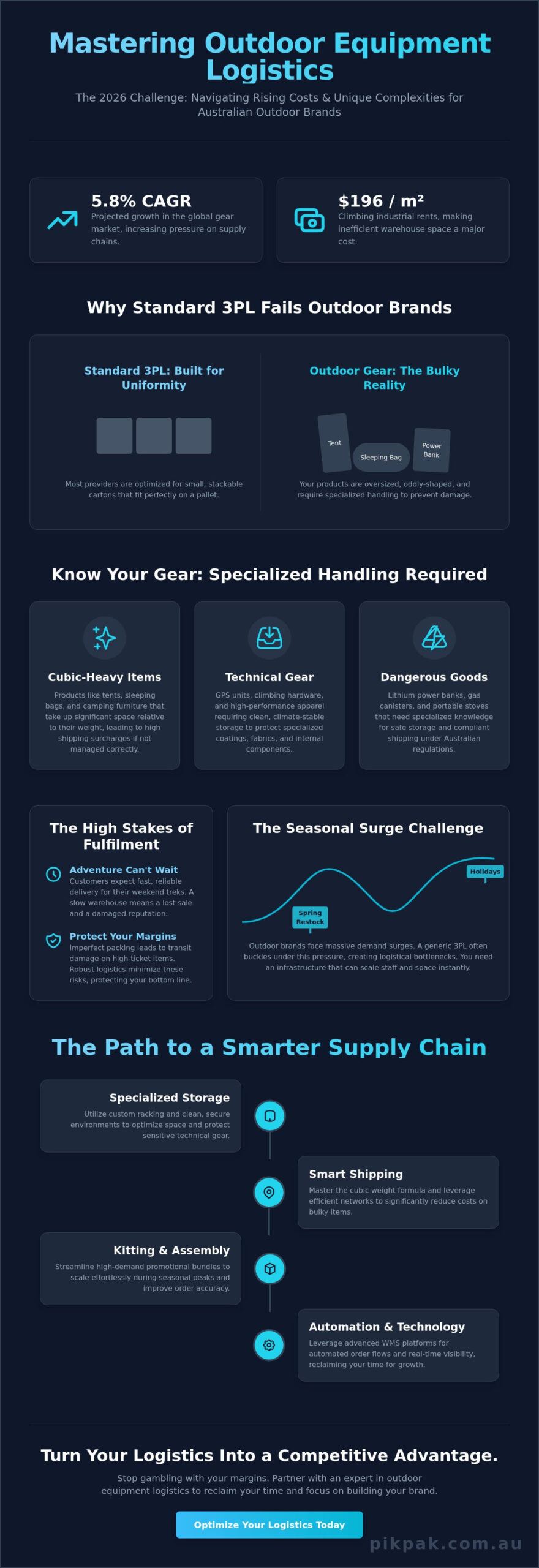
What if the projected 5.8% growth in the global gear market is actually the very thing threatening your bottom line? Scaling a brand in 2026 means facing industrial rents that have climbed to $196 per square meter and shipping rates that penalize every cubic centimeter of a family-sized tent. You have likely felt the friction of managing “cubic-heavy” items or the stress of shipping lithium power banks under strict regulations. It is a complex puzzle where one wrong move eats your margin. We understand that outdoor equipment logistics shouldn’t feel like a gamble every time peak season hits.
This guide provides a pragmatic roadmap to mastering your supply chain without losing control of your inventory. You will learn how to leverage automated order flows and expert kitting to turn bulky shipping challenges into a competitive advantage. We will explore how professional pick, pack, and ship services combined with advanced WMS platform access can simplify your operations. By the end of this article, you will have a clear strategy to reduce shipping costs, handle sensitive gear safely, and reclaim the time you need to focus on your brand’s core mission.
Key Takeaways
- Understand the unique operational requirements of the Australian gear market and why a specialized strategy is essential for 2026.
- Protect your margins by mastering the cubic weight formula and selecting the most efficient shipping networks for bulky equipment.
- Optimize your inventory storage to ensure technical fabrics and sensitive gear remain in peak condition while maximizing warehouse space.
- Scale effortlessly during seasonal peaks by using kitting and assembly to streamline high-demand promotional bundles.
- Simplify your outdoor equipment logistics through automated WMS platform access to reclaim your time for product design and growth.
What is Outdoor Equipment Logistics and Why is it Unique?
At its core, outdoor equipment logistics is the specialized management of recreational gear throughout the supply chain. It is far more than just moving boxes from point A to point B. It involves the precise handling of items that are often oversized, oddly shaped, or technically sensitive. While the Australian warehouse market is projected to grow to USD 8.68 billion by 2034, many brands find that standard fulfillment models don’t work for them. Logistics for the outdoor industry requires a bespoke approach that understands the product as well as the person using it.
Standard 3PL processes often fail outdoor brands because they are built for uniformity. Most providers prefer small, stackable cartons that fit perfectly on a pallet. Your brand likely deals with four-man tents, kayaks, or carbon-fiber mountain bikes. These items are bulky, heavy, or incredibly fragile. If a provider treats a high-end climbing rope like a pallet of consumer electronics, the risk of stock degradation or transit damage skyrockets. With the global outdoor gear market growing at a 5.8% CAGR through 2028, your backend operations must be as rugged and reliable as the gear you sell.
The Categories of Outdoor Gear
Precision starts with understanding what is in the box. We categorize gear to ensure it receives the correct storage and handling protocols:
- Cubic-heavy items: These include tents, sleeping bags, and camping furniture. They take up significant space without necessarily being heavy, which can lead to expensive shipping surcharges if not managed correctly.
- Technical gear: Items like GPS units, climbing hardware, and high-performance apparel require clean, climate-stable storage to maintain their specialized coatings and internal components.
- Dangerous Goods: Modern adventure relies on lithium power banks, gas canisters, and portable stoves. These require specialized knowledge to store and ship safely while staying compliant with Australian regulations.
The High Stakes of Gear Fulfilment
Adventure doesn’t wait for a slow warehouse. A customer who orders a new hiking pack on Tuesday usually expects it to arrive before their weekend trek. Fast, reliable delivery is a non-negotiable part of the customer experience. This is where professional order fulfilment becomes your brand’s silent partner. Damage is another critical factor. High-ticket items are prone to transit damage if the packing isn’t perfect. A robust outdoor equipment logistics strategy minimizes these risks, protecting your margins and your reputation among the outdoor community.
The final differentiator is seasonality. Outdoor brands don’t experience a flat sales curve. You face massive surges during Spring restocks, Christmas, and the Easter holiday. A generic 3PL often buckles under this pressure. True expertise in this field means having the infrastructure to scale staff and space instantly, ensuring your peak season is a period of growth rather than a logistical bottleneck.
The Warehouse Challenge: Storing Bulky and Sensitive Gear
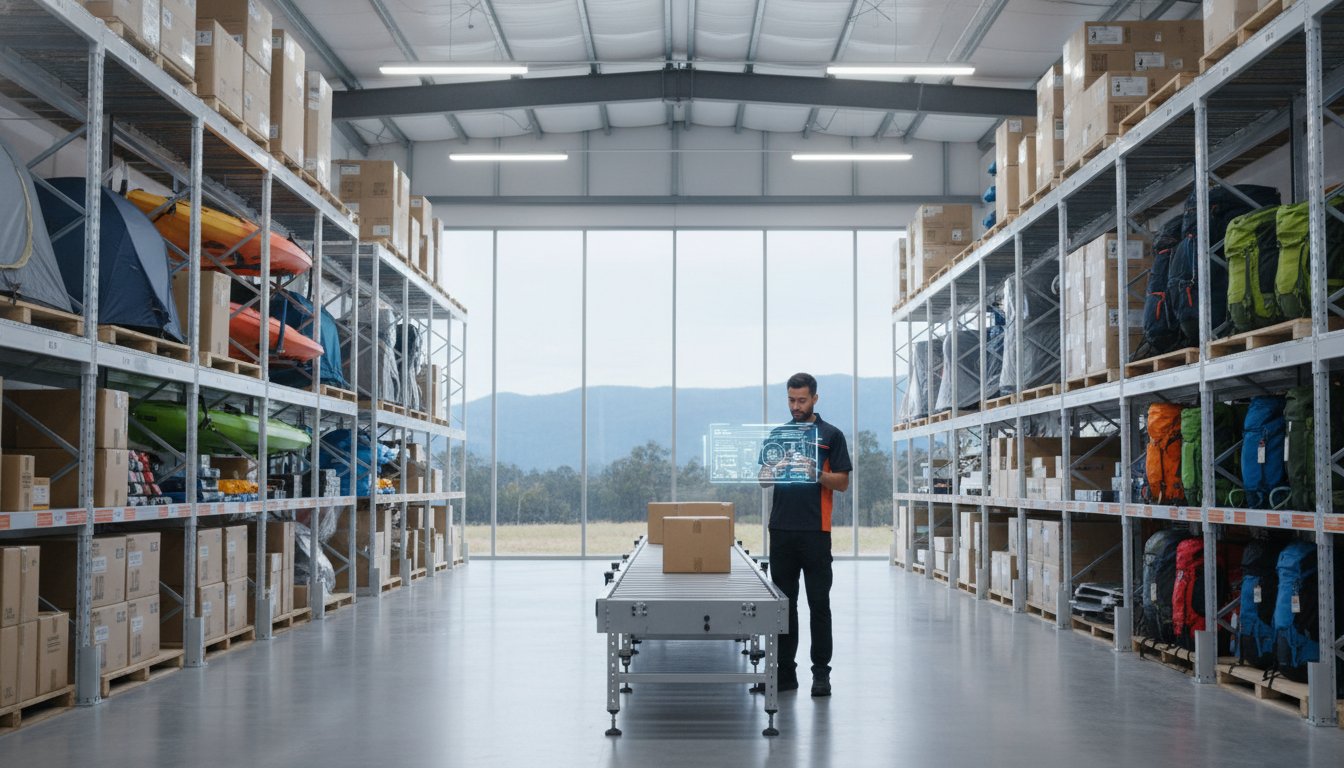
Efficient storage is the backbone of successful outdoor equipment logistics. It’s a constant trade-off between maximizing storage density and maintaining picking speed. In 2026, with prime industrial rents reaching $196 per square meter, every pallet position must be optimized. You don’t have the luxury of wasted space, but you also can’t afford a warehouse layout that slows down your fulfillment team during a summer rush. Balancing these needs requires a tech-savvy approach to space management.
Technical outdoor fabrics require more than just a shelf. High-end jackets, tents, and sleeping bags are sensitive to dust, moisture, and pests. Secure, clean storage environments are essential to preserve the integrity of DWR coatings and delicate membranes. Specialized racking is often necessary for non-standard items like kayaks or long-form trekking poles that don’t fit standard pallet dimensions. Effective seasonal inventory management ensures these high-value items are accessible when demand spikes but safely tucked away during the off-season.
Managing ‘Cubic-Heavy’ Inventory
Items like camping chairs and family tents are “cubic-heavy.” They fill up volume long before they reach weight limits. This creates a unique challenge for 3PL warehousing. A pragmatic partner uses strict pallet build discipline to maximize vertical space. This isn’t just about stacking boxes; it’s about strategic organization that prevents crushing while ensuring the smallest possible footprint for your stock. This approach keeps your overheads manageable while keeping your inventory ready for immediate dispatch.
Dangerous Goods (DG) and Compliance
Managing outdoor equipment logistics involves strict adherence to safety standards for items like lithium power banks (Class 9) and portable stove gas canisters (Class 2.1). These aren’t just suggestions; they’re legal requirements that impact your insurance and safety protocols. Your 3PL must use specialized labeling and dedicated picking zones to separate these items from standard stock. To ensure your brand stays compliant from the moment stock arrives, follow a clear Warehouse Receiving Guideline. This streamlines the inbound process and prevents costly delays. If you’re looking for a partner that handles these complexities with precision, exploring our Inventory Storage options is a great place to start.
Shipping Strategies: Navigating Dead Weight vs. Cubic Volume
Shipping outdoor gear in Australia presents a unique financial challenge: the battle between actual weight and cubic volume. Most Australian carriers use a cubic conversion factor, typically 250kg per cubic meter, to determine the billable weight. If you ship a lightweight but bulky four-person tent, the carrier charges you based on the space it occupies in the truck, not its physical weight. This “cubic weight” often catches brands off guard, leading to unexpected “carrier adjustment” fees that erode profit margins. Mastering outdoor equipment logistics means ensuring every millimetre of packaging is accounted for before the label is printed.
Choosing between parcel networks and Less Than Truckload (LTL) freight is a critical decision for your bottom line. Standard parcel networks are efficient for technical apparel or compact hiking stoves, but they often have strict limits on length and girth. Once you scale to larger items like kayaks or rigid camping furniture, LTL becomes the pragmatic choice. This allows you to move oversized goods through specialized networks that handle non-standard shapes with greater care. Accuracy in dimensions is non-negotiable here. With global shipping schedule reliability sitting at 62.2% in early 2026, you cannot afford further delays caused by misdeclared dimensions or rejected pickups.
Regional delivery adds another layer of complexity. While metro deliveries are straightforward, your customers often live or play in remote areas. Reaching a trailhead in the Blue Mountains or a coastal town in Western Australia requires a multi-carrier strategy. Relying on a single provider often leads to “out of area” surcharges or extended lead times. A tech-integrated logistics partner solves this by automatically selecting the most reliable carrier for each specific postcode, ensuring your gear arrives when the adventure begins.
Optimizing Packaging to Reduce Costs
Box sizing is the most effective lever you have to control shipping spend. Even a two-centimetre reduction in a box’s height can shift a product into a lower cubic weight bracket, saving dollars on every shipment. While standard carrier satchels work for soft goods, custom-fit boxes are essential for protecting high-ticket items. In 2026, we see a strong shift toward sustainable packaging. Sustainable outdoor products command a 15% price premium, and using recycled, right-sized packaging reinforces your brand’s commitment to the environment while simultaneously lowering your cubic costs.
Carrier Selection for Outdoor Gear
Not all couriers are equipped to handle the “rough” nature of outdoor equipment. Some providers refuse Dangerous Goods (DG) like lithium batteries entirely, while others lack the tail-lift vehicles required for oversized deliveries. You need a partner that provides access to a diverse fleet. By leveraging our Customer Delivery Services, you gain the flexibility to switch between providers based on item type and destination. This multi-carrier approach ensures that whether you are shipping a compact GPS unit or a bulky camp kitchen, the delivery remains reliable and cost-effective.
Scaling for Seasonal Peaks: Spring, Summer, and Holidays
Managing outdoor equipment logistics during an Australian summer isn’t just about hard work; it’s about smart systems. Your brand likely faces a trifecta of demand: the Spring restock when adventurers prep for warmer weather, the Christmas gift-giving frenzy, and the Easter holiday peak. These periods don’t just see a steady climb in sales; they often result in 300% order spikes that can overwhelm a traditional warehouse. Attempting to scale by simply hiring more temporary staff is a high-risk strategy that often leads to picking errors and shipping delays. Instead, successful brands in 2026 use automation to maintain precision without the friction of constant hiring.
Reverse logistics is another critical piece of the seasonal puzzle. After the Christmas rush, a surge in returns is inevitable. If your 3PL doesn’t have a robust Returns Management system, your warehouse will quickly become cluttered with “dead” stock that isn’t back on the shelf for resale. A pragmatic partner handles these returns with the same speed as outbound orders, ensuring your inventory remains fluid and your margins stay healthy through the end of the season.
Kitting and Assembly for Growth
Kitting is your most powerful tool for maximizing sales during quiet periods and accelerating fulfillment during peaks. By pre-bundling accessories into “Camping Starter Packs” or “Weekend Trekker Kits,” you move multiple SKUs with a single pick. This significantly reduces picking time when order volumes are at their highest. Our Kitting and Special Projects team can also handle value-added services like applying promotional labels or gift wrapping. These small touches build massive brand loyalty without slowing down your core dispatch operations.
Real-Time Inventory Visibility
Spreadsheets are the first thing to fail when your brand hits a growth spurt. In the lead-up to the 2026 Black Friday rush, you need absolute certainty about your stock levels across every sales channel. A modern Warehouse Management System (WMS) provides a single source of truth, preventing the dreaded “out of stock” notification for a customer who has already paid. This visibility allows you to make data-driven decisions about when to restock and which items to promote. If you want to stop guessing and start growing, it’s time to automate your order flow with a partner that understands the outdoor sector’s unique rhythm.
Why Pik Pak is the Leading Partner for Australian Outdoor Brands
Scaling a brand in the competitive 2026 market requires more than just great products; it requires a logistics partner that acts as an extension of your team. Pik Pak provides a pragmatic, tech-first approach to 3PL that removes the friction from your daily operations. By delegating the heavy lifting of your outdoor equipment logistics to us, you reclaim the hours needed to focus on product design, marketing, and community engagement. Our Australian-based warehousing offers the security and reliability you need to grow with confidence, knowing your gear is handled by experts who understand the industry’s unique demands.
Operational friction is often the silent killer of growth. When you are stuck managing staff or troubleshooting shipping delays, you aren’t building your brand. We frame complex logistical challenges as simple, manageable tasks so you don’t have to. Our seasoned problem-solvers act as a calm expert in a chaotic field, using language that suggests precision and the elimination of inefficiency. This supportive partnership allows you to move from broad promises to detailed execution without the stress of managing a physical warehouse yourself.
Technology that Integrates with Your Store
Manual data entry is a growth killer that leads to costly errors. We provide seamless Technology Support through API connections that link directly to Shopify, WooCommerce, and major online marketplaces. This integration fulfills our “effortless” promise: as soon as a customer hits ‘buy’, the order flows into our system without you lifting a finger. Real-time visibility through our WMS platform access ensures you can plan for seasonal peaks with precision, closing the gap between your digital storefront and our physical warehouse. You stay in control of your inventory while we handle the execution.
Transparent Pricing and Dedicated Support
Trust is built on clarity and consistent results. We offer a transparent 3PL cost structure so you always know exactly what you are paying for, with no hidden fees or surprise surcharges. In an industry that can often feel overwhelming, we provide a dedicated support system to guide you through complex decisions. Whether it’s optimizing your inventory storage or managing reverse logistics after a holiday rush, our team is entirely focused on delivering results that help you scale. We don’t just outsource a task; we provide an enabling force that removes major operational hurdles.
Don’t let operational hurdles hold your brand back from its full potential. Transitioning to a professional pick, pack, and ship model allows you to scale without the overhead of managing your own warehouse or seasonal staff. It’s time to simplify your operations and prioritize your business growth. Get a Quote from Pik Pak today and see how we can transform your supply chain into a competitive advantage.
Master Your Operations for Sustainable Growth
Success in 2026 requires more than just high-quality gear. It demands a logistics strategy that turns operational friction into a competitive edge. By mastering the complexities of cubic weight and implementing seasonal kitting, you protect your margins while delivering the speed your customers expect. Effective outdoor equipment logistics shouldn’t be a source of stress; it should be the engine that drives your brand forward. You have the vision for your products, and we have the infrastructure to ensure they reach your customers without delay.
Transitioning to a professional partner allows you to delegate the heavy lifting and refocus on your core mission. You gain access to state-of-the-art secure warehousing and real-time WMS visibility, ensuring you always stay in control of your inventory. Our expert handling of Dangerous Goods means you can ship technical gear with total confidence and compliance. It is time to move past manual spreadsheets and embrace an automated future. Scale your outdoor brand with Pik Pak’s effortless 3PL services and reclaim the time you need to innovate. We are ready to help you reach your next peak with ease and precision.
Frequently Asked Questions
What is considered ‘bulky’ in outdoor equipment logistics?
Items are generally classified as bulky when they exceed standard parcel dimensions or possess a high volume-to-weight ratio. Examples include family sized tents, rigid camping furniture, and kayaks. These products require specialized outdoor equipment logistics strategies because they occupy significant warehouse space and often trigger cubic weight surcharges from carriers rather than being billed by their physical weight.
Can you ship lithium batteries and gas canisters for camping gear?
Yes, these items can be shipped as long as they follow strict Dangerous Goods (DG) protocols. Lithium power banks are Class 9 and gas canisters are Class 2.1; both require specialized labeling, documentation, and storage zones. We utilize a multi-carrier network that understands these compliance rules to ensure your technical gear reaches customers safely and legally.
How do I calculate cubic weight for my outdoor products?
To calculate cubic weight, multiply the length, width, and height of your package in meters, then multiply that total by the carrier’s cubic conversion factor. In Australia, the standard factor is typically 250kg per cubic meter. If your box is 0.5m x 0.5m x 0.5m, the volume is 0.125m³, resulting in a cubic weight of 31.25kg. Carriers charge based on whichever is higher: physical weight or cubic weight.
What are the benefits of outsourcing my gear storage to a 3PL?
Outsourcing provides instant scalability and removes the burden of managing industrial leases or seasonal warehouse staff. You gain access to professional inventory storage and advanced WMS technology that tracks your stock with precision. This pragmatic shift allows you to turn fixed overheads into variable costs while freeing up your time to focus on product innovation and brand growth.
How does Pik Pak handle seasonal spikes in orders?
We use a combination of automated workflows and flexible resource management to absorb surges during peaks like the Spring restock or Christmas. Our WMS platform allows us to prioritize high volume orders and utilize pre-assembled kits to accelerate the pick and pack process. This ensures your dispatch times remain stable even when your daily order volume triples during a holiday rush.
Do you offer returns management for outdoor apparel and gear?
Yes, we provide comprehensive Returns Management to keep your inventory fluid and your customers happy. Our team inspects returned items, such as technical apparel or camping hardware, to verify they meet your quality standards before restocking them. This fast reverse logistics process helps you reclaim value from returns quickly and maintains a professional experience for your buyers.
How long does it take to integrate my online store with your WMS?
Most integrations with platforms like Shopify or WooCommerce are completed within a few business days. In 2026, the one-time setup cost to integrate an eCommerce platform with an Australian 3PL typically ranges from A$250 to A$1,500 depending on complexity. Our tech-savvy team manages the API connection to ensure your orders flow automatically from your store to our warehouse without manual entry.
Is my inventory insured while in a 3PL warehouse?
Standard 3PL agreements typically do not include insurance for your physical stock against loss or damage. While we provide secure, monitored warehousing to minimize risk, it’s a pragmatic business step to maintain your own marine or transit insurance policy. This ensures your high value assets are fully protected throughout the entire outdoor equipment logistics cycle under your own specific coverage terms.