

Scanning only works when it confirms the right product at the right point in the order. To learn how to reduce mis-picks and packing errors, scan the item and its pick location, confirm each order line as it’s picked, then compare packed items with the order before sealing the parcel. Track accuracy over time so you can see whether the controls are working.
A wrong item, missing unit or incorrect quantity can turn a straightforward order into extra handling and a poor customer experience. The problem may appear to start at picking, but packing is the last practical chance to catch a mismatch before dispatch.
This guide covers barcode confirmations, picking-accuracy calculations and practical packing checks. It also explains how to spot process issues, such as unclear labels or misplaced stock, and prioritise changes that can help prevent repeat errors.
Key Takeaways
- Match the picking method to your order flow: single-order, zone, batch and wave picking each organise work differently.
- Use barcode, RF, voice or pick-to-light confirmations to guide picks and create a clearer record of order activity.
- Calculate accuracy consistently by comparing correct picks with total picks, then use the result to pinpoint where errors occur.
- Add packout controls such as tote identity checks and weight comparisons to catch order discrepancies before dispatch.
1. How to Reduce Picking and Packing Errors?
Choose a picking method that suits your order volume and product layout. Single-order picking keeps each customer’s order together, while zone picking assigns staff to specific warehouse areas. Batch picking groups items for several orders into one trip; wave picking releases orders in planned groups based on dispatch times or priorities. For example, a small food warehouse could batch nearby items, then sort them into separate orders at a controlled packing station.
Give each SKU a clearly labelled bin, separate similar-looking products and keep each item in a consistent location. Place fast-moving stock in accessible pick locations, and use signs and shelf labels to make routes clear. Mis-picks can result from incorrect labels or inventory records, cluttered aisles, poor lighting or insufficient training. Cycle counts and spot audits help catch stock discrepancies before they lead to picking errors.
Errors lead to rework, replacement shipments, returns and customer-service tasks, taking staff away from other work. A wrong size, missing unit or unauthorised substitute can weaken customer trust and affect retention, particularly when the same issue recurs. Track error types and order outcomes to uncover repeated causes, not just individual mistakes.
2. Barcode, RF, voice, and pick-to-light confirmations
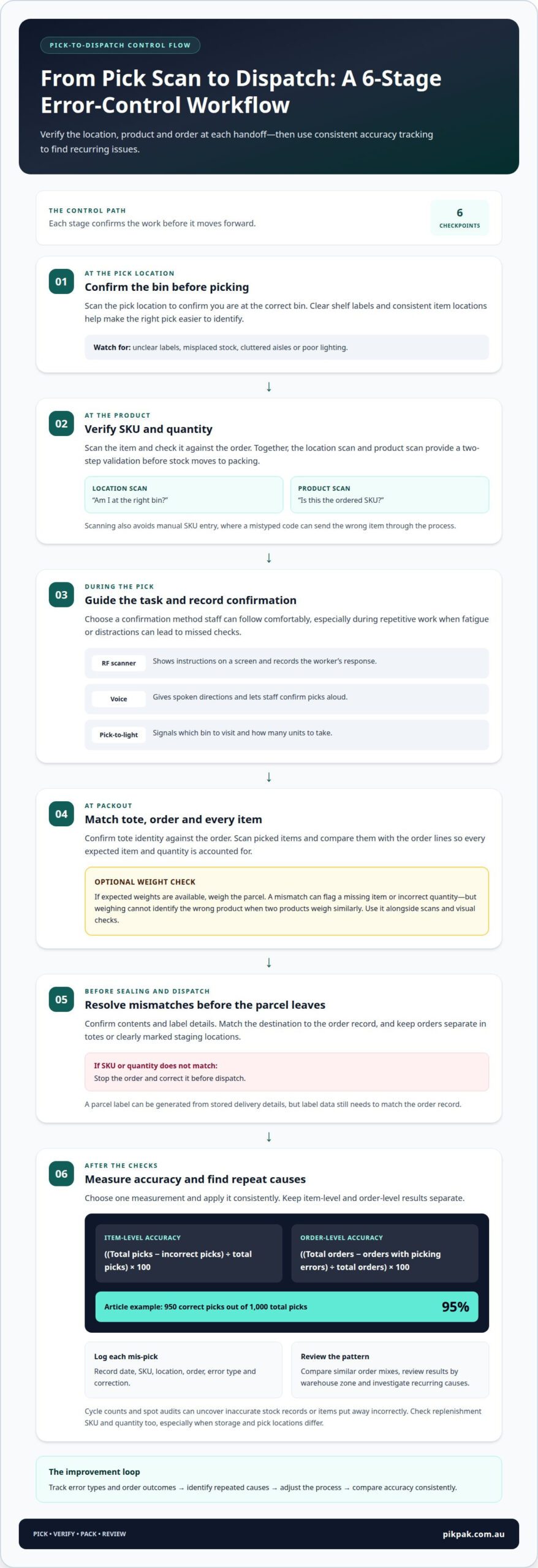
Scan both the pick location and product before moving stock. Scanning the location confirms that the picker is at the correct bin; scanning the item checks the SKU against the order. This two-step validation can catch a wrong product before it reaches the packing bench. It also avoids manual SKU entry, where a mistyped code can send the wrong item through the picking process.
RF devices, voice prompts and pick-to-light displays provide different ways to guide and confirm tasks. An RF scanner shows instructions on a screen and records the worker’s response. Voice systems give spoken directions and let staff confirm picks aloud, while pick-to-light signals which bin to visit and how many units to take. Choose a workflow that staff can follow comfortably, especially during repetitive tasks when fatigue or distractions can lead to missed confirmations.
Connect scanning with labelling and packout. For example, a system can generate a parcel label from the order’s stored delivery details, then prompt the packer to scan each item before sealing the parcel. A final pack confirmation should show that every expected line has been picked and packed. If the SKU or quantity does not match, stop the order and correct it before dispatch. Keep label data aligned with the order record to avoid pairing a correct barcode with incorrect destination details.
Barcode and RFID checks address related but different needs. A barcode scan typically verifies a specific item or location; RFID can read tagged items without aiming a scanner at each code, supporting bulk verification in high-velocity operations. Both methods can log transactions for tracking, investigation and correction. Automation still depends on sound setup: test labels, scanner settings and exception steps before rollout. If an incorrect order reaches a customer, clear scanning records can help trace the error and support returns management. Returns management helps organise that reverse flow.
3. How do you calculate picking accuracy rate?
Choose one measurement and use it consistently. For item-level accuracy, subtract incorrect picks from total picks, divide by total picks, then multiply by 100. For example, 950 correct picks out of 1,000 total picks equals 95% accuracy. At order level, subtract orders with picking errors from total orders, then divide by total orders and multiply by 100. Don’t mix item and order results in one comparison.
Record mis-picks in an error log, including the date, SKU, location, order, error type and correction. Compare the rate before and after a process change using similar order mixes. This helps show whether an adjustment improved accuracy or simply coincided with easier orders. Review results by warehouse zone to identify where errors occur.
At packout, scan the tote identity and match it to the order before packing. Check the picked items against the order lines, then weigh the parcel if expected weights are available. A weight mismatch can flag a missing item or incorrect quantity, but it cannot identify the wrong product when two products weigh similarly. Use weighing alongside scans and visual checks.
Before sealing, confirm the order contents and parcel label. Check the destination against the order record before moving parcels to the dispatch area. Keep orders separate in totes or clearly marked staging locations, so a correct parcel is not assigned to the wrong dispatch record.
Cycle counts and spot audits help uncover stock that was put away incorrectly or recorded inaccurately. Count selected inventory locations, compare physical quantities with system records, and correct discrepancies before replenishment or picking. Check replenishment as well: confirm the SKU and quantity moved into each pick location, particularly when storage and picking locations differ.
To calculate the cost of errors, record the actual rework labour, replacement goods, return or reship handling, and customer-service time for each incident. Add these costs over the same period as your error count, then compare totals over time. This shows which causes have the greatest operational impact.
4. Order packing error reduction
Packing is the final control before an order leaves the warehouse. To reduce mis-picks and packing errors, use a consistent pack sequence: match the order to its tote, inspect each item, check the parcel label, then seal and stage the parcel. Keep orders separate at the station to lower the risk of mixing products during busy periods.
Arrange the packing area around this sequence. Keep cartons, protective materials and labels within easy reach, and separate completed parcels from work in progress. Mark similar packaging sizes clearly. For example, packers handling two product sizes should be able to identify each carton without relying on memory or appearance.
Focus quality checks on likely failure points. Confirm the variant and quantity, inspect fragile items, and match the shipping label to the parcel before sealing. For complex or unusually large orders, a second-person check can target the specific risk rather than repeat every task.
Train staff on the packing process and exceptions before peak volume arrives. Use examples from the error log, such as a missing component or mismatched label, to practise the right response. During a surge, assign clear roles for packing, replenishment and dispatch staging. This helps prevent rushed handovers and gives workers a clear way to resolve discrepancies.
The question of how to reduce mis-picks and packing errors should lead to measurable process changes. Aim for order accuracy as close to 100% as possible, while recognising perfect accuracy may not always be realistic. Wholesale food operations can review the error log monthly. A 90-day first-pass-accuracy goal can be 0.5 to 1.0 points higher, followed by a review of repeat errors.
If packing volume makes these checks difficult to sustain, explore a warehousing and fulfilment approach that fits your order workflow.
Pik Pak Logistics: Pick, Pack, and Ship Services
Pik Pak Logistics helps online stores manage order fulfilment when picking, packing and dispatch take time away from running the business. Its Pick, Pack, and Ship Services bring these steps together, with Inventory Storage for products awaiting orders and home delivery shipping options for customer dispatch.
When an order is returned, Pik Pak’s Returns Management (Reverse Logistics) handles the reverse flow, with returns processed competently. Bringing these logistics tasks together can reduce the operational load on your team, leaving you free to focus on customers and business growth.
To discuss your fulfilment needs, contact Pik Pak Logistics or visit pikpak.com.au.
Make accuracy part of your next growth step
Reducing fulfilment errors is an ongoing operating discipline, not a one-off scanner setup. Choose a practical improvement, monitor its performance, then refine the process as your products and order patterns change. This steady approach helps protect the customer experience as your business grows.
If you’re working out how to reduce mis-picks and packing errors while freeing your team to focus elsewhere, Pik Pak Logistics can support fulfilment with Pick, Pack, and Ship Services, Inventory Storage and home delivery shipping options.
Start a conversation about your order flow and where fulfilment support could fit. Contact Pik Pak Logistics to discuss the next step, and keep building an operation your customers can rely on.
Frequently Asked Questions
How to Reduce Picking and Packing Errors?
Reduce errors by building a clear control into each handover, from pick release to packed parcel. For example, have a supervisor review exception orders, such as substitutions, damaged stock or unclear product descriptions. Give workers a simple way to pause and report mismatches instead of guessing. Then compare error logs by cause, so fixes address process gaps rather than relying on reminders alone.
How Costly Can Pick and Pack Errors Be for Your Ecommerce Business?
The impact goes beyond replacing the incorrect product. Each incident can require staff time for investigation, customer support, return handling, replacement picking and extra delivery. Repeated mistakes can also erode customer confidence and affect future orders. To understand the effect on your business, record direct handling costs and note whether customers contact support, request a return or stop purchasing.
How can you improve picking efficiency?
Improve efficiency by reducing avoidable movement and interruptions across the shift. Release work in a sequence that groups nearby demand, keep replenishment tasks from blocking active pick routes, and ask staff to identify congestion points. A brief end-of-shift review can uncover recurring delays, such as waiting for stock or unclear instructions. Use these observations to adjust task timing and workflow.
How do you calculate picking accuracy rate?
Divide correct picks by total picks, then multiply by 100 to calculate item-level accuracy. Keep the denominator consistent: count either individual items or complete orders, not a mixture. For a useful comparison, define what counts as an error, including wrong items, missing units and unauthorised substitutions. Report the same measure across comparable periods to see whether process changes improve results.
What are common warehouse packing strategies?
Common strategies include packing one order at a time, grouping orders by product or destination, and assigning specialist stations to fragile or unusual items. Standardise materials and instructions at each station, then separate completed parcels from unsealed orders. For example, a fragile-item lane can keep protective packaging close and reduce unnecessary handling before parcels move to dispatch.
What are the most common causes of warehouse mis-picks and packing errors?
Common causes include fatigue, distractions, insufficient training, unclear procedures, poor lighting, cluttered aisles and inaccurate inventory records. Similar-looking products and incorrect labels can also mislead staff who follow their instructions carefully. Look for patterns in error reports: repeated mistakes in one location may point to layout or labelling issues, while recurring quantity errors may indicate unclear counting steps.