Are customer returns draining your time and eating into your profits? For many Australian eCommerce brands, what happens after the sale can be the biggest headache. Managing returns, dealing with high shipping costs, and trying to get products back into stock feels like a constant battle. But what if you could turn this challenge into a strength? A streamlined approach to reverse logistics Australia-wide is no longer just a ‘nice-to-have’-it’s a critical part of building a successful, profitable online business.
Forget the complexity and the wasted hours. This ultimate guide makes it simple. We’ll walk you through the entire process, from creating a customer-friendly returns policy to efficiently inspecting, restocking, and reselling returned items. You’ll discover cost-effective strategies built specifically for the Australian market that not only protect your bottom line but also boost customer loyalty. It’s time to stop letting returns run your business and start making them work for you, so you can focus on what matters most: growth.
What is Reverse Logistics? (And Why It’s More Than Just Returns)
As an eCommerce business owner, you’ve mastered getting products to your customers. But what happens when a product needs to come back? That entire journey-from the customer’s doorstep back to your business-is reverse logistics. It’s the process of managing the flow of goods after the point of sale to recapture value or ensure proper disposal.
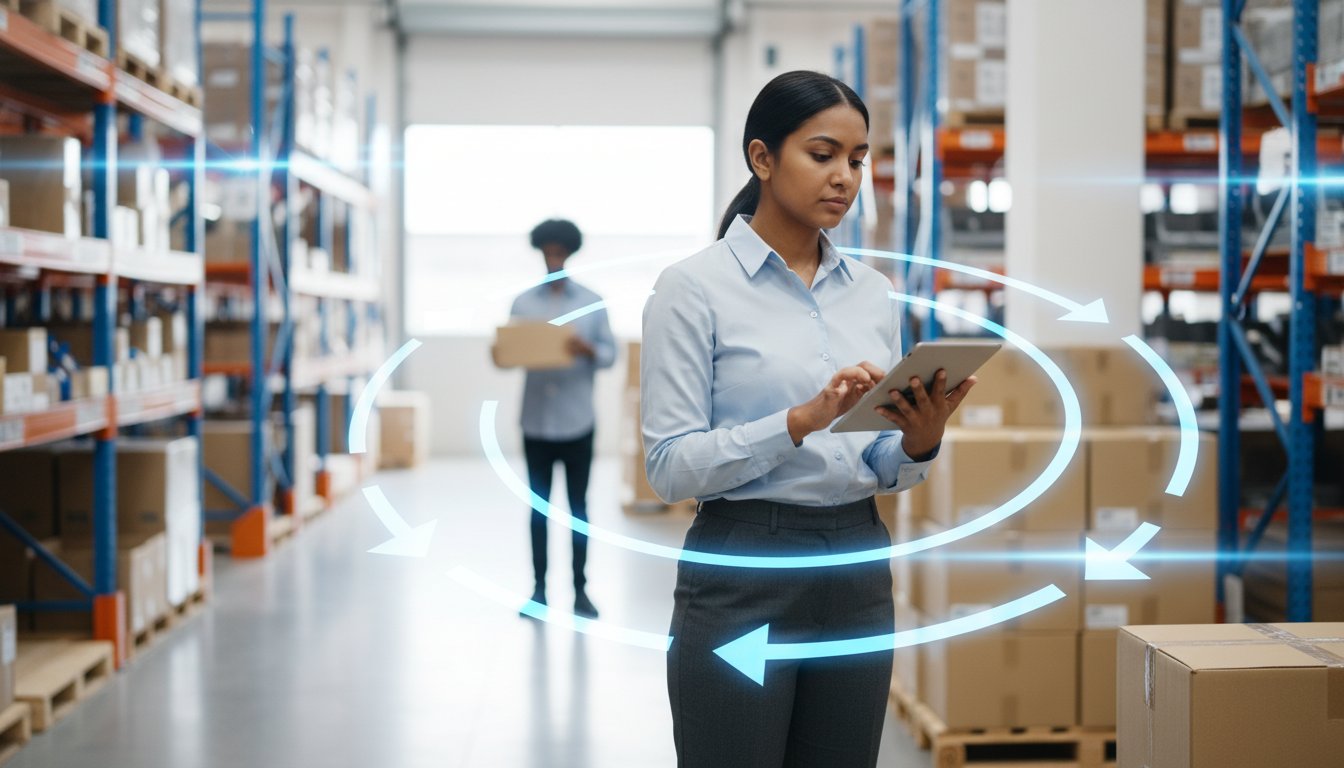
Think of it this way: forward logistics is a one-way street, designed for speed and efficiency to a single destination. In contrast, the world of reverse logistics is a complex roundabout with multiple exits. It’s not just about shipping a box back to the warehouse; it’s a detailed process that includes receiving, inspecting, sorting, and deciding the next best step for that item. This system is becoming critical in the competitive landscape of reverse logistics Australia, where customer expectations for easy, seamless returns are higher than ever.
Forward Logistics vs. Reverse Logistics: The Key Differences
The core challenge is managing unpredictability. Forward logistics is a predictable, streamlined process focused on moving new stock from A to B quickly and cost-effectively. Reverse logistics, however, deals with unpredictable volumes and multiple outcomes. A returned item could be restocked, repaired, refurbished, recycled, or disposed of, making inventory management far more complex than with new stock.
The Core Components of a Reverse Logistics System
A well-oiled reverse logistics system doesn’t just happen; it’s built on four key pillars that work together to make the process simple and efficient, freeing you up to focus on your business. A strong system should include:
- Returns Policy: The foundation of a great customer experience. This is your first touchpoint, setting clear expectations for how, when, and why customers can return items.
- Processing & Handling: The physical workflow. This covers everything from issuing a return label to receiving the item, inspecting its condition, and sorting it for its next destination.
- Value Recovery: Getting the most from every return. This is the strategy for recapturing the maximum value, whether through restocking pristine items, selling on secondary markets, or recycling components.
- Data & Analytics: Learning from your returns. Smart data tells you why products are coming back, helping you improve product quality, update descriptions, and reduce future return rates.
The 5-Step Reverse Logistics Process for Australian eCommerce
What happens after a customer clicks “return”? A smooth customer experience on the front end is powered by a highly efficient, behind-the-scenes workflow. Mastering this process isn’t just about handling returns; it’s about recovering value, retaining customers, and turning a cost centre into a strategic asset. This is the operational engine that makes it all run like clockwork.
Here is the simple, 5-step framework that transforms a returned product’s journey from a logistical headache into a streamlined, automated process.
Step 1 & 2: Initiating the Return & Shipping It Back
The process begins with the customer. The best practice is a self-service online returns portal where they can log the return and state the reason. Your system should then automatically generate a pre-paid shipping label. Partnering with carriers like Australia Post or couriers like Sendle makes this step effortless for the customer. Clear instructions are non-negotiable-the easier you make it for them, the more likely they are to shop with you again.
Step 3: Receiving, Inspecting, and Grading
Once the parcel arrives at your warehouse or 3PL provider, it’s scanned and logged against the Return Merchandise Authorisation (RMA). This is the critical checkpoint. Staff inspect the item for damage, check if it’s in its original packaging, and ensure all parts are present. The product is then graded:
- A-Grade: Perfect condition, ready to be restocked and resold immediately.
- B-Grade: Minor cosmetic issues or damaged packaging; can be refurbished or sold at a discount.
- C-Grade: Damaged, used, or unsellable; must be liquidated, recycled, or disposed of.
Step 4 & 5: Processing the Outcome & Analysing Data
The grade assigned in Step 3 triggers the final actions. Your Warehouse Management System (WMS) should automatically process the customer’s refund or dispatch their exchange. Simultaneously, the physical product is routed to its next destination-back into inventory, to a repair station, or to a disposal area. This is where a robust system for reverse logistics australia truly pays off, by not just handling the item but also capturing valuable data. You can spot recurring product faults, unclear website descriptions, or even shipping damage patterns, allowing you to fix the root cause and reduce future returns.
Key Benefits: How Smart Reverse Logistics Drives Business Growth
Many eCommerce brands view returns as a costly headache. But a strategic approach to reverse logistics Australia is one of the most powerful tools you have for growth. It’s not just about managing unwanted products; it’s about building customer trust, recovering maximum value from your stock, and gathering priceless data to make your business smarter. When managed correctly, your returns process stops being a cost centre and becomes a genuine growth engine.
Enhance Customer Loyalty and Lifetime Value
A simple, hassle-free returns process is a cornerstone of customer trust. According to Australia Post, 62% of Australian shoppers check a retailer’s returns policy before committing to a purchase. By making the process easy and positive, you turn a potential disappointment (like a wrong size) into a brand-building moment. This experience encourages customers to shop with you again, confident that you’ll take care of them, significantly boosting their lifetime value.
Recover Value and Reduce Financial Losses
Every returned item represents a financial opportunity, not just a loss. An efficient reverse logistics system ensures you’re not just writing off stock. A streamlined process allows you to:
- Quickly inspect and restock A-grade items to get them back on sale before they lose relevance or a potential sale is missed.
- Identify B-grade stock for refurbishment, repackaging, or resale on secondary marketplaces to recover significant revenue.
- Minimise waste and associated disposal fees for unsellable items, improving both your bottom line and your brand’s sustainability credentials.
Gain Valuable Business Insights
Your returns are a direct line of feedback from your customers. Are you seeing the same product returned for the same reason? This data can signal a quality control issue with a supplier, an inaccurate product description, or misleading photos on your website. By analysing these patterns, you can make targeted improvements that reduce future returns, cut costs, and perfect the overall customer experience.
Ready to make your returns process a growth engine? See how Pik Pak can help.
Optimising Your Strategy: In-House vs. Outsourcing to a 3PL
As your Australian eCommerce brand grows, you’ll inevitably face a critical decision: should you continue managing customer returns yourself, or is it time to partner with an expert? This isn’t just a logistical choice; it’s a strategic one that impacts your time, your customer experience, and your ability to scale effectively.
Handling Returns In-House: The Pros and Cons
Initially, managing returns in-house seems like the most direct, cost-effective option. You maintain complete control and avoid immediate management fees. However, this control comes with significant hidden costs. As order volumes rise, your time is increasingly spent processing packages instead of marketing your brand. Valuable warehouse space gets cluttered with returned stock, and staff are pulled away from fulfilling new orders. This approach simply doesn’t scale, and slow processing can lead to delayed refunds and frustrated customers.
Partnering with a 3PL Provider like Pik Pak
Outsourcing is the simple way to transform your returns process from a headache into a competitive advantage. A dedicated 3PL partner like Pik Pak already has the expert processes, dedicated space, and advanced Warehouse Management System (WMS) technology to handle everything efficiently. What seems like a challenge is an easy game for us.
We manage the entire reverse logistics process for you seamlessly:
- Receive & Log: We accept the return at our facility and log it into the system.
- Inspect & Grade: Each item is inspected against your quality control rules.
- Process Outcome: We trigger the refund or exchange in your eCommerce platform.
- Restock or Dispose: Sellable items are quickly returned to inventory, while others are handled as you direct.
This isn’t just about offloading a task. It’s about leveraging a partner who understands the complexities of reverse logistics Australia-wide, securing better shipping rates, and automating a difficult process. Most importantly, it frees you up to do what you do best: focus on your business and drive growth.
Stop letting returns slow you down. Get a quote from Pik Pak today.
Turn Your Returns into a Competitive Advantage
Ultimately, mastering your returns process is no longer optional for ambitious eCommerce brands-it’s a critical component of sustainable growth. As we’ve seen, this goes far beyond simply accepting returned packages. An efficient strategy enhances customer loyalty, recovers maximum value from your stock, and streamlines your operations. Getting your reverse logistics australia strategy right is the key to turning a potential cost centre into a powerful competitive advantage.
But why navigate this complexity alone? Managing returns in-house can quickly become a major headache, draining your time and resources away from what you do best: marketing and growing your brand. At Pik Pak, we specialise in making this process simple for Australian businesses. Our advanced WMS provides complete, real-time visibility on your returns, while our proven processes ensure your stock is inspected and back on sale faster.
Let Pik Pak handle the headaches of reverse logistics. Focus on your business, we’ll do the rest.
Frequently Asked Questions About Reverse Logistics in Australia
What is a good returns policy for an Australian eCommerce store?
A good returns policy in Australia is clear, simple, and compliant with Australian Consumer Law. We recommend offering a 30-day return window, as this meets modern customer expectations. The key is to make it effortless for your customer-provide clear instructions, an easy-to-find policy, and consider offering options like pre-paid shipping labels. A hassle-free return builds trust and encourages customers to shop with you again, turning a potential negative into a positive brand experience.
How much does reverse logistics cost for a small business in Australia?
For a small business, reverse logistics costs are typically variable and charged per return, not as a large fixed expense. Costs include the return shipping label (often A$8-A$15 via national carriers) and a processing fee for inspection and restocking, which can range from A$3-A$7 per item. Working with a 3PL partner that offers transparent, “pay as you go” pricing helps you manage these costs effectively without committing to expensive overheads as you scale.
How can I reduce the number of returns my online store gets?
Reducing returns starts before the customer even makes a purchase. Focus on providing crystal-clear product information. Use high-resolution photos and videos from multiple angles, write detailed and accurate descriptions, and include comprehensive size guides or specifications. Encouraging customer reviews with photos also helps set realistic expectations. Getting the order right the first time is the most efficient way to manage returns-it eliminates the headache at the source.
What is the difference between reverse logistics and returns management?
Think of returns management as the customer-facing part of the equation-it covers your returns policy and the process a customer follows to initiate a return. Reverse logistics is the entire operational journey that product takes after that point. It includes shipping the item back, inspection, quality control, and deciding whether it can be restocked, refurbished, or needs to be recycled. Returns management is just one piece of the much larger reverse logistics puzzle.
At what point should my business outsource its reverse logistics to a 3PL?
You should consider outsourcing when returns start consuming too much of your time, space, and resources. If you’re spending more time handling returned packages than focusing on growth, it’s time for a change. Another clear sign is when slow processing leads to delayed refunds and unhappy customers. Outsourcing your reverse logistics australia operation to a specialist partner lets you reclaim your time and ensures the entire process runs like clockwork, protecting your brand reputation.
How does a 3PL handle quality control for returned products?
A professional 3PL uses a systematic, tech-driven process for quality control. When a return arrives at the warehouse, it is scanned and inspected against your specific, pre-defined criteria-such as checking for damage, original tags, and packaging. The product is then graded (e.g., ‘A-Grade’ for immediate restocking or ‘B-Grade’ for outlet sales), and your inventory system is updated in real-time. This ensures every item is handled according to your rules, simply and efficiently.