
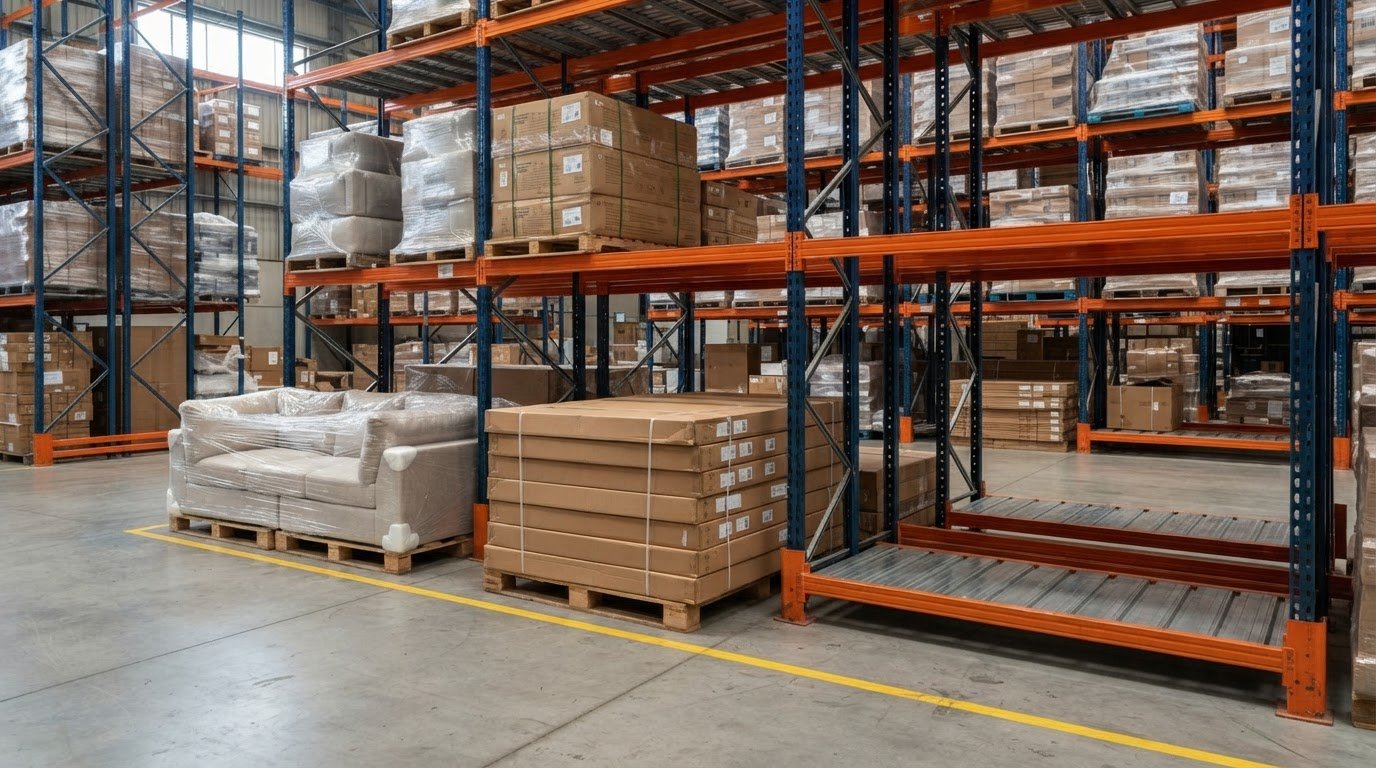
Bulky goods storage in Perth needs to suit your stock, not just the available floor space. At Pik Pak Logistics, drive-up access varies by facility, so consider how goods will be moved in and out as well as whether they’ll fit. A suitable setup gives your business room to adapt as inventory and space needs change.
If you’re weighing up storage for large or awkward items, you’ll want clear answers about access, security and space requirements. This guide covers what commercial storage can accommodate, how to plan for changing capacity, and which facility and handling details to assess.
The right choice depends on practical details, including your goods’ dimensions, handling needs and how often you need to access them. Assess these factors to make an informed decision and keep bulky inventory from disrupting day-to-day operations.
Key Takeaways
- Match storage capacity to the goods’ dimensions and handling needs, not just the amount of floor space they occupy.
- Understand how changing stock levels and access frequency can shape the unit size and rental arrangement that suits your business.
- Assess facility security and onsite management in light of the value and practical needs of the items being stored.
- For eCommerce inventory, storage can connect with order fulfilment so products can move from stock to customer delivery.
Commercial storage for inventory, equipment and furniture
Commercial storage can hold business inventory, equipment and furniture when these items compete for space at work. The right arrangement depends on each item’s dimensions, handling needs and role in daily operations.
Business and Warehouse Storage
Business storage and warehouse storage serve different operational needs. You may need term storage for seasonal stock, display furniture or equipment used between projects, while warehouse space can support inventory that moves regularly. Boxed products awaiting orders, for instance, need a different layout from office desks held during a relocation. Plan for item size, access frequency and how goods will be received or collected. These details help match storage to the job instead of treating every item as standard-sized stock.
Storage for Organisations and Industry
Commercial and industrial storage can support organisations with varied assets, from spare retail fixtures to trade equipment and archived office furniture. Start by grouping goods by type and use. Keep equipment needed for an upcoming project separate from surplus items with no immediate use, so retrieval and stock decisions are clearer. Personal, commercial and industrial storage serve different purposes, so the arrangement should reflect who owns the goods and how they’ll be used.
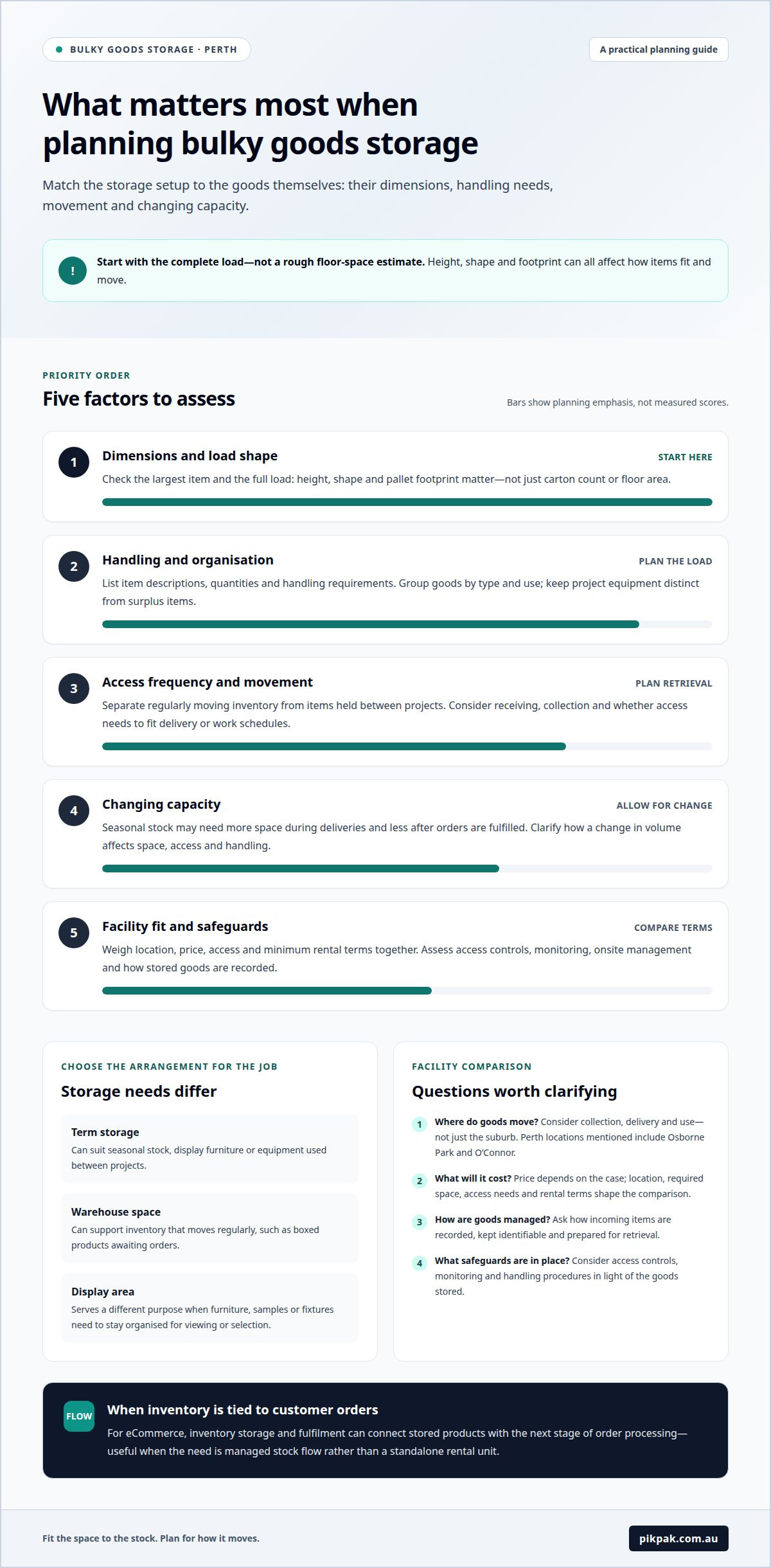
Before storing larger goods, assess the complete load rather than relying on a rough floor-space estimate. A cabinet’s height, a machine’s shape or a pallet’s footprint can affect how goods fit and move. Create an inventory list with item descriptions, quantities and handling requirements. This also helps separate saleable stock from equipment or furniture that needs to stay grouped together.
For bulky goods storage in Perth, consider how storage connects with your working space. Stock picked for customer orders has different access needs from furniture held during an office change. Make a clear plan for what is stored, how it is organised and when it may need to move. This helps commercial storage support both growing businesses and organisations with changing space requirements.
Storage rental flexibility and changing unit size
Storage needs change as stock arrives, projects finish or a business reorganises. Plan for those shifts rather than assigning every item a fixed capacity. For bulky goods storage in Perth, begin with the goods’ dimensions, access needs and expected movement.
Storage unit sizes and types suit different loads. A compact unit may fit boxed belongings, while larger items need enough floor area and clearance for placement. A display area serves another purpose: furniture, samples or fixtures may need to stay organised for viewing or selection. Match capacity to the full shape of the load, not simply the number of cartons.
For a business with seasonal stock, required capacity may rise during a delivery period and fall after orders are fulfilled. Choose an arrangement with a clear process for changing space, including how changes affect access and handling. This gives you a practical basis for planning and helps avoid paying for space that no longer supports current operations.
Apartment and storage-unit cleanouts in Perth can also create changing storage needs. Belongings may need temporary space during a move, renovation or property clear-out. Perth council collection is limited and operates once or twice a year, so it may not align with your schedule. A storage plan can keep items together while you decide whether to reuse, relocate or dispose of them.
When choosing a bulky-goods provider, assess more than advertised unit sizes. Consider the largest item, stacking limits, access frequency and whether goods need to stay grouped. Clarify how the storage arrangement handles changes in volume and how stored items are organised. These details help match storage to real business needs across Western Australia.
For eCommerce inventory that changes with incoming stock and customer orders, inventory storage and fulfilment can connect stored products with the next stage of order processing. It’s a practical option when the requirement is managed stock flow rather than a standalone rental unit.
Secure storage facilities and onsite management
Security depends on how goods are stored, access is managed and activity is overseen. Compare location, price, access and minimum rental terms together, since each affects how well a facility fits your operation.
Storage Facility Locations
When assessing travel to and from a facility in Perth, consider locations such as Osborne Park and O’Connor. The best fit depends on where goods are collected, delivered or used, not just the suburb. A business serving customers across Perth may prioritise convenient routes, while equipment used near one worksite may be better stored nearby. For operations spanning Perth and Kalgoorlie, consider how each location supports the actual movement of goods.
Comparing Location, Price and Access
Compare location, price, access arrangements and minimum rental terms against your goods and storage period. Price depends on the case and is provided after a quote request; location, required space, access needs and rental terms shape the comparison. Clarify how often you’ll retrieve goods and whether access must fit delivery or work schedules. These details make the practical differences between options clearer.
Onsite management matters when goods need organised receiving, storage or packing. Find out how incoming items are recorded, kept identifiable and prepared for retrieval. Renovation materials stored separately from office furniture, for example, are easier to locate when each group has a clear record. The warehouse process should also make clear who is responsible for managing access to stored goods.
Assess security by considering the facility’s access controls, monitoring arrangements and procedures for handling goods. Match these measures to what you’re storing: valuable equipment may call for different safeguards from boxed documents or furniture. Flexible access is useful when paired with clear control over who enters storage areas. A clear explanation of the procedures gives you a practical basis for comparing facilities, rather than relying on a general security claim.
Storage for bulky and oversized goods
Bulky goods need more than spare floor space. A commercial fridge, long display counter or crated machine can be difficult to position, protect and retrieve. Before choosing storage, record each item’s length, width, height, weight and handling requirements. These details help you assess whether the facility can accommodate the load and how the goods should be arranged.
Access matters as much as capacity. A wide item may fit inside a warehouse but block nearby stock without a retrieval plan. Consider how it will move through the facility, whether it needs to stay upright and what must remain accessible. A business retrieving one display stand regularly, for example, needs a different layout from one storing equipment until a project ends.
Businesses across Australia store oversized goods during relocation, renovation or changes in stock levels. Separate items by purpose, then record which goods need to be collected first. Keep components together where practical, such as a table and its matching base, to make retrieval easier. Clear item records also help distinguish active stock from equipment held for later use.
Secure storage should suit the goods, not just the available space. Protective packing can help reduce contact between furniture surfaces or exposed parts, while a stable layout can limit unnecessary handling. Ask how incoming items are recorded, where they’ll be placed and how retrieval is arranged. A friendly, clear explanation of these steps helps you assess whether the handling process fits your requirements.
For businesses comparing bulky goods storage in Perth, the key is matching dimensions, handling and collection needs to the storage arrangement. A provider’s warehouse receiving process can clarify how goods are documented and organised on arrival. Consider that process alongside access and the expected storage period before deciding. Review warehouse receiving steps to understand the information used when goods arrive.
Pik Pak Logistics: Inventory Storage
Pik Pak Logistics provides Inventory Storage for online stores that need stock held as part of order fulfilment. It’s a practical option when products need more than temporary space, especially when orders must move from stored inventory to picking, packing and dispatch.
With Pick, Pack, and Ship Services, products can be stored and prepared for customer orders. Home delivery shipping options support the next stage, while Returns Management (Reverse Logistics) handles returned items. This connected approach suits businesses managing saleable products, rather than equipment or furniture that only needs standalone storage.
To discuss inventory storage for your business, contact Pik Pak Logistics.
Plan your next storage move with confidence
For bulky goods storage in Perth, connect your storage decision with how stock moves through your business. Identify which items need to remain available, which can be stored longer term, and how inventory changes could affect operations. A clear plan helps keep storage aligned with your priorities as space needs evolve.
Pik Pak Logistics supports online stores that want inventory storage connected with order fulfilment. If that approach fits your business, contact the team to discuss your requirements and next steps.
Contact Pik Pak Logistics to discuss your storage needs. A practical plan can give your team more room to focus on the work ahead.
Frequently Asked Questions
Do your storage units have drive-up access?
Pik Pak Logistics provides inventory storage through a managed warehouse service, rather than drive-up self-storage units. Drive-up access is therefore not the basis of this service. For online retailers, the practical question is how stock is received, recorded and prepared for orders. For example, boxed products can be managed as inventory for picking and packing, instead of being collected from an individual storage unit.
Need a Container and Warehouse Storage Solution Partner in Perth who takes care of everything?
Pik Pak Logistics supports online stores with inventory storage and order fulfilment, including picking, packing and shipping customer orders. Home delivery shipping options can be part of that order flow. This model suits products that need to move from stored stock to customer dispatch. It’s designed around eCommerce fulfilment, so the goods are products managed as inventory for sale.
What is the minimum storage period?
For Pik Pak Logistics, inventory storage is part of a third-party logistics service for online stores, not a conventional self-storage unit rental. The service centres on holding products within the fulfilment process. To plan, consider how stock levels and order activity change over time, since these shape the space and handling your business needs.
What bulky goods storage options are available in Perth, WA?
For Perth businesses considering bulky goods storage, options depend on whether the goods are commercial inventory or items needing standalone storage. For eCommerce products, a 3PL arrangement can combine inventory storage with picking, packing and shipping. Returns management can also support the flow of returned products. Plan around item dimensions, handling requirements and whether goods need to move into customer orders.
Which Perth self-storage facilities accept bulky items such as furniture, appliances and equipment?
Pik Pak Logistics provides managed inventory storage for online stores, rather than a directory of Perth self-storage facilities. Furniture, appliances and equipment each have different dimensions and handling needs, so they shouldn’t be assumed to suit an inventory fulfilment setup. For products held for online sale, a 3PL service connects storage with order processing and dispatch, keeping the focus on stock movement.
What unit sizes suit bulky goods storage in Perth?
For bulky goods storage in Perth, suitable capacity depends on each item’s full dimensions and handling needs. A tall appliance, long table or group of cartons may occupy space differently, even when the floor footprints appear similar. For eCommerce inventory, the storage plan also needs to account for stock quantities and order access. These details help define practical capacity without relying on a generic unit label.