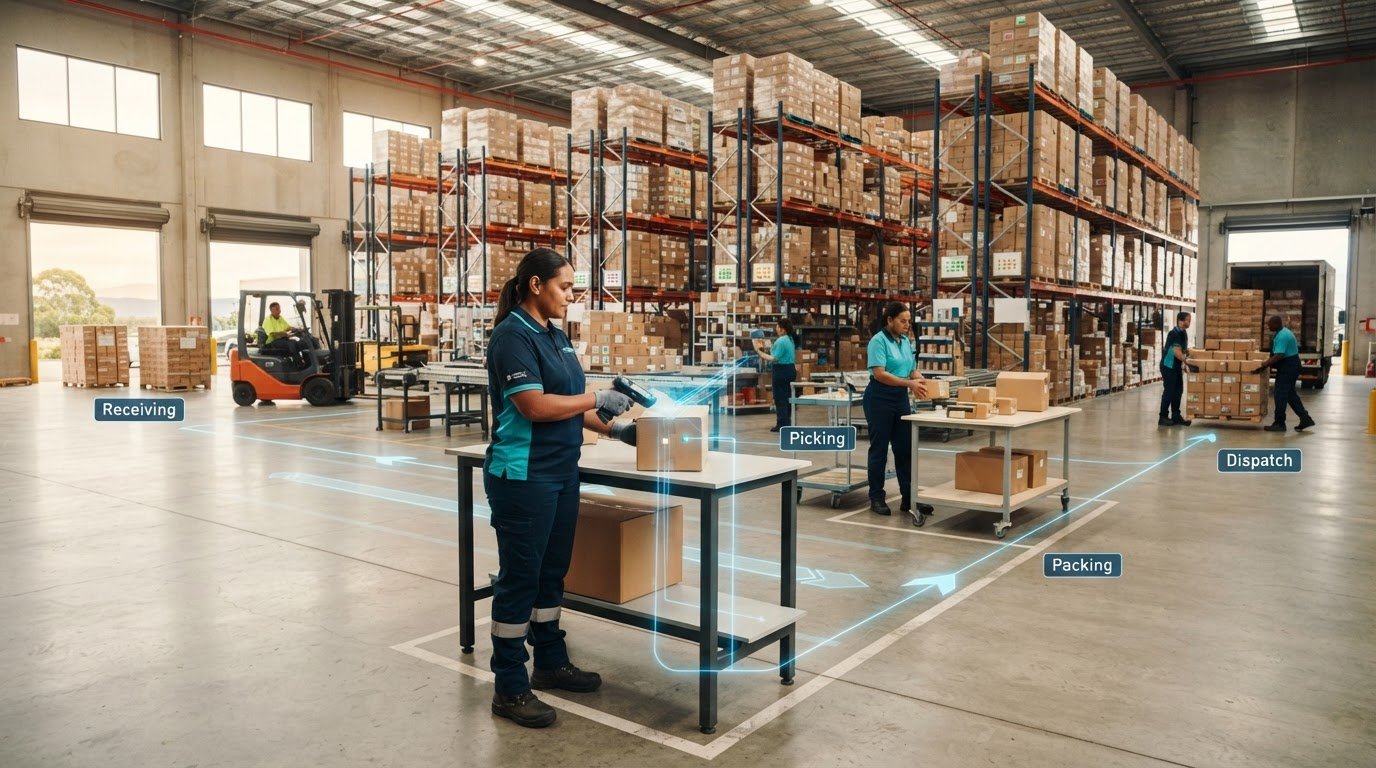
Traceability depends on what gets recorded at every handover, not just where a carton is stored. Batch tracking with a 3PL in Australia links stock to its batch details as it arrives, moves through storage, and is picked for an order. A warehouse management system (WMS) uses barcode scans to record stock movements and can track batch and serial numbers.
If you manage products with expiry dates or need to identify specific items, clear stock records matter. They help you see what’s on hand and which batch is being picked, so stock rotation and order fulfilment are easier to manage.
This guide explains how batch traceability works across the supply chain, what barcode scanning records, and how batch tracking differs from serial number tracking. You’ll also learn how a 3PL WMS connects stock movements with order fulfilment, and what to consider when choosing a 3PL for your Australian supply chain.
Key Takeaways
- Map batch details from warehouse receipt through storage, picking and dispatch to make product movements easier to trace.
- For expiry-dated stock, use batch records and FEFO rotation so products approaching expiry are prioritised for dispatch.
- Use barcode scans at key handling steps to update stock records and help validate that the right items are picked and packed.
- Distinguish batch tracking, which follows a group of products, from serial number tracking, which identifies an individual item.
Batch traceability across the supply chain
Batch traceability connects a product group with its warehouse movements and orders. Batch tracking with a 3PL in Australia depends on consistent identifiers and records at each handover.
Batch and Lot Tracking Basics
Batch or lot tracking assigns a shared identifier to products made or received together. Product traceability links that identifier to stock location and movement history, helping teams find remaining stock and identify orders that included a particular lot.
Australian 3PL providers can offer batch and lot traceability when their warehouse systems and workflows support it. Compare whether records can be searched by batch, SKU and order.
Traceable Movement from Receipt to Shipment
For Shopify, ERP and inventory integrations, check how batch details map between systems and whether order records retain the relevant identifier. If a recall affects one lot, movement records help locate remaining stock and related orders.
Product Labelling for Traceability
Readable product or carton labels help staff capture the correct batch identifier during handling. Match the label to the SKU and warehouse record, because a mismatch can disrupt traceability. Australian record-keeping and labelling requirements depend on the product category, so identify the rules that apply to each product before setting warehouse procedures.
Comparing 3PL Capabilities and Service Levels
To compare providers, test a sample lot through receiving, storage, picking, dispatch and returns. Check reporting access, exception handling and how quickly staff can identify affected stock. Choose batch tracking with a 3PL in Australia that supports your products’ identifiers and operational workflow.
Tracking costs depend on handling, labelling, integration and reporting needs; pricing is provided after a quote request. Inaccurate records can delay locating affected stock, so assess how discrepancies are flagged and stock is isolated.
Barcode scanning and stock tracking
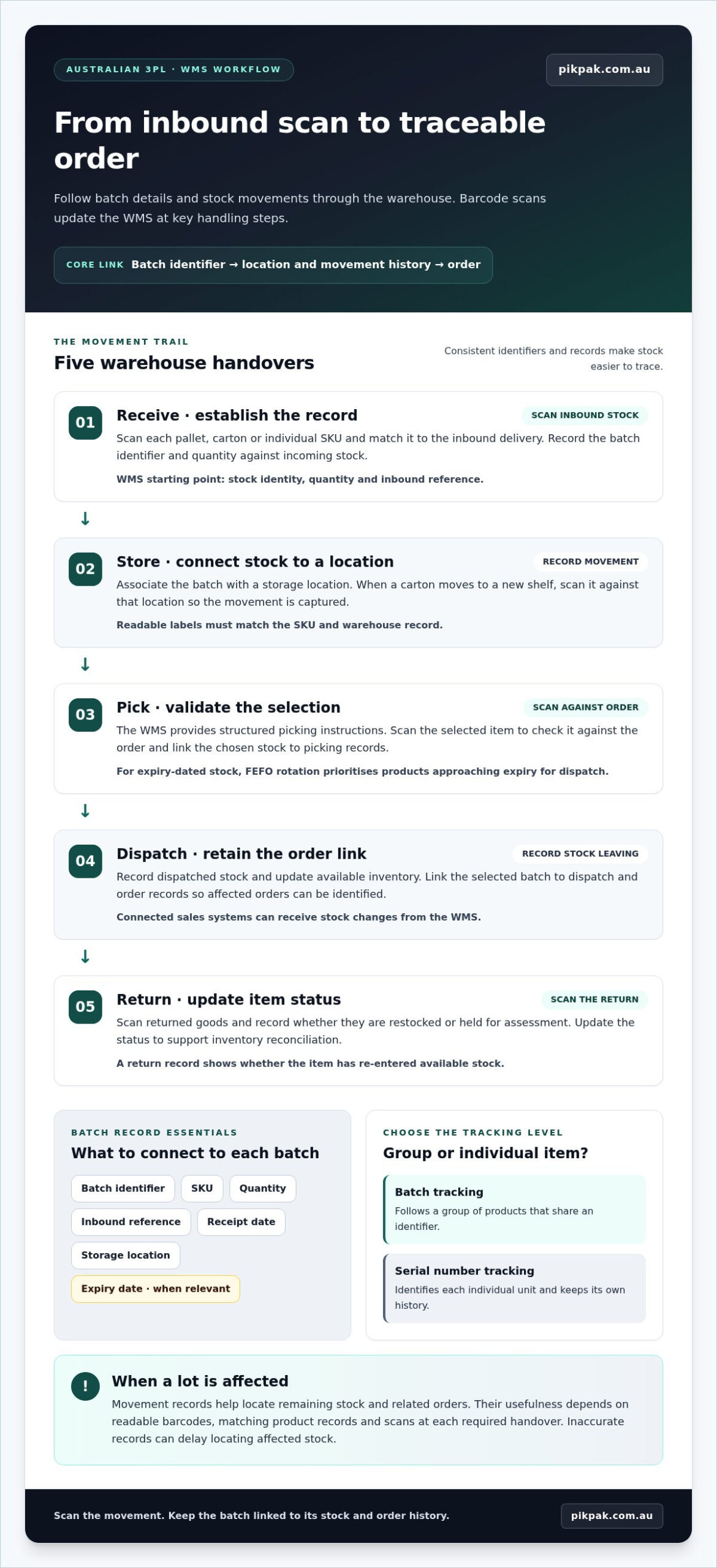
A barcode scan records a physical stock movement in the warehouse management system (WMS). At receiving, staff scan each pallet, carton or individual SKU and match it to the inbound delivery. This gives the system a starting point for tracking location and quantity. For example, a carton moved to a new shelf can be scanned against that location.
As warehouse operations continue, the WMS updates inventory levels in real time as goods are picked, packed and dispatched. Staff follow structured picking instructions and scan items at key steps to validate each selection. If a customer orders one blue water bottle, a scan can help catch a different colour or SKU before packing.
Barcode scans support accuracy by checking that the item handled matches the order or stock record. They also create a movement history that helps teams investigate discrepancies. For that history to be useful, barcodes must be readable, product records must match, and staff must scan at each required handover.
- Receive: Scan incoming stock and record its quantity and warehouse location.
- Pick: Scan the selected item to validate it against the order.
- Dispatch: Record the stock leaving the warehouse and update available inventory.
- Return: Scan returned goods, then record whether they are restocked or held for assessment.
For eCommerce businesses, inventory visibility depends on the connection between the WMS and sales channels. When Shopify or another commerce platform sends an order, the WMS can allocate stock and create picking instructions. Stock changes then flow back to connected systems, reducing the risk of selling inventory already allocated to another order.
Returns need their own scan and status update. Recording each returned item supports inventory reconciliation and shows whether it has re-entered available stock. A clear warehouse technology setup helps connect scanning steps with order fulfilment workflows.
Batch and serial number tracking
Batch tracking follows a group of products, while serial tracking identifies each individual unit. The right method depends on the product and how precisely a brand needs to trace movement through the supply chain.
Information Recorded for Each Batch
For each batch, record its identifier, SKU, quantity and inbound reference. Add the receipt date, storage location and expiry date when relevant. These details connect the batch to warehouse stock and make it easier to locate during picking, dispatch or a stock investigation.
Keep serial numbers at unit level when each item needs its own history. For example, a batch code can group a carton of identical products, while separate serial numbers distinguish each device inside it. Consistent records help platforms report the right level of detail.
Setting Up Batch Tracking with a 3PL
Start by defining which products need batch or serial tracking, then standardise identifiers and required data fields. Map each SKU to its tracking method and agree how inbound stock will be labelled and recorded. Next, configure the WMS workflow and its integrations with eCommerce, ERP or inventory platforms so order and stock records stay aligned.
Test the process with a sample inbound delivery. Follow its records through storage, picking, packing, dispatch and, where relevant, returns. Compare the physical label with the WMS entry, then confirm that an order can be linked to the correct batch or unit. Fix mismatches before applying the workflow to regular stock.
Use WMS technology support to explore how system workflows can connect inventory records with order handling.
Pik Pak Logistics: Pick, Pack, and Ship Services
Pik Pak Logistics helps eCommerce businesses manage inventory storage, order picking, packing and shipping. Its Pick, Pack, and Ship Services and home delivery shipping options support the fulfilment workflow, while Returns Management handles returned products through reverse logistics.
If you’re reviewing how warehouse operations fit your batch-recording process, consider how storage, order handling and returns connect to your stock records. Visit Pik Pak Logistics to learn more about its services.
Make Your Next Fulfilment Move with Confidence
Turn batch tracking with a 3PL in Australia into a practical operating plan by defining who records product details, when stock status changes, and how exceptions are handled. These decisions help connect inventory controls with day-to-day fulfilment, without adding unnecessary steps for your team. Start by mapping the handovers that matter most to your products, from warehouse storage through dispatch and returns.
Pik Pak Logistics offers Pick, Pack, and Ship Services, Inventory Storage, and Home delivery shipping options for eCommerce businesses. These services can support the physical flow of stock while you maintain clear batch-recording procedures. Set out your product requirements and fulfilment priorities, then discuss how the logistics workflow can fit your operation. Contact Pik Pak Logistics today to explore the next step and keep your business moving forward.
Frequently Asked Questions
What Is a 3PL Warehouse Management System?
A 3PL warehouse management system is software that helps a logistics provider manage stored inventory and customer orders for businesses. For an Australian online store, it can show stock and order status through a web-based platform, without requiring the business to run its own warehouse system. For example, a store can use the platform to view whether an item is available before promoting it online.
Which Australian 3PL providers offer batch tracking and lot traceability?
Australian 3PL providers can offer batch and lot traceability when their warehouse systems and workflows support it. Compare whether their records can be searched by batch, SKU and order.