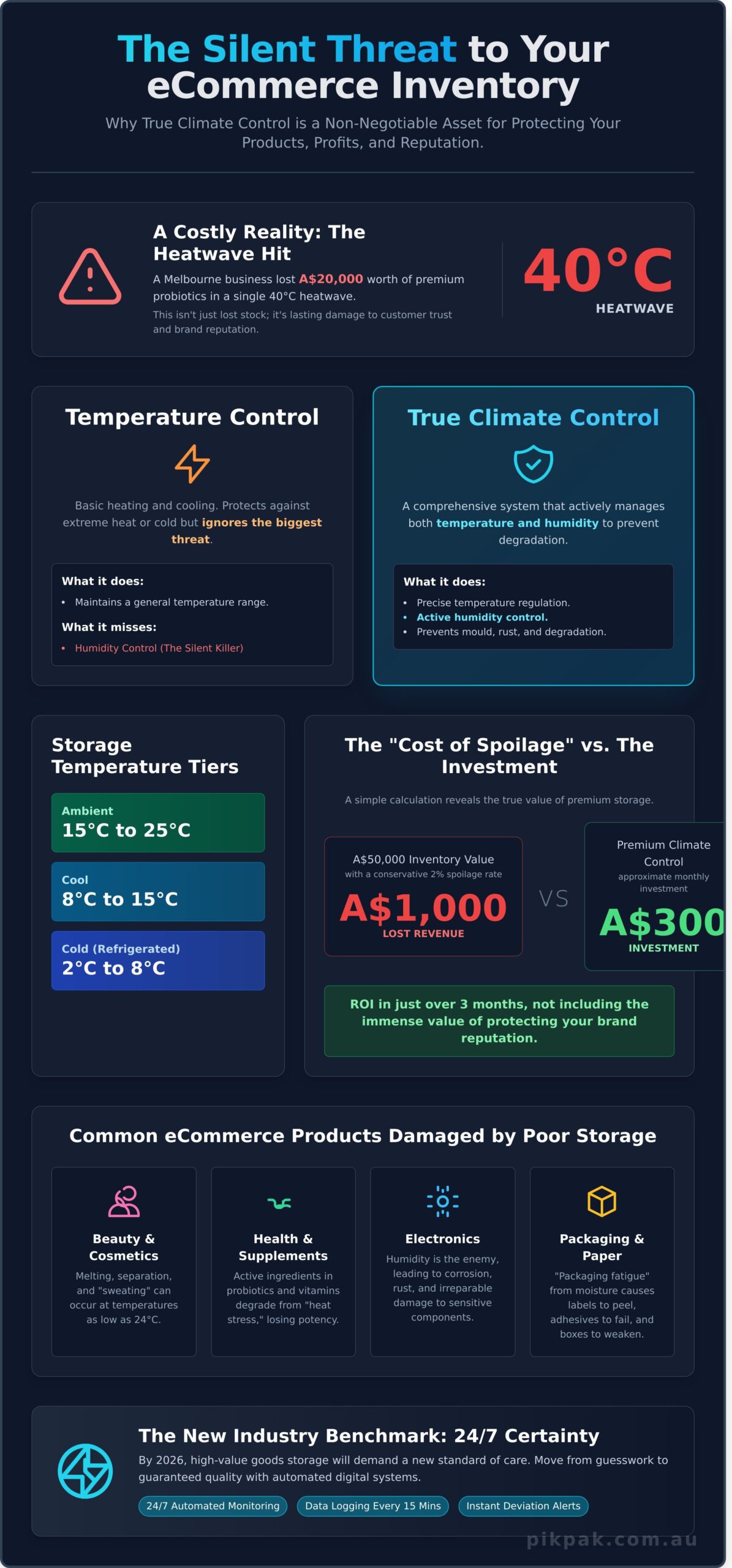
Last summer, a Melbourne-based health supplement company watched A$20,000 of their premium probiotics become unsellable in a single 40°C heatwave. The stock was a total loss, but the damage from the inevitable customer complaints lasted for months.
It’s a gut-wrenching feeling, isn’t it? You’ve worked hard on a fantastic product, only to see profits melt away in a standard warehouse. The anxiety over product quality is a constant headache. This guide is your solution. We’ll show you how implementing the right climate controlled storage for ecommerce doesn’t just protect your inventory; it secures your brand’s reputation and eliminates spoilage for good, letting you focus on your business.
Ahead, we’ll break down the exact temperature and humidity needs for popular products, reveal the tech that gives you 24/7 visibility, and show you how to find a 3PL partner that makes managing your inventory conditions simple and secure.
Key Takeaways
- Learn the crucial difference between simple temperature control and true climate control to properly protect your products from humidity damage.
- Identify which of your products-from beauty to electronics-are most at risk from Australia’s extreme heat and how to secure their quality.
- Compare the hidden costs of DIY storage versus partnering with a 3PL for climate controlled storage for ecommerce to see which model truly scales your brand.
- Get a simple checklist of technical questions to ask any facility about their certifications and backup systems to guarantee your inventory is secure 24/7.
What is Climate Controlled Storage for eCommerce?
You’ve sourced the perfect products. You’ve built a beautiful online store. But what happens to your inventory between receiving it from your supplier and shipping it to a customer? For many eCommerce businesses in Australia, a standard warehouse just won’t cut it. The extreme shifts from a humid 35°C summer day to a cool, dry winter morning can silently ruin sensitive stock. This is where professional climate controlled storage for ecommerce becomes a non-negotiable part of your logistics chain.
At its core, it’s a proactive defence for your inventory. A standard storage unit might protect your goods from rain, but it does little to stop the damaging effects of heat, cold, and especially moisture. To truly understand what climate-controlled storage is, you have to look beyond simple air conditioning. It’s an active system designed to maintain a stable environment, ensuring your products reach your customers in the exact condition you intended.
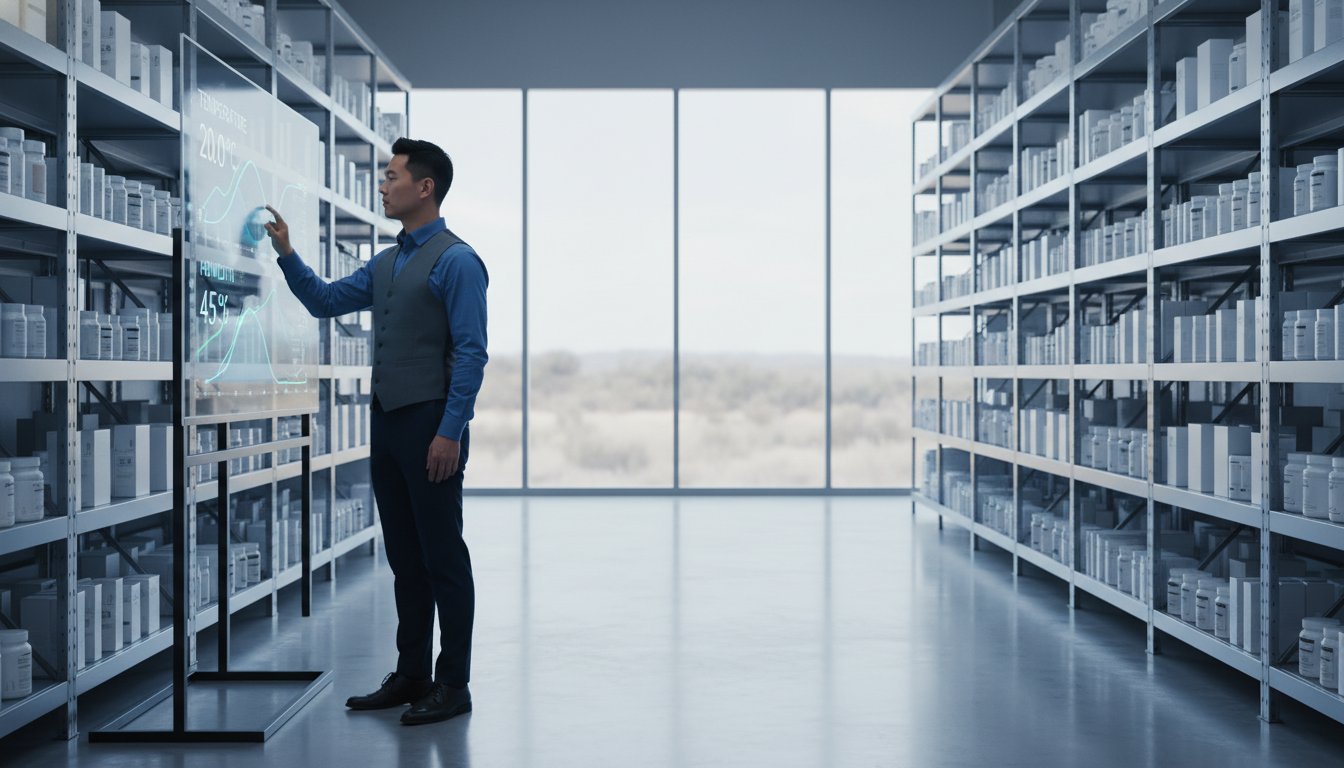
But what does that mean in practice? It’s about moving from guesswork to certainty. By 2026, the industry benchmark for high-value goods storage will demand 24/7 automated monitoring. This isn’t just a guard checking a thermometer; it’s a digital system that logs temperature and humidity levels every 15 minutes, providing an unbroken chain of custody and instant alerts if conditions deviate. This is the new standard of care.
Climate Control vs. Temperature Control: Know the Difference
Many 3PLs use “temperature controlled” and “climate controlled” interchangeably, but they are worlds apart. Temperature control is simple heating and cooling. Climate control tackles the real silent killer of inventory: humidity. For products with electronics, paper-based packaging, or organic ingredients, airborne moisture is far more destructive than a few degrees of heat, leading to mould, rust, and degradation. In an Australian 3PL context, temperature ranges are typically defined as:
- Ambient: 15°C to 25°C
- Cool: 8°C to 15°C
- Cold: 2°C to 8°C (often called ‘refrigerated’)
Climate-controlled storage is a comprehensive system that actively regulates both temperature and moisture levels to prevent product degradation over time.
The “Cost of Spoilage” vs. The Cost of Premium Storage
Thinking climate control is too expensive? It’s time to calculate your “Risk Threshold.” It’s a simple calculation. If you have A$50,000 of inventory in a standard warehouse and experience a conservative 2% spoilage rate from heat or moisture damage, you’ve lost A$1,000. If the premium for proper climate controlled storage for ecommerce is A$300 a month, you are already saving money in just over three months. This doesn’t even account for the hidden costs of customer returns, negative reviews, and the wasted marketing spend to acquire a customer you ultimately disappointed. A damaged product isn’t just a lost sale; it’s a damaged reputation.
Finally, consider “thermal inertia.” Your product’s packaging offers temporary protection during a short delivery trip. But over weeks or months in a warehouse, that protection is meaningless. The ambient environment will eventually win. Don’t leave your business’s most valuable assets to chance. Secure them properly. It’s the simple, pragmatic choice.
Why Sensitive eCommerce Products Require Environmental Precision
In Australia, the environment inside a standard warehouse is anything but standard. During the 2019-2020 summer, the Bureau of Meteorology recorded numerous days over 40°C across the country. Inside a typical metal-clad fulfilment centre, that ambient heat can easily push internal temperatures towards 50°C. For an eCommerce business selling sensitive goods, this isn’t just an inconvenience; it’s a direct threat to your inventory, your customer satisfaction, and your bottom line.
This extreme heat and fluctuating humidity creates a cascade of problems. Active ingredients in high-value products suffer from “Heat Stress,” a process where chemical compounds degrade, rendering them ineffective long before their expiry date. Think of expensive Vitamin C serums losing their antioxidant power or probiotic supplements becoming useless. Beyond the product itself, packaging begins to fail. We call this “packaging fatigue,” where labels peel from condensation, adhesives on boxes weaken, and plastics become brittle. Your premium product suddenly looks second-rate before it even leaves the shelf. This is where professional climate controlled storage for ecommerce becomes a non-negotiable asset.
Beauty and Cosmetics: Preventing Separation and Melting
The delicate balance of ingredients in cosmetics is easily disrupted. Organic oils and natural butters, found in many clean beauty products, can begin to melt or separate at temperatures as low as 24°C. Lipsticks lose their form and “sweat” above 30°C. High humidity, especially in coastal cities like Sydney and Brisbane, creates the perfect breeding ground for mould in natural products that avoid harsh preservatives. A product’s “shelf life” is not a guarantee; it’s a variable entirely dependent on its storage environment.
Electronics and Tech: The Silent Threat of Humidity
For high-end electronics, moisture is a silent killer. Sustained humidity above 60% can lead to micro-corrosion on internal circuit boards, causing device failure weeks or months after purchase and leading to costly warranty claims. A stable environment also helps with Electrostatic Discharge (ESD) control, as overly dry air increases static risk. Furthermore, the health of lithium-ion batteries is directly tied to temperature. Major manufacturers recommend against storing devices above 32°C, as heat significantly accelerates permanent battery capacity loss.
The need for precision extends to a surprising range of products sold online, from health supplements to specialised goods. For instance, many diagnostic kits, dental materials, and lab reagents have strict temperature requirements to remain effective, a standard underscored by international guidelines like the FDA requirements for medical device storage. Protecting this kind of inventory isn’t a luxury; it’s a core business requirement. Managing these variables is a complex task, but it doesn’t have to be your headache. A specialised 3PL partner can handle the precision storage for you, so you can focus on growing your brand.
3PL vs. Self-Storage: Which Climate-Controlled Option Scales Your Business?
As your eCommerce business grows, the spare room or garage quickly becomes unworkable. The next logical step seems to be a local self-storage unit. It feels simple and affordable. But choosing the right climate controlled storage for ecommerce is more than a cost comparison; it’s a strategic decision that directly impacts your ability to scale.
The reality of the DIY storage unit approach involves a mountain of “invisible work.” It’s the hour spent in traffic driving to the unit, the manual labour of unloading new stock, the tedious process of picking and packing orders on a concrete floor, and the weekly trips to the post office. It’s the constant worry about your manual inventory spreadsheet being inaccurate. This isn’t just an inconvenience; it’s a direct brake on your growth, pulling you away from marketing, sales, and product development.
The Hidden Risks of DIY Climate Storage
Beyond the time sink, self-storage facilities present risks that can jeopardise your inventory. What’s your plan if the single air conditioning unit at your facility fails during a 40°C Sydney heatwave? Most consumer-grade units lack the commercial redundancy, backup power, and 24/7 monitoring of a professional logistics warehouse. This puts your temperature-sensitive products at immediate risk. You’re also battling to maintain a clean environment in a public space, limiting your ability to properly store sensitive goods like cosmetics or supplements.
Ultimately, manual fulfilment from a storage unit throttles your order volume. Handling 10 orders a day might be possible, but processing 100 orders after a successful marketing campaign becomes a logistical nightmare that can lead to shipping delays and unhappy customers.
The Efficiency Gains of Integrated 3PL Fulfillment
A third-party logistics (3PL) partner transforms storage from a passive cost into an active, automated part of your business. The complex “Pick, Pack, and Ship” process becomes effortless. When an order comes through your online store, our advanced Warehouse Management System (WMS) instantly directs our team to pick the correct item, pack it securely, and dispatch it with the best carrier. It’s all done for you.
This automated system provides complete, real-time inventory visibility. You can see exactly what stock you have, down to the last unit, from your laptop or phone. No more guessing games or surprise stock-outs. This integrated process is the engine of a modern supply chain. You can learn more in our complete guide to eCommerce order fulfillment.
Scalability is where a 3PL truly outshines self-storage. With a storage unit, you pay a flat fee, like A$350 per month for a 10-square-metre space, whether it’s full or half-empty. A 3PL operates on a “pay as you go” model. You only pay for the pallet space you actually use. During a slow month, your costs go down. As you prepare for the holiday rush, you can scale up your space instantly without signing a new lease. This flexible approach, combined with superior security and commercial insurance policies designed to protect high-value inventory, makes a professional 3PL partner the smart choice for any serious eCommerce brand.
Technical Checkpoints: Evaluating a Climate-Controlled Facility in 2026
Finding a warehouse that says it’s “climate-controlled” is easy. Finding one that can prove it with data, certifications, and fail-safes is the real challenge. As Australian consumer standards and regulations tighten, your brand’s reputation depends on the technical integrity of your 3PL partner. By 2026, a simple thermostat on the wall just won’t cut it. You need to look under the hood to ensure the facility’s systems are as robust as your products are sensitive.
Your due diligence should feel like a technical audit, because it is. Start with the essentials. If you sell food, health, or beauty products, ask for current HACCP or ISO 22000 certifications. These aren’t just paperwork; they are proof of a systematic approach to safety and quality control, recognised by Food Standards Australia New Zealand. Then, ask about the worst-case scenario. What happens during a 40°C Sydney heatwave if the power grid fails? A premium facility will have automated backup generators and redundant HVAC systems that kick in within minutes, not hours, protecting your inventory from catastrophic loss.
A truly modern provider of climate controlled storage for ecommerce also understands that a warehouse isn’t one single environment. It’s a collection of micro-climates. That’s why “Zone Mapping” is critical. This involves using dozens of sensors to create a detailed temperature and humidity map of the entire space, identifying and eliminating any “hot spots.” This ensures the product on the top shelf in a back corner receives the exact same consistent airflow and temperature as the one right by the main cooling unit.
Audit Trails and Compliance Reporting
For many eCommerce brands, especially in the health and wellness space, a digital paper trail of storage conditions isn’t a nice-to-have; it’s a legal necessity. You need an unbroken chain of data to prove compliance to bodies like the TGA. During the vetting process, ask a potential partner to see a sample “Temperature Map” or a historical data log. Can they show you second-by-second data for the last 90 days? Top-tier systems also feature automated alerts. It’s one thing to get an email report in the morning, but it’s another to have an on-call engineer automatically notified at 2 AM because a sensor has deviated by a single degree.
Integration with Your eCommerce Tech Stack
What seems like a complex technical challenge is an easy game with the right software. Your warehouse data shouldn’t live in a silo. At Pik Pak, our “point, click and connect” software integrates environmental data directly into your dashboard. This gives you a single source of truth for real-time inventory tracking, location, and storage conditions, providing total peace of mind for high-value items like premium cosmetics or artisan foods. The future of transparent logistics is API access, allowing you to pull warehouse data directly into your own systems. It’s about giving you complete control and visibility, so you can focus on growing your business. See how Pik Pak’s integrated WMS provides total environmental transparency for your inventory.
How Pik Pak Protects Your Inventory and Frees Up Your Time
Managing inventory, fulfilling orders, and dealing with couriers can feel like a full-time job in itself, especially when your products demand specific environmental conditions. It’s the operational “headache” that distracts you from your real goals. At Pik Pak Logistics, our philosophy is simple: we make complex logistics an easy game. We take the entire fulfilment process off your plate so you can get back to focusing on what you do best-innovating, marketing, and growing your brand.
The foundation of our service is our network of state-of-the-art Australian warehousing and storage facilities. Centrally located in Melbourne for optimal national reach, these secure centres are more than just sheds. They are tech-driven hubs designed for precision and safety, featuring:
- Advanced Warehouse Management Systems (WMS) for 100% inventory accuracy.
- 24/7 CCTV surveillance and access control systems.
- Comprehensive fire suppression and pest control protocols.
- Specialised zones offering premium climate controlled storage for ecommerce.
This infrastructure ensures your goods-from delicate cosmetics and artisan chocolates to sensitive electronics-are protected and accounted for from the moment they arrive.
For businesses with seasonal demand, traditional warehousing is a cash flow killer. Why pay for empty shelf space for eight months of the year? Our “Pay as you go” model aligns your costs directly with your revenue. If you sell winter apparel that peaks from May to August, you only pay for the increased space you use during those months. This eliminates the dead weight of a fixed lease and frees up capital you can reinvest into marketing or product development. It’s a smarter, leaner way to manage your logistics.
Pick, Pack, and Ship Made Easy for Sensitive Goods
We understand that one-size-fits-all handling doesn’t work for sensitive goods. Our team is expertly trained to manage a strict “Climate Chain,” ensuring temperature integrity is maintained from our storage zones right through to the moment of dispatch. We use specialised insulated packaging and partner with couriers who understand the demands of cold chain logistics. This meticulous process guarantees your products arrive at your customer’s door in the exact condition you intended.
Start Scaling Your eCommerce Brand Today
Outgrowing your garage or a cramped self-storage unit is a milestone to celebrate, not a problem to fear. We make the transition to a professional 3PL partner seamless. Our onboarding is as simple as connecting your Shopify, WooCommerce, or other major eCommerce platform to our system-a process that takes less than five minutes-and then sending us your stock. We handle the rest. Stop spending your evenings packing boxes and start building your empire. Let our expertise in climate controlled storage for ecommerce become your competitive advantage.
Ready to eliminate the headache of logistics and free up your time? Get Started with Pik Pak Logistics today and discover how simple scaling can be.
Secure Your Brand’s Future with Precision Storage
Protecting your inventory isn’t just a cost; it’s a direct investment in your brand’s reputation. As you plan for 2026 and beyond, remember two critical points: sensitive products demand environmental precision to avoid costly damage, and a scalable 3PL partner will always outperform a basic self-storage unit for growth. Choosing the right climate controlled storage for ecommerce isn’t about finding space. It’s about finding a partner who makes logistics easy so you can focus on what you do best.
Stop worrying about temperature fluctuations and inventory management. Pik Pak provides state-of-the-art secure warehousing with real-time WMS visibility, giving you complete peace of mind. Our pay-as-you-go flexibility means you only pay for what you use, with no lock-in software fees. What seems like a challenge is an easy game with the right team on your side.
Focus on your business and let Pik Pak handle the hard work-Get a Quote Today and see how simple scaling your Australian eCommerce brand can be.
Frequently Asked Questions About Climate Controlled Storage
Is climate-controlled storage the same as cold storage?
No, climate-controlled storage is not the same as cold storage. Climate-controlled warehousing maintains a consistent, moderate temperature range, typically between 13°C and 24°C, while also controlling humidity levels. This protects sensitive goods from fluctuations. Cold storage, on the other hand, is for perishable items like food or pharmaceuticals, requiring constant refrigeration or freezing temperatures, often below 0°C. Think of it as protecting quality versus preventing spoilage.
How much does climate-controlled storage for eCommerce cost in Australia?
The cost for climate controlled storage for ecommerce in Australia typically ranges from A$35 to A$55 per cubic meter per month. The final price depends on the volume of inventory you store and the specific temperature and humidity requirements. Warehouses in major hubs like Sydney or Melbourne may have different rates than those in Brisbane. At Pik Pak, we offer simple, transparent ‘pay as you go’ pricing, so you only pay for the space you use.
What products absolutely require climate-controlled warehousing?
Any product that can be damaged by extreme heat, cold, or humidity absolutely requires climate-controlled warehousing. This includes cosmetics that can melt, nutritional supplements that lose potency, and electronics with sensitive components. Other common items are wooden goods that can warp, artwork, candles, and premium confectionery like chocolate. Storing these items correctly prevents costly damage and protects your brand’s reputation with every single order.
Can humidity damage my eCommerce packaging even if the product is fine?
Yes, high humidity can definitely damage your packaging, compromising your brand presentation even if the product inside is intact. Humidity levels above 60% can weaken cardboard boxes, causing them to lose structural integrity. It can also make adhesive labels peel and create an environment for mould to grow on packaging materials. This creates a poor unboxing experience for your customer and can lead to damage during transit due to weakened boxes.
How does Pik Pak monitor warehouse temperatures and humidity?
We make monitoring simple and secure with an automated Warehouse Management System (WMS). Our facilities are equipped with digital sensors placed approximately every 100 square meters that monitor temperature and humidity 24/7. These sensors log data every 15 minutes. If conditions deviate from the pre-set range, our central operations team receives an instant alert, ensuring your inventory is always protected and our operations run like clockwork.
What happens to my sensitive products during the shipping process?
Protecting your products doesn’t stop at the warehouse door. For highly sensitive items, we use specialised packaging solutions like thermal mailers or insulated box liners to mitigate temperature changes during transit. We also work with our network of couriers to prioritise these shipments, minimising time spent on hot loading docks or in non-insulated vehicles. It’s all part of our end-to-end service, ensuring your products arrive in perfect condition.
Is there a minimum inventory requirement for climate-controlled 3PL storage?
No, there are no minimum inventory requirements to use Pik Pak’s climate-controlled 3PL storage. We believe logistics should be easy and flexible, which is why our model is built to “scale as you grow.” Whether you have one pallet or one hundred, you get access to our premium facilities. Our “pay as you go” pricing ensures you aren’t locked into paying for space you don’t need, making professional fulfilment accessible for every eCommerce business.
How do I switch from my current warehouse to Pik Pak climate-controlled storage?
Switching to Pik Pak is a simple, three-step process designed to be completely headache-free. First, you get in touch with our team to discuss your needs. Second, we create a seamless transition plan to move your inventory from your current location to our facility. Finally, you connect your eCommerce store to our platform with a few clicks. Let Pik Pak do the hard work; we’ll handle the receiving and organising so you can focus on your business without interruption.