

The biggest sales weekend of the year is approaching, and for many Aussie eCommerce businesses, it brings a mix of excitement and pure dread. The fear of overselling, the vision of a chaotic warehouse, and the inevitable wave of angry customer emails about shipping delays can turn your biggest opportunity into your biggest headache. But what if it could be different? What if you could approach the peak season with complete confidence? Solid black friday logistics planning is what separates the businesses that thrive from those that just survive.
Forget the stress and reactive scrambling. We’ve created the ultimate playbook to make your peak season logistics run like clockwork. This guide breaks down everything you need-from smart inventory forecasting and streamlined warehouse operations to efficient shipping and returns management-into a clear, step-by-step checklist. It’s time to stop worrying and start preparing for your most profitable and smoothest Black Friday yet. Let’s make this your easiest peak season ever.
Key Takeaways
- Understand why the massive surge in BFCM orders requires a completely different operational approach than your day-to-day logistics.
- A successful peak season starts months in advance; our timeline breaks down your black friday logistics planning into simple, manageable steps.
- Master the entire sales cycle by learning how to manage real-time execution during the sale and the critical returns process that follows.
- Discover how automating your fulfilment can help you scale effortlessly, freeing you up to focus on sales, not shipping boxes.
Why Your Standard Logistics Will Fail During Black Friday
Think of Black Friday not as a busy sales day, but as the ultimate stress test for your eCommerce business. It’s more than just discounts; for many retailers, it marks the unofficial beginning of the Christmas shopping season, unleashing an unprecedented wave of demand. Your everyday, ‘business-as-usual’ logistics aren’t just strained by this-they’re often completely broken. Without robust black friday logistics planning, you risk turning your biggest sales opportunity into your most significant operational headache.
The Order Volume Tsunami
The scale of Black Friday in Australia is immense. In 2023, shoppers spent an estimated A$8 billion over the four-day sale period. For your warehouse, this translates to an exponential surge. An operation handling 10 orders an hour can suddenly face 100. This is where manual or inefficient processes crumble, causing a domino effect of delays across picking, packing, and dispatch, leading to critical bottlenecks and missed courier cut-offs.
The Customer Experience Paradox
Here’s the challenge: customers demand deep discounts while also expecting fast, free, and flawless delivery. They have little patience for delays, even during the busiest shopping event of the year. The pressure to maintain picking accuracy and dispatch speed is enormous. A single delayed parcel or incorrect item can instantly erase all the goodwill from a fantastic deal, turning a happy customer into a vocal critic.
The True Cost of a Logistics Failure
A failed delivery during Black Friday costs far more than a single sale. The damage is deep and long-lasting, impacting your business in several ways:
- Lost Customer Lifetime Value: A poor first experience means that bargain-hunter is unlikely to ever return.
- Damaged Brand Reputation: In the age of social media, public complaints about slow shipping or wrong orders spread like wildfire, deterring future customers.
- Increased Operational Costs: Managing returns, responding to customer complaints, and re-shipping orders eats directly into your already tight profit margins.
Effective black friday logistics planning isn’t just about surviving the rush; it’s about protecting your brand and securing future growth.
Phase 1: Your Pre-BFCM Strategic Plan (August – October)
The secret to a smooth Black Friday Cyber Monday (BFCM) isn’t luck; it’s meticulous preparation. This early phase is where you build the foundation for a stress-free and profitable peak season. By breaking your black friday logistics planning into four key pillars, you can turn potential chaos into a predictable, streamlined operation. Let’s make this complex challenge an easy game.
Demand Forecasting and Inventory Management
Accurate inventory is the bedrock of BFCM success. Getting this right prevents both costly overstocking and disappointing stockouts. Focus on data-driven decisions now to ensure you have the right products ready to fly off the shelves.
- Analyse Historical Data: Use sales data from last year’s peak season to project demand for your best-selling products and identify trends.
- Set Purchasing Deadlines: Work backwards from late November to set firm deadlines with your suppliers for purchasing and receiving all necessary stock.
- Plan Your Safety Stock: For your hero products, secure a buffer of safety stock to guard against unexpected sales spikes or supply chain delays.
- Pre-Assemble Kits: If you offer product bundles, pre-kitting them now will save an enormous amount of time when your team is under pressure.
Warehouse and Staff Preparation
An efficient warehouse is an efficient business. Optimising your physical space and your team’s workflow is critical to handling a high volume of orders quickly and accurately. This is where you build your operational engine.
- Optimise Warehouse Layout: Position your most popular items in easily accessible locations near your packing stations to create the most efficient picking paths.
- Stock Up on Supplies: Order all necessary packing materials-boxes, mailers, tape, and labels-well in advance. Don’t let a A$5 roll of tape halt your entire operation.
- Prepare Your Team: Plan for seasonal staff by starting the hiring and training process early. A well-trained team is your greatest asset. Remember to also plan for the inevitable returns; designating space and a clear process for these reverse logistics tasks will prevent post-holiday chaos.
Technology and Systems Audit
Your tech stack must be robust enough to handle the BFCM storm. A single point of failure, from a slow website to an unsynced inventory system, can lead to lost sales and frustrated customers. Ensure your digital infrastructure is solid.
- Stress-Test Your Website: Work with your developers to ensure your site can handle a massive surge in traffic without crashing or slowing down.
- Sync Your Systems: Double-check that your eCommerce platform (e.g., Shopify) and your Warehouse Management System (WMS) are perfectly integrated to provide real-time data.
- Set Up Inventory Buffers: Prevent overselling by setting an inventory buffer that displays slightly less stock than you actually have.
- Prep Customer Service: Equip your customer service platform with templates and automated responses to handle the increased volume of enquiries efficiently.
Carrier and Shipping Strategy
Getting orders out the door is only half the battle. A clear and reliable shipping strategy is essential for customer satisfaction. This is your final, and most crucial, touchpoint with your BFCM shoppers.
- Talk to Your Carriers: Give your shipping partners, like Australia Post or Aramex, a forecast of your expected order volume so they can plan their capacity.
- Define Shipping Offers: Decide your BFCM shipping promotions, such as a free shipping threshold (e.g., over A$99) or express shipping options, and display them clearly on your site.
- Set Clear Cut-Off Dates: Communicate the last possible dates for customers to order for pre-Christmas delivery to manage expectations effectively.
- Arrange Backup Carriers: Have a secondary shipping provider on standby. This contingency is a non-negotiable part of solid black friday logistics planning.
Phase 2: The Execution Plan (The Week of BFCM)
The spreadsheets are finalised and the stock is on the shelves. Now, your focus shifts from careful preparation to flawless real-time execution. This is the critical moment where your black friday logistics planning is put to the test. Success during the BFCM week isn’t just about having a plan; it’s about executing it with precision and being agile enough to adapt instantly. Let’s make it a simple, stress-free operation.
Final Checks and Team Briefing
Before the first order comes in, it’s time for a final huddle. A well-prepared team is an efficient team. This isn’t about last-minute changes; it’s about ensuring everyone is aligned and ready to go. Run through this quick pre-launch checklist:
- Warehouse Walk-through: Are packing stations fully stocked? Are walkways clear? Is all equipment charged and operational?
- Team Alignment: Hold a final briefing. Confirm roles, review hourly targets, and reiterate the contingency plan. Clarity is your best tool against chaos.
- Systems Go: Double-check that your WMS, website, and shipping integrations are all communicating perfectly.
- Customer Service Ready: Ensure your support team is fully briefed on all promotions, shipping cut-offs, and return policies.
Real-Time Operations Monitoring
Once the sales start, your job is to monitor, not micromanage. With the right systems, you can have a bird’s-eye view of your entire operation and solve small issues before they become big problems. Keep a close eye on your key operational dashboards to track order flow, inventory levels, and warehouse productivity in real-time. Watch for carrier pickups to ensure couriers like Australia Post or Aramex are collecting parcels on schedule. Appoint a dedicated point person to troubleshoot any system glitches or equipment failures, so your team can keep picking and packing without interruption.
Proactive Customer Communication
During BFCM, managing customer expectations is just as important as managing your inventory. Excellent communication prevents an overloaded customer service inbox and builds trust. Be transparent about potential delays on your website and social media. Automate your order confirmation and shipping notifications so they are sent instantly-this simple step reassures customers and reduces enquiries. Have templated responses ready for common questions, allowing your team to focus on more complex issues. A little transparency goes a long way in keeping customers happy.
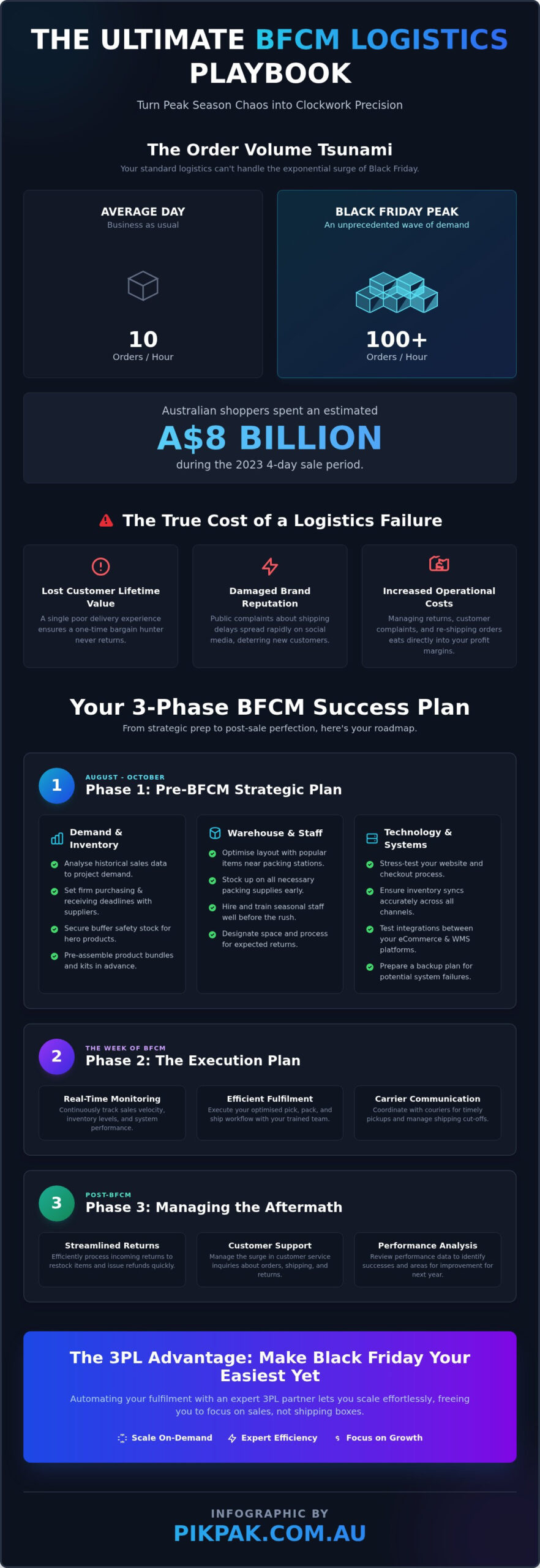
Phase 3: Managing the Aftermath (Post-BFCM and Returns)
The sales have ended, but the real test of your operations is just beginning. Many businesses focus entirely on the pre-sale rush and forget that the post-purchase experience is where customer loyalty is truly forged. This final phase of your black friday logistics planning separates the good from the great, focusing on efficient final deliveries and a seamless returns process.
Mastering the Returns Wave
The inevitable wave of returns after a major sale isn’t a failure-it’s an opportunity. A simple, hassle-free returns experience can turn a hesitant buyer into a lifelong advocate. To make this process run like clockwork, you need a clear system in place.
- Establish a simple returns policy: Make it easy for customers to find and understand on your website. Clarity reduces customer service enquiries.
- Designate a returns zone: Set up a specific area in your warehouse to receive and process returned items without disrupting outbound orders.
- Implement a processing system: Quickly inspect items, decide whether to restock or dispose of them, and get sellable products back into inventory.
- Process refunds fast: Issue refunds or exchanges promptly to maintain customer trust and satisfaction.
What seems like a logistical headache can be a powerful loyalty-building moment. Overwhelmed by returns? Pik Pak makes reverse logistics easy.
Clearing the Backlog and Final Deliveries
The finish line is in sight. Now is the time to clear any remaining orders and manage customer expectations with precision. Focus on proactive communication to keep customers happy and reduce support tickets.
- Ship remaining orders diligently: Work through any backlog to get every last parcel out the door.
- Communicate shipping deadlines: Be transparent about cut-off dates for pre-Christmas delivery with carriers like Australia Post.
- Manage “Where Is My Order?” enquiries: Use automated tracking updates to keep customers informed and reduce the load on your support team.
- Thank your team: Acknowledge the hard work and long hours your staff put in. A little appreciation goes a long way.
Performance Analysis and Debrief
Once the dust settles, the most critical part of your black friday logistics planning begins: the review. This is where you gather the insights needed to make next year even more successful and profitable. Document everything now while it’s fresh.
- Review what worked and what didn’t: Hold a debrief session to discuss bottlenecks, successes, and operational challenges.
- Gather team feedback: Your warehouse and customer service teams are on the front lines. Their feedback is invaluable.
- Analyse the data: Dive into your sales figures, average shipping costs, return rates, and inventory accuracy.
- Start a ‘Lessons Learned’ document: This will become the foundation of your strategy for the next peak season.
The 3PL Advantage: How to Make Black Friday Your Easiest Yet
After reviewing the checklists for inventory, warehousing, and shipping, the complexity can feel overwhelming. What if there was an ‘easy button’? Partnering with a third-party logistics (3PL) provider isn’t just another cost-it’s a strategic investment in growth. A 3PL partner transforms your black friday logistics planning from a source of stress into your greatest competitive advantage, allowing you to focus on sales while we do the hard work.
Instantly Scale Your Warehouse and Labour
Forget the frantic search for temporary warehouse space or the headache of hiring and training seasonal staff. A 3PL partner like Pik Pak gives you immediate access to a network of fulfilment centres and a trained team ready to handle any surge. Instead of being locked into expensive leases, you benefit from a flexible, ‘pay-as-you-go’ model. You only pay for the space and labour you use, turning a massive fixed cost into a predictable, variable expense.
Leverage Better Shipping Rates and Technology
Securing competitive shipping rates during peak season is a major challenge for individual businesses. 3PLs ship huge volumes, giving us access to bulk discounts from major Australian carriers that we pass directly to you. Beyond cost savings, you gain immediate access to our robust technology stack, including:
- A professional Warehouse Management System (WMS) for real-time inventory tracking and order accuracy.
- Automated order processing that syncs directly with your eCommerce platform.
- Optimised shipping solutions that ensure fast and reliable delivery for your customers.
Focus on Growth, Not Packing Boxes
Your time is your most valuable asset. Every hour you spend managing stock levels, printing labels, or packing boxes is an hour you’re not spending on marketing, customer service, and strategy. Outsourcing your fulfilment frees you to concentrate on what you do best: growing your brand.
Let logistics experts manage the operational complexity. With the right partner, you can turn the most demanding sales period of the year into your most profitable and stress-free one yet. Ready to simplify your black friday logistics planning? Discover how Pik Pak can help you scale effortlessly.
Turn Black Friday Chaos into Clockwork Success
Black Friday Cyber Monday doesn’t have to be a source of stress. As we’ve covered, success hinges on a proactive, multi-phase approach that addresses everything from pre-sale inventory preparation to post-sale returns management. Ultimately, solid black friday logistics planning is the foundation that separates a record-breaking sales weekend from an operational nightmare.
But you don’t have to navigate that complexity alone. Instead of being buried in boxes, you can focus on what you do best: growing your business. Pik Pak makes it easy. With pay-as-you-go scalability perfect for peak season and seamless integration with your eCommerce store, we handle the pick, pack, and ship, so you can handle the sales.
Ready to make this your most profitable and stress-free Black Friday? Talk to a Pik Pak logistics expert today. Here’s to your smoothest, most successful peak season yet!
Frequently Asked Questions
When is the absolute latest I should start my Black Friday logistics planning?
To avoid stress and secure capacity, your planning should be well underway by August. The absolute latest to begin is early September. This provides a crucial window to confirm inventory with suppliers, book freight, and integrate with partners. Starting early turns a logistical challenge into a simple, manageable process, ensuring you are fully prepared to capture the sales peak without any last-minute headaches. It’s all about being proactive, not reactive.
How much extra inventory should I order for Black Friday and Cyber Monday?
There is no one-size-fits-all answer; your decision must be data-driven. Start by analysing last year’s BFCM sales data, your current year-on-year growth, and which products you plan to promote heavily. A 30-50% increase in stock for your hero products is a safe benchmark, but tailor this forecast to your specific business. The goal is to maximise sales by avoiding stockouts on bestsellers while not overcommitting capital to slow-moving items.
What are the most common logistics mistakes eCommerce stores make during BFCM?
The most common mistake is underestimating order volume, which leads to stockouts, packing delays, and unhappy customers. Another frequent error is poor communication about shipping times, creating a surge in support tickets. Finally, many businesses neglect their returns process, which can become a major bottleneck post-sale. Thorough black friday logistics planning helps you anticipate these issues and ensures your operations run like clockwork, protecting your brand reputation.
How can a 3PL help a small business that only has one major sales peak per year?
A 3PL is the ideal solution for seasonal demand. It provides instant access to professional warehousing and fulfilment staff exactly when you need them, without the fixed, year-round costs. Our pay-as-you-go model means you can scale your operations up for BFCM and then seamlessly scale back down. This frees up your time and capital, allowing you to focus on growing your business instead of packing boxes. It’s peak season logistics made easy.
What is the best strategy for handling the inevitable surge in customer service tickets?
The best strategy is proactive and transparent communication. Clearly display estimated shipping timeframes on your website and in order confirmation emails. Create a dedicated BFCM FAQ page to address common questions. You should also prepare email templates for “Where Is My Order?” (WISMO) enquiries to enable swift replies. Automating shipping notifications is a simple way to keep customers informed and significantly reduce your team’s workload during the rush.
How do I choose the right shipping carriers for the Black Friday rush in Australia?
A multi-carrier strategy is essential for managing the BFCM rush in Australia. Don’t rely on just one provider. Using a mix of carriers like Australia Post for national reach and others like Aramex or Sendle for flexibility helps mitigate risks and control costs. Be sure to offer customers both standard and express options at checkout and clearly communicate order cut-off dates for pre-Christmas delivery to manage expectations effectively.