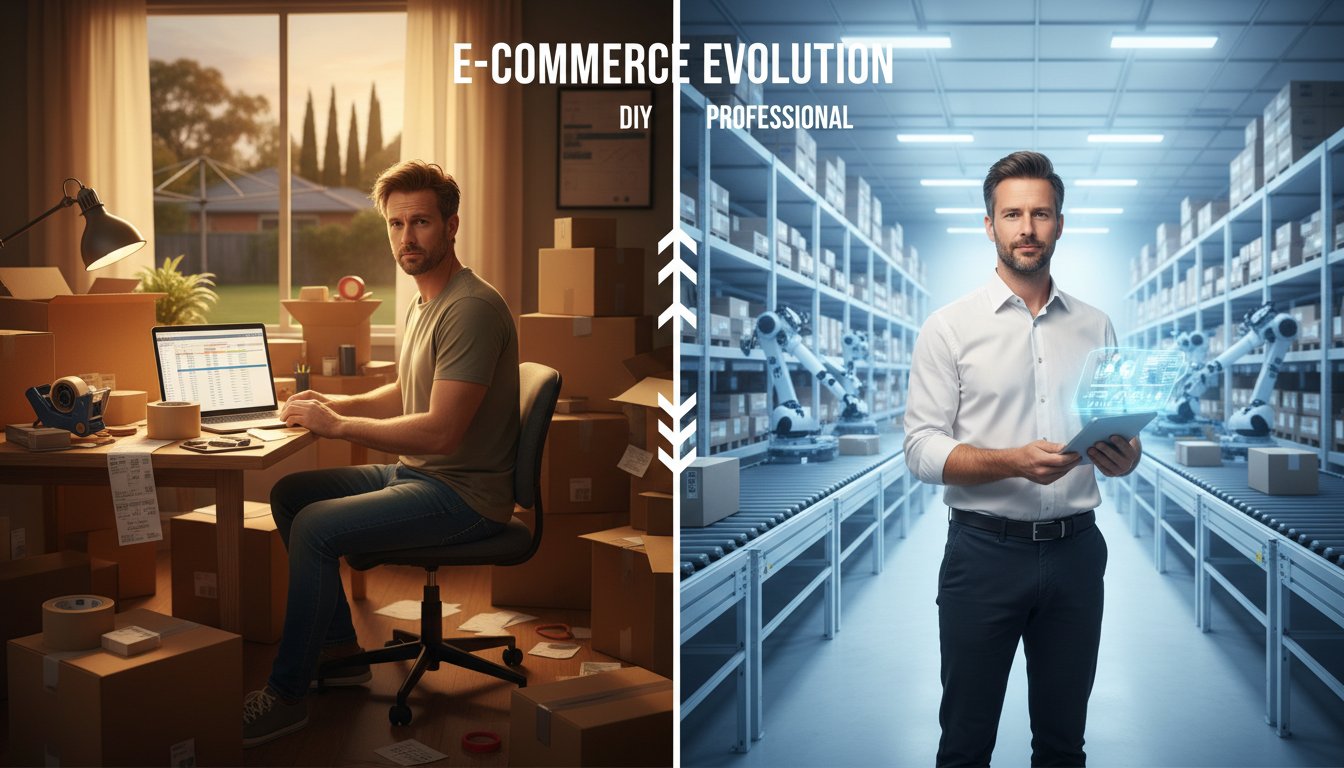
What if the four hours you spend every afternoon taping boxes and printing labels are actually costing your business A$42,500 in lost growth opportunities this year? You likely started your eCommerce brand to create and market products, yet you’ve found yourself acting as a full-time warehouse manager. It’s a common trap for Australian founders who believe that handling everything manually is the only way to protect their margins. When weighing up DIY fulfillment vs professional services, many brands realize too late that their “free” labor is the most expensive part of the business.
We agree that handing over control of your inventory feels like a massive leap. However, you shouldn’t have to choose between high shipping rates and your own sanity. This guide reveals the true cost of self-fulfillment in the 2026 market and shows you exactly when to transition to a professional 3PL to scale your Australian business. You’ll discover how to achieve a 22% reduction in per-order shipping costs while reclaiming your time for high-level strategy. We will walk you through the simple steps to automate your inventory and order sync so your operations finally run like clockwork.
Key Takeaways
- Identify the hidden “founder’s tax” and calculate how much self-storage and manual packing are actually draining your A$ profit margins.
- Navigate the 2026 Australian logistics landscape by comparing independent courier rates against bulk-negotiated 3PL shipping tiers to protect your bottom line.
- Evaluate DIY fulfillment vs professional services to see how transitioning from manual spreadsheets to an automated WMS eliminates costly shipping errors.
- Recognise the five critical breaking points—from inventory shrinkage to missed packing windows—that signal it is time to scale your operations.
- Discover how to reclaim your time and focus on growth with a simple “point, click, and connect” onboarding process that makes outsourcing effortless.
The DIY Fulfillment Trap: Why “Doing it Yourself” Costs More Than You Think
Every successful Australian eCommerce story begins with a founder who does everything. You design the product, build the website, and pack every box on your kitchen table. This “maker” phase is essential for birth, but it quickly becomes a cage for growth. When you spend six hours a day taping cartons, your identity shifts from a visionary CEO to an underpaid logistics manager. This transition stalls revenue because the person responsible for strategy is too busy hunting for a lost roll of packing tape.
The financial reality of DIY fulfillment vs professional services often surprises business owners. Most founders fail to calculate their own hourly rate. If your time is worth A$150 per hour but you spend 20 hours a week packing orders, you’re effectively paying A$3,000 weekly for labor that a professional facility handles for a fraction of that cost. Beyond labor, you face hidden expenses like residential electricity hikes, premium retail prices for packaging materials, and the rising cost of domestic shipping labels without volume discounts. Manual fulfillment creates a hard ceiling. You can’t scale your marketing or launch a 24-hour flash sale if your physical capacity to ship maxes out at 30 orders a day. One mispicked order or a late tracking number doesn’t just cost a refund; it erodes the customer lifetime value (LTV) of an Australian shopper who expects 2026-standard efficiency.
The Opportunity Cost of Packing Tape
In the fast-moving 2026 eCommerce environment, agility is your greatest asset. When a CEO loses 20 hours a week to low-value manual tasks, the business loses the ability to pivot. You miss out on negotiating with new suppliers or optimizing your ad spend because you’re stuck in a loop of printing labels. Offloading these tasks to Pik Pak services allows you to reclaim that time. Focus on your business and let the logistics experts handle the heavy lifting while you focus on the 20% of activities that drive 80% of your revenue.
The “Garage Ceiling”: Space as a Growth Barrier
Physical space is often the first wall you hit. Residential garages lack climate control and professional security, risking inventory damage from Sydney’s humidity or Melbourne’s temperature swings. Storing stock at home also prevents you from taking advantage of bulk-buy discounts from manufacturers because you simply have nowhere to put a full container. Moving to professional warehousing removes these limits. You gain access to industrial-grade security and scalable rack space, ensuring your operations run like clockwork without the clutter of your home becoming a safety hazard. It’s about moving from a hobbyist setup to a professional infrastructure that supports unlimited growth.
The 2026 Australian Logistics Landscape: DIY vs. Professional Rates
The 2026 market doesn’t reward trial and error. For small eCommerce brands, the choice between DIY fulfillment vs professional services often comes down to the bottom line. If you’re shipping 50 parcels a week from a home office, you’re likely paying standard retail courier rates. These costs have climbed by 12% since 2024 due to rising labor costs and infrastructure levies. Professional 3PLs operate differently. They use massive volume to access shipping tiers that are simply out of reach for independent sellers.
Shipping Economies of Scale
Scaling your business shouldn’t mean scaling your stress. 3PL providers aggregate volume from hundreds of clients to negotiate deep discounts with Australia Post, StarTrack, and regional carriers. Freight aggregation is the secret weapon for small eCommerce stores, defined as the strategic process of combining multiple small shipments into a single large volume to secure wholesale shipping rates. This lowers the floor price for every item you send.
A pay-as-you-go model allows you to stay agile in a fluctuating Australian economy. You only pay for the space you use and the orders you ship. This eliminates the fixed overhead of warehouse rent or hiring staff during peak seasons like Black Friday. By leveraging these shared resources, you can automate your operations and keep your margins healthy. It’s a simple way to ensure your business stays profitable even as shipping costs rise nationwide.
Navigating Australian Geography
Australia’s geography is a unique beast. Shipping a 2kg parcel from a single DIY point in Melbourne to a customer in Perth can cost upwards of A$25. In 2026, fuel surcharges have stabilized around 18%; this makes long-distance regional deliveries even more expensive for small-scale shippers. Professional services solve this by using strategic logistics hubs and sophisticated multi-carrier networks.
- Metro Speed: Shoppers now expect metro delivery within 24 hours. DIY setups often fail here because they rely on a single carrier’s pickup schedule.
- Regional Reach: 3PLs use data to choose the fastest route across multiple carriers instantly, bypassing regional bottlenecks.
- Returns Management: Handling interstate returns is a major headache for home-based businesses. A professional system processes these at a central hub, getting stock back on the digital shelf in 48 hours.
This infrastructure is vital for meeting modern customer delivery standards. What seems to be a challenge for a solo founder is an easy game with the right partner. If you want to see how these rates can work for your specific volume, explore our service options to find a better fit for your growth goals. Don’t let logistics hold you back; let the experts handle the heavy lifting while you focus on your business.
Direct Comparison: Manual Processes vs. Automated Fulfillment
Choosing between DIY fulfillment vs professional services often comes down to how much you value your time and accuracy. When you’re starting out, a spreadsheet feels like enough. However, as you scale toward 2026, those cells and rows become a liability. Manual inventory tracking results in a 15% discrepancy rate for most growing brands. Professional services replace these manual logs with a Warehouse Management System (WMS), providing 100% visibility of every SKU in real time. You’ll always know exactly what’s on the shelf without doing a physical count every weekend.
Manual data entry is the primary cause of fulfillment delays for Australian eCommerce businesses. Re-typing customer addresses or SKU codes into courier portals takes roughly three minutes per order. If you’re processing 50 orders a day, that’s two and a half hours lost to pure admin. Automated systems pull order data directly from your storefront. This eliminates human error and ensures the package leaves the warehouse on the same day. It’s the difference between a backlog and a breakthrough.
Security is another factor often overlooked in the DIY stage. Residential storage or small lock-up units rarely offer the same protection as a professional facility. A dedicated warehouse provides 24/7 CCTV monitoring, restricted access, and comprehensive insurance. This protects your stock against theft, fire, or damage. It ensures your capital isn’t wiped out by a single incident. In a professional environment, your inventory is treated as a high-value asset, not just boxes in a garage.
The Technology Gap
Modern logistics rely on seamless communication between your store and the warehouse. Advanced technology support and API integrations allow your Shopify or WooCommerce store to talk to the fulfillment center instantly. This creates a loop where tracking numbers are pushed back to the customer the moment a label is printed. WMS automation reduces fulfillment errors to near-zero percent, turning your logistics into a silent, high-performance engine. This level of synchronization is impossible to replicate with manual spreadsheets.
Kitting and Assembly: Beyond the Box
Many founders worry that outsourcing means losing the personal touch. This is a misconception. Professional assembly lines can execute complex kitting, such as adding tissue paper, stickers, or specific promotional inserts, far more efficiently than a kitchen table setup. While you might struggle to pack 100 custom gift boxes in a day, a professional team handles thousands with consistent precision. This allows you to scale seasonal sales or promotional bundles without a nervous breakdown. Pick, Pack & Ship Made Easy means you maintain your brand standards while we do the heavy lifting. Focus on your business and let the experts handle the tape and cardboard.
The Capacity Breaking Point: 5 Signs It Is Time to Outsource
Growth is a double-edged sword. When you started, packing every box by hand felt like a badge of honour. That sentiment fades quickly when your lounge room becomes a warehouse and your family hasn’t seen the dining table in months. The debate between DIY fulfillment vs professional services usually ends when the operational friction starts costing you more than the warehouse fees.
Recognising the breaking point before it shatters your brand is vital. Here are five indicators that your home-grown operation has reached its limit:
- The Midnight Shift: Your daily order volume consistently exceeds your “safe” packing window. If you’re still taping boxes after 8 PM just to meet the morning courier pickup, you’re scaling on borrowed time.
- Invisible Losses: Inventory shrinkage and “lost” stock are becoming regular line items. A 3% discrepancy in stock levels might seem minor, but it’s a symptom of a disorganised system that bleeds profit.
- Customer Friction: Complaints regarding shipping speed or incorrect items are rising. In the Australian market, 68% of shoppers won’t return after a single poor delivery experience.
- The Marketing Ceiling: You’ve intentionally throttled your marketing spend because you literally cannot handle more orders. If a successful Meta ad campaign feels like a threat rather than a win, your fulfillment is the bottleneck.
- The Burnout Factor: You’re no longer working on your business; you’re only working in it. When the CEO spends six hours a day as a packing clerk, the strategic growth of the brand stops entirely.
The Order-to-Hour Ratio
Efficiency is a numbers game. To find your personal fulfillment efficiency, divide the total hours spent on logistics by the number of orders shipped. If you spend 10 hours a week on 50 orders, that’s 12 minutes per order. If your time is valued at a modest A$60 per hour, your internal labour cost is A$12 per parcel. Most professional services pick and pack that same order for a fraction of that cost, often between A$3.00 and A$5.50. Set a “trigger volume” of 20 orders per day as your signal to switch. When comparing DIY fulfillment vs professional services, the math almost always favours the latter once you reach consistent daily volume.
Scaling for Peak Seasons
The Black Friday stress test is where DIY usually breaks. During Q4, order volumes can spike by 400% overnight. While a home-based business struggles to find extra hands and space, 3PLs provide “elastic” capacity. They have the staff and infrastructure to absorb these spikes without missing a beat. For a deeper look at how these systems work, read our Order Fulfilment Guide to see how professional infrastructure keeps your brand reliable during the busiest months of the year.
Ready to reclaim your time and scale without the headache? Explore how Pik Pak makes fulfillment easy.
Transitioning to Professional Fulfillment with Pik Pak
Making the leap from a home office or a crowded garage to a professional warehouse is a major milestone for any Australian brand. We believe this shift should be painless and rewarding. Our “Point, Click, and Connect” philosophy ensures that you don’t need a degree in IT to integrate your online store with our systems. Pik Pak handles the complex API connections and logistics logic behind the scenes. This allows you to treat your supply chain like an easy game rather than a daily headache. What seems like a massive hurdle becomes a simple task with the right partner by your side.
When evaluating the choice between DIY fulfillment vs professional services, the most valuable asset you gain is time. Reclaiming 20 hours every week means you can finally stop acting as a warehouse manager and start acting as a CEO. That is 1,040 hours a year you can reinvest into marketing, product development, or simply taking a well-deserved weekend off. It’s about the peace of mind that comes when you know your operations run like clockwork. We take the “headache” out of the equation so you can focus on the big picture.
Your First 30 Days of Outsourced Fulfillment
The first 30 days are designed to be a smooth, structured handover. You start by preparing your inventory according to our receiving guidelines to ensure every SKU is accounted for and ready for the shelves. Once your stock arrives at our facility, our team logs it into the system with precision. You’ll gain access to a transparent dashboard where you can track stock levels and order statuses in real-time. Within the first few days, you’ll see your first automated order processed. There’s no better feeling than receiving a notification that a customer’s package is on its way while you’re busy doing literally anything else. This is pick, pack and ship made easy.
Focusing on Growth, Not Logistics
Outsourcing is a strategic investment in your company’s future success. We’ve assisted Australian brands that successfully doubled their revenue within 12 months of moving away from manual packing. By eliminating the physical limits of a home-based setup, these businesses could finally say yes to large-scale influencer campaigns and 48-hour flash sales. The long-term value of a partner like Pik Pak is that we scale as you grow. Whether you ship 20 orders or 2,000, the process remains consistent and reliable. The choice between DIY fulfillment vs professional services is really a choice between staying small or scaling up. If you’re ready to automate your success and eliminate waste, Get Started with Pik Pak and let us do the hard work for you.
Scale Your Brand Beyond the Packing Bench
Choosing between DIY fulfillment vs professional services is the most critical decision for Australian eCommerce brands aiming for 7-figure growth by 2026. Sticking with manual processes often leads to hidden costs averaging A$8.50 more per order than automated solutions. When your daily order volume hits 20 shipments or your team loses 15 hours weekly to manual packing, you’ve reached the capacity breaking point. Professional logistics isn’t just an expense; it’s a strategic move to eliminate waste and reclaim your schedule.
Pik Pak makes this transition seamless with a 100% Australian owned and operated team that understands local market conditions. We offer pay-as-you-go pricing with no locked-in contracts, so you only pay for what you use. Our system provides a simple point, click, and connect integration with Shopify, WooCommerce, and eBay. You don’t need to be a computer geek to automate your shipping; you just need a partner that makes it easy and reliable.
Stop letting logistics hold your business back. Ready to reclaim your time? Get a custom fulfillment quote from Pik Pak today.
We’re here to ensure your operations run like clockwork so you can get back to what you do best and watch your business thrive.
Frequently Asked Questions
Is DIY fulfillment always cheaper for small businesses?
No, DIY fulfillment isn’t always the cheapest option because it hides significant opportunity costs. While you avoid service fees, you’re likely spending 20 to 30 hours every week packing boxes instead of growing your brand. Recent 2025 industry data shows that small Australian retailers lose roughly A$45 per hour in potential revenue while performing manual tasks. Outsourcing lets you trade a small per-order fee for hours of reclaimed time to focus on sales.
What is the minimum order volume needed to hire a professional 3PL?
You don’t need thousands of orders to start using a professional service. While some traditional warehouses require a minimum of 500 orders per month, modern 3PLs like Pik Pak offer pay as you go models with zero minimum requirements. This flexibility is vital for the 65% of Australian startups that experience seasonal fluctuations. You can start with just 5 or 10 orders a week and scale your operations as your customer base grows.
Will I lose control over my shipping and packaging if I outsource?
You won’t lose control; you’ll gain visibility through a dedicated Warehouse Management System (WMS). Our cloud-based technology provides 24/7 real-time tracking of every SKU and order status. You still decide exactly how your products are handled and which carriers are used. By moving away from DIY fulfillment vs professional services, you replace manual guesswork with precise data. This ensures your customers receive the exact experience you’ve designed without you needing to touch tape.
How long does it take to switch from DIY to professional fulfillment?
Switching from your garage or spare room to a professional warehouse typically takes between 7 and 14 days. This timeline includes connecting your Shopify or eBay store via API, which usually happens in under 15 minutes. Once your inventory arrives at our facility, we count and shelf it within 48 hours. We make the transition easy so your shop stays open and your customers never experience a delay in delivery. Focus on your business while we handle the setup.
Can a professional service handle my specific custom branding and kitting?
Yes, professional services specialize in custom kitting and branded packaging to keep your unboxing experience unique. We follow your specific instructions to ensure tissue paper, stickers, and thank-you notes are placed perfectly every time. Approximately 82% of premium Australian eCommerce brands use custom inserts to drive repeat purchases. We handle these complex tasks with precision. This ensures your brand identity remains consistent even as your daily order volume triples during peak seasons.
What happens to my returns if I use a professional fulfillment service?
We manage the entire reverse logistics process by receiving, inspecting, and restocking your returned items. When a customer sends a product back, our team checks it against your quality standards within 24 hours of arrival. If it’s in perfect condition, we put it back on the shelf for the next sale. This automated system eliminates the returns pile in your office and gets your inventory back into circulation faster to protect your cash flow.
How much does professional order fulfillment cost in Australia in 2026?
In 2026, Australian fulfillment costs typically range from A$2.50 to A$4.80 for a standard pick and pack service. Storage is usually billed per pallet at roughly A$5.00 to A$8.00 per week, or by the cubic meter for smaller items. Because we use transparent pricing, you only pay for the space and labor you actually use. This model helps you maintain a healthy 30% profit margin even during slower retail months like February or March.
Is my inventory insured when stored in a professional 3PL warehouse?
Your inventory is stored in a secure, monitored facility, but you should always maintain your own marine or stock insurance policy. While we provide 24/7 CCTV and fire protection systems, standard 3PL contracts usually limit the warehouse’s liability to a specific dollar amount per kilogram. Most Australian business insurance providers offer affordable goods in trust extensions. This double layer of protection ensures your assets are safe while you evaluate DIY fulfillment vs professional services.