
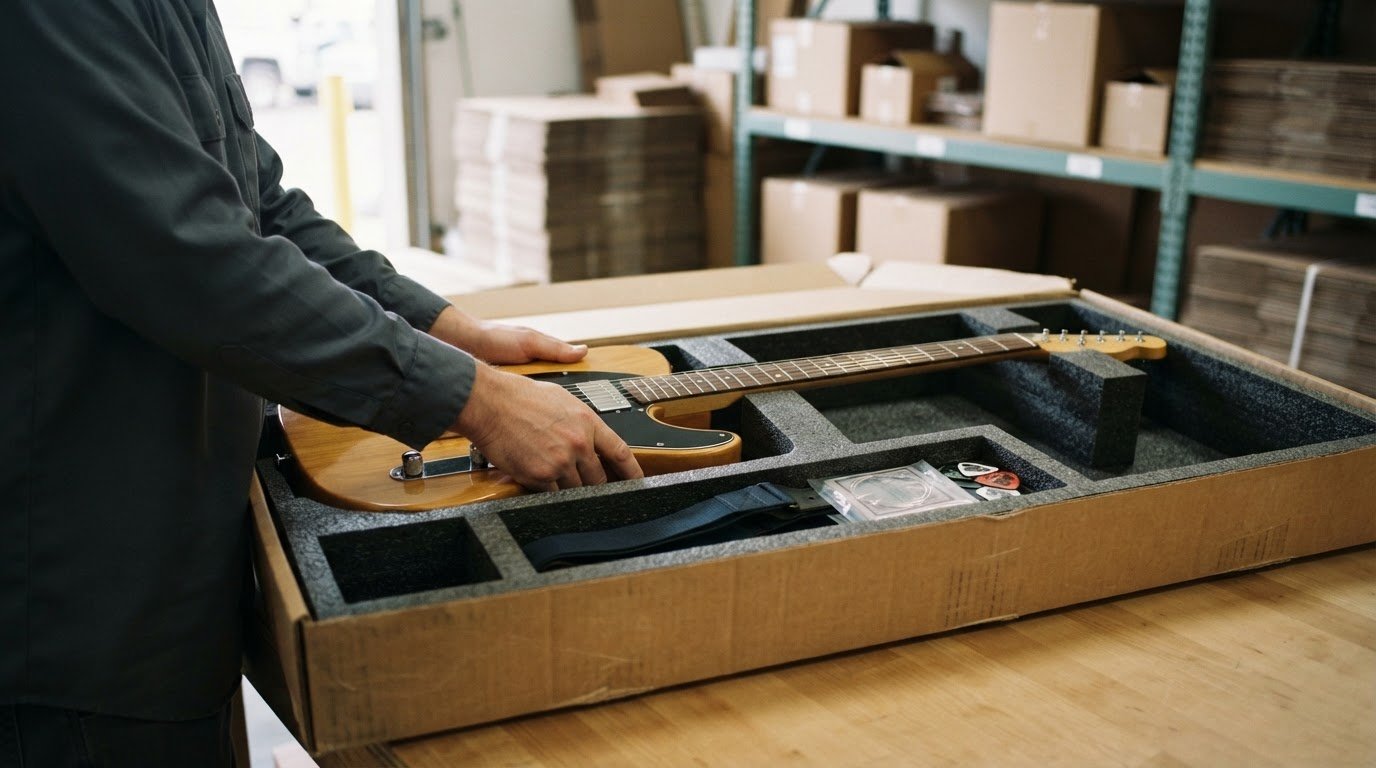
Bulky cartons can cost more to ship than their weight alone suggests. For a 3PL for musical instruments and equipment in Australia, fulfilment costs vary with packed dimensions, weight, destination, product value and the handling each item needs. Compact accessories usually fit standard parcel workflows, while larger instruments may need oversized handling or freight.
That makes the order mix as important as the instrument itself. A guitar ordered with the right strings, picks or other accessories may need careful matching and assembly. Protective packaging and accurate carton measurements also help manage shipping costs and reduce the risk of damage.
This guide explains the factors that shape instrument fulfilment, from receiving and storage to packing, shipping and returns. It also covers protecting delicate gear and assembling accessory orders accurately, so you can assess whether fulfilment is taking too much time away from running your business.
Key Takeaways
- Base shipping estimates on the finished carton’s dimensions and weight, since bulky parcels may cost more even when they aren’t especially heavy.
- Consistent receiving and packing processes help protect instruments, record condition, and keep serial details connected to the right item.
- Compare fulfilment costs across storage, picking, packing, shipping, returns, and special handling to understand how different gear affects your operation.
- Clear product and accessory information helps fulfilment teams assemble complete orders and match the right items more reliably.
How Much Does Musical Instrument Fulfilment Cost in Australia?
In Australia, fulfilment costs depend on packed size and weight, destination, order volume and handling needs. For wireless equipment, the battery configuration, including whether a lithium battery is installed or packed separately, affects carrier and dangerous-goods handling requirements.
Bulky and Delicate Instrument Handling
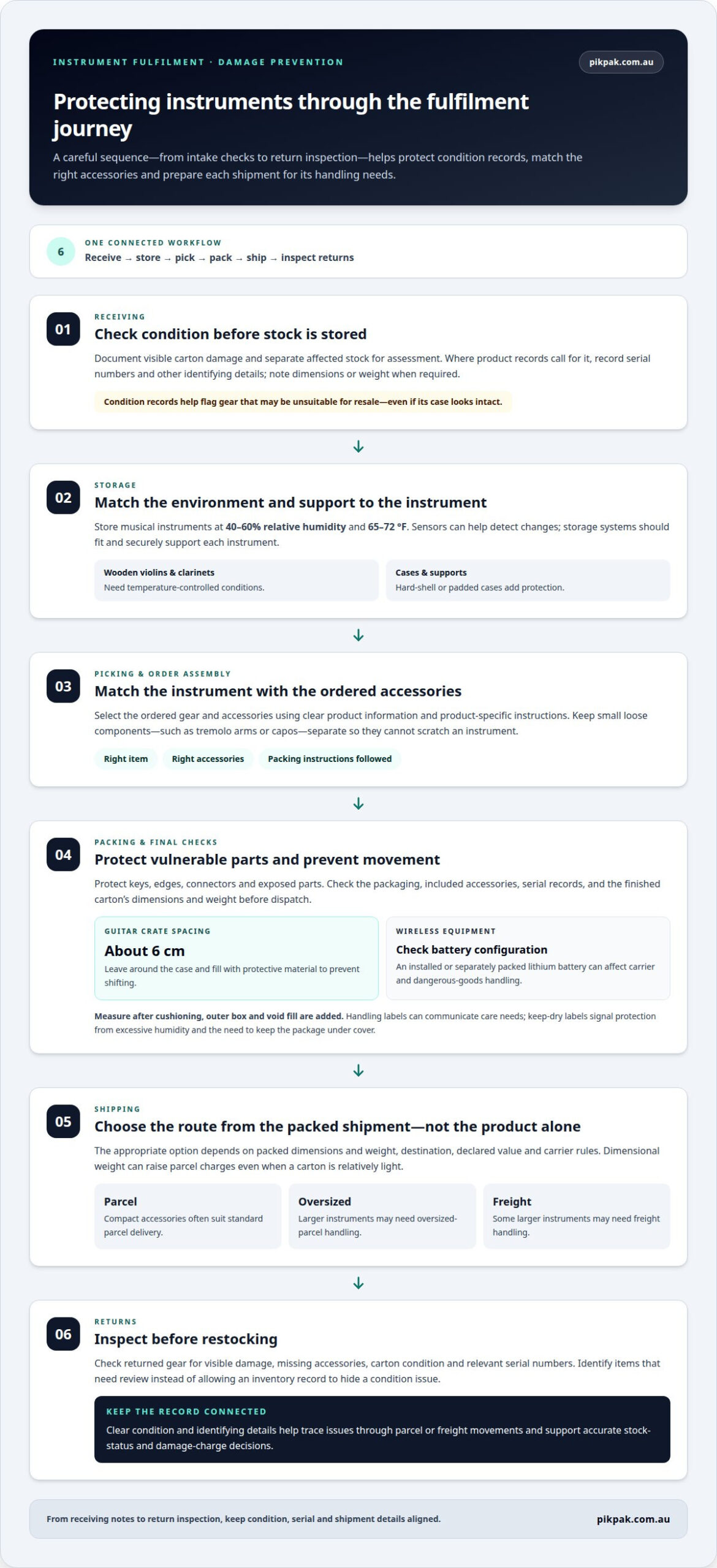
Bulky instruments and fragile components need packaging that limits movement and protects vulnerable surfaces. Guitars and violins can travel in padded hard cases, while amplifiers and speakers may need pallet handling. A guitar crate should leave about 6 cm around the case, filled with protective material to prevent shifting. Warehouse locations must fit packed carton dimensions and weight.
Parcel, Oversized, and Freight Shipping
Compact accessories often suit standard parcel delivery, while larger instruments may need oversized-parcel handling or freight. The right option depends on packed dimensions and weight, destination, declared value and carrier rules. Dimensional weight can increase parcel charges even when a carton is relatively light. Measure the shipment after adding cushioning, an outer box and void fill, then account for applicable carrier surcharges.
Receiving, Pick-and-Pack, and Shipping Workflows
At receiving, warehouse teams can record carton condition and, where product records call for it, serial numbers, dimensions or weights. Visible damage should be documented before stock enters active storage. During pick-and-pack, staff select the ordered instrument and accessories, follow product-specific packing instructions, and prepare the parcel for carrier handoff. Warehouse receiving guidelines help define information for an orderly intake.
Preparing Instruments for Storage and Shipping
Before dispatch, check the protective packaging, included accessories, serial records, and the finished carton’s dimensions and weight. Packing should protect keys, edges, connectors and exposed parts while preventing movement. Handling labels can help communicate how a carton should be handled. Keep-dry labels signal that the package should be protected from excessive humidity and kept under cover.
Damage prevention during receiving, storage, picking, and returns
Damage prevention starts before instruments enter active storage. At receiving, warehouse teams document visible carton damage and separate affected stock for assessment. Condition records are important for valuable gear: an instrument may arrive in an intact case but still be unsuitable for resale. Where product records require it, teams can also record serial numbers and other identifying details.
Storage conditions and supports should suit each instrument’s size and materials. Musical instruments should be stored at 40-60% relative humidity and 65-72 °F. Temperature and humidity sensors can help teams detect changes. Hard-shell or padded cases add protection, while storage systems need to fit each instrument securely. Wooden violins and clarinets need temperature-controlled conditions.
Handling needs vary by instrument family. Stringed instruments may need careful preparation before shipping to reduce the risk of damage. Woodwinds should be disassembled, with joints greased or oiled. Brass instruments need clean, dry valves, and percussion shells need protection from dents and uneven tension. Keep keyboards and pianos away from heat, direct sunlight and sudden humidity changes.
During picking, pack small loose components, such as tremolo arms or capos, separately so they cannot scratch an instrument. Inspect returns before restocking, checking for visible damage, missing accessories, carton condition and relevant serial numbers. This helps identify gear that needs review instead of letting an inventory record obscure a condition problem. Clear records also help trace issues through parcel or freight movements and support accurate stock-status and damage-charge decisions.
For instrument stock that needs organised storage and careful fulfilment, explore warehouse storage and fulfilment.
Fulfilment costs for different product sizes and values
In Australia, a 3PL for musical instruments and equipment can support online orders through receiving, storage, pick-and-pack, shipping and returns. Providers with e-commerce fulfilment workflows can handle guitars, electronic gear and audio equipment when their warehouse processes account for each product’s packed size, weight and handling needs. Returns processing can manage the logistics of returned goods; repairs are a separate activity.
Fulfilment costs depend on the work each order creates, not just the number of items. A compact cable or capo may need little space and standard packing. A packed guitar, keyboard or amplifier can take up more storage space and need larger packaging, extra protection or oversized handling. Destination, order volume, units per order and returns also affect the workload. Product value may shape the packing and handling instructions used to keep goods secure.
Compare fulfilment setups by mapping the same cost categories across your current operation and the options you are considering: receiving, storage, picking, packing, shipping, returns and special handling. Review the written service terms to understand how they address damage claims, liability and compensation. Check the agreement for the responsibilities and claims process rather than assuming a fulfilment guarantee.
Outsourcing becomes worth assessing when packing backlogs, inventory errors, damage claims or shipping work consume too much internal time. To choose and onboard a 3PL, provide SKU details, packaged dimensions and weights, product values, packing instructions, monthly order volume, units per order and seasonal peaks. Then map how orders, inventory records and returns will move through the workflow. Those details help establish whether the warehouse can fit your range and process its order mix efficiently, before stock arrives.
eCommerce order fulfilment can include receiving, storage, picking and packing, shipping, and returns processing. Returns handling covers the logistics of returned goods; repairs are a separate activity.
Accessory matching, order assembly, and kitting
Accurate accessory matching starts with clear product relationships in your order and inventory records. A guitar may need specific strings, a strap or a compatible capo; a keyboard order may include a stand or sustain pedal. SKU-level instructions help the fulfilment team distinguish suitable combinations from similar-looking products. This prevents an accessory being picked just because it shares a product name or category.
For each order, match the main item and accessories against the recorded contents. Verify the selected SKUs, quantities and packing notes before closing the carton. If a customer orders two instruments with different accessory sets, separate product-level instructions help keep each set together. A final contents check can catch a missing cable or incorrect replacement item before dispatch.
Kitting combines selected components into a prepared pack or order configuration. For example, a retailer can define a beginner guitar kit that lists the instrument and accessories to include. The team assembles the kit to the supplied specification, rather than treating every component as an interchangeable extra. Clear kit definitions also help keep inventory records aligned when components are stored and picked separately.
Order assembly must account for fragile parts as well as correct matching. Pack loose components such as tremolo arms or capos separately from instrument surfaces, and secure strings and smaller accessories inside the shipment. Product instructions can specify which items travel together and which need individual protection. Consistent steps make assembly easier to repeat across orders and seasonal peaks.
Useful logistics tracking connects each order to its picked items and recorded inventory movements. This creates a clearer trail if a customer reports a missing accessory or receives the wrong component. The key is to define compatible combinations and packing instructions at SKU level, then build verification into picking and final packing. This makes accessory matching a repeatable fulfilment process rather than a last-minute judgement.
Pik Pak Logistics
Pik Pak Logistics helps online music retailers manage order fulfilment. Turn to the team when storing stock, picking and packing orders, arranging home delivery or processing returns is taking time away from sales and product planning.
Inventory Storage and Pick, Pack, and Ship Services connect stock management with dispatch. Home delivery shipping options support customer orders, while Returns Management (Reverse Logistics) handles returned goods. To prepare for a discussion, organise your product list, packed dimensions and weights, order volume, and SKU-specific packing instructions. These details describe the mix of instruments and accessories your business needs to fulfil.
Delegate the logistics workload and refocus on growing your range. Contact Pik Pak Logistics to discuss your fulfilment needs.
Set up fulfilment around your product range
Choosing a 3PL for musical instruments and equipment is a chance to shape fulfilment around how your range is actually sold. Decide which order types need the most attention, such as single-instrument shipments, accessory combinations, or returns. Clear priorities help turn a broad logistics setup into a workflow that supports your customers and your team.
Look beyond dispatch. Inventory Storage, Pick, Pack, and Ship Services, and home delivery shipping options can support different parts of the customer journey. Identify where internal work creates friction, then decide which responsibilities you want handled externally. This gives your next conversation a practical starting point without making assumptions about every product or order.
When you’re ready to discuss a fulfilment approach for your music business, contact Pik Pak Logistics. Share the needs that matter most, from product handling to order assembly and delivery. A clear starting point makes the next step easier, so you can focus more time on serving customers and growing your business.
Frequently Asked Questions
How Should a 3PL Handle Fragile or High-Value Instruments?
A 3PL should follow product-specific handling instructions and keep condition records for valuable gear. For a high-value violin, for example, the inventory record can connect its serial number with receiving and return checks. Clear SKU instructions also help staff distinguish a delicate instrument from standard accessories. For damage investigations, dated condition notes can help establish whether an issue was visible before dispatch or appeared later.
Can a 3PL Fulfill Guitars, Keyboards, Drums, and Accessories?
Yes, a 3PL can fulfil mixed music orders when its storage and order workflows suit the products’ packed sizes and handling needs. One customer order might contain a guitar, a keyboard stand, drum accessories, and cables. SKU-level order details help staff select the right items and quantities. Product records also help keep a complete range organised, from large instruments to small components.
Can a Musical Instrument 3PL Integrate With Shopify?
A Shopify connection can pass customer orders into a 3PL workflow when the relevant integration is available. The connection may also support inventory updates and order-status visibility, reducing manual entry between systems. Pik Pak Logistics provides a web-based platform for online-store integration, with a Simple – Pre-Built 3PL Warehousing Connector and an Advanced – Custom 3PL Warehousing API. The integration path depends on the store’s technical setup.
How Does 3PL Work?
A 3PL manages logistics tasks for a business while the business retains ownership of its inventory. The arrangement typically links stock records with fulfilment activity, so orders can be processed without the business operating its own warehouse team. For a music retailer, the workflow can include products arriving into storage, customer orders being fulfilled, and returned goods being processed back into inventory or held for review.
Can a 3PL Handle Guitars, Keyboards, and Other Large Instruments?
Yes, large instruments can be handled through 3PL fulfilment when the warehouse and shipping workflow accommodate their packed dimensions and weight. A keyboard or drum kit may need different storage space and dispatch arrangements from a guitar accessory. Product details help determine where stock can be stored and how orders are prepared. This is distinct from assuming every instrument can use the same parcel method.
Can a 3PL Track Instrument Serial Numbers?
Yes. Serial numbers can be recorded and linked to an instrument’s inventory history when the system and product record support serial tracking. This can help identify the specific unit involved in an order or return, rather than relying only on the product model. Pik Pak’s web-based system provides real-time inventory and order visibility, including SKU details such as serial numbers.